A life in context
The person behind the prize
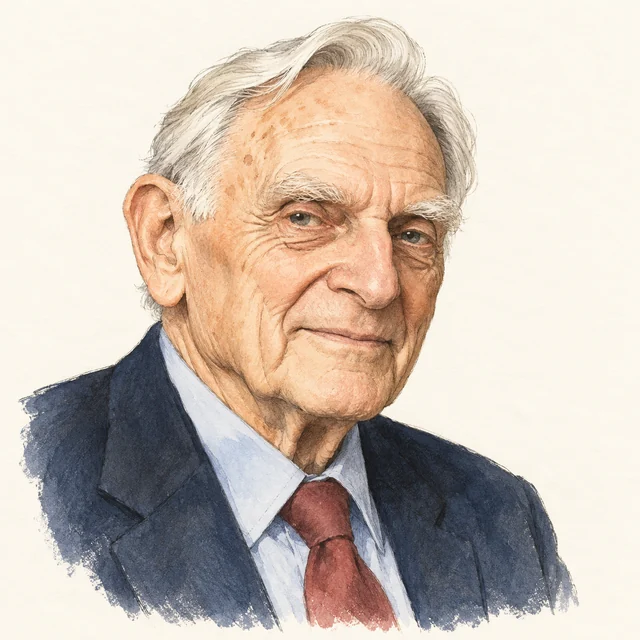
Goodenough studied mathematics at Yale and earned a physics doctorate at the University of Chicago in 1952. His career took him through MIT and Oxford before he joined the University of Texas at Austin in 1986. He applied an understanding of how atoms and electrons behave in solids to the practical question of storing more electrical energy in a rechargeable battery.
The contribution
In 1980, he and colleagues showed that a lithium-containing cobalt oxide could serve as a high-voltage positive electrode. This provided a crucial material foundation for the later commercially viable lithium-ion battery.
The idea in plain language
A battery stores energy through the different chemical conditions at its two electrodes. During discharge, lithium ions move through the electrolyte inside a lithium-ion battery, while electrons travel through the outside circuit and power a device. Charging supplies energy to reverse the transfer. The key is finding electrode materials that can repeatedly accept and release lithium ions.
Read the full award story ↗