c.curionodeThe Nobel Archive

2019 · Chemistry

A rechargeable home for lithium ions

Materials that let lithium ions move in and out made lightweight rechargeable batteries practical.

Lithium-ion batteriesEnergy storageMaterials
2019Chemistry

Visual guide

The prize, pictured

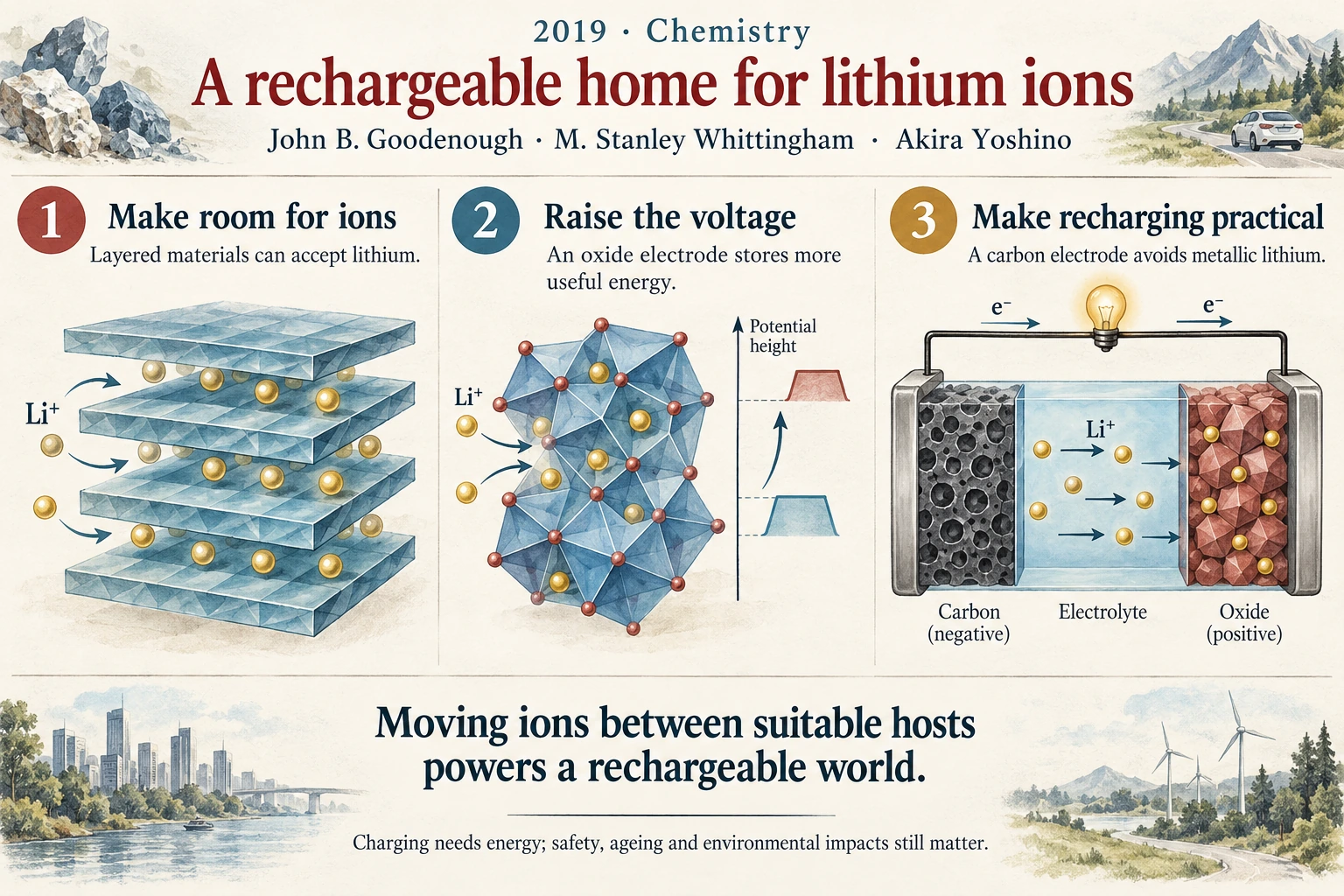
Infographic explaining A rechargeable home for lithium ions
Original AI-generated infographic. A conceptual overview; the explanations and sources below provide context.
Read the poster text

Moving ions between suitable hosts powers a rechargeable world.

  1. Make room for ions

    Layered materials can accept lithium.

  2. Raise the voltage

    An oxide electrode stores more useful energy.

  3. Make recharging practical

    A carbon electrode avoids metallic lithium.

Charging needs energy; safety, ageing and environmental impacts still matter.

01 · The discovery

The idea, in everyday language

A battery stores energy through the different chemical conditions at its two electrodes. During discharge, lithium ions move through the electrolyte inside a lithium-ion battery, while electrons travel through the outside circuit and power a device. Charging supplies energy to reverse the transfer. The key is finding electrode materials that can repeatedly accept and release lithium ions.

Whittingham developed a layered titanium-disulphide electrode, but his early battery used reactive metallic lithium. Goodenough’s lithium-containing cobalt oxide supplied a higher-voltage positive electrode. Yoshino combined an oxide positive electrode with a carbon-based negative electrode, creating a practical design that avoided metallic lithium. Their contributions were different steps in a cumulative development.

Why it matters

Rechargeable lithium-ion batteries helped make portable electronics and electric vehicles practical and provided another way to store electricity from variable sources. The impact depended on materials research, engineering, manufacturing and safety systems developed by many people beyond the three laureates.
02 · The people

Who brought the idea to life?

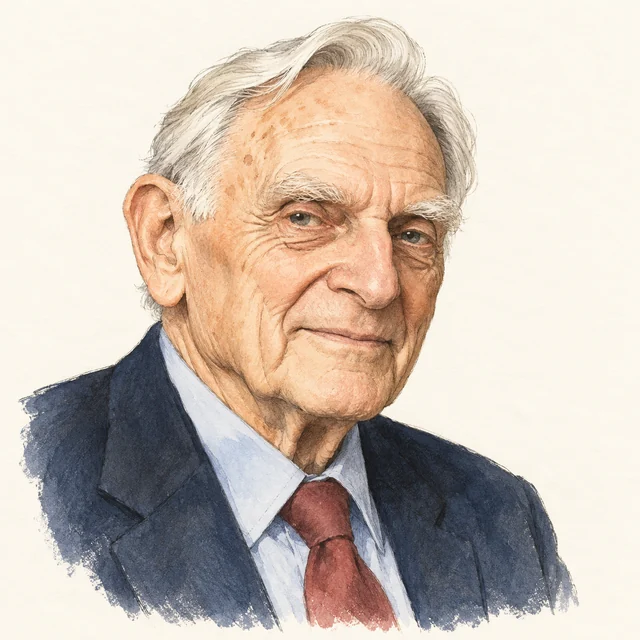
Illustrated portrait of John B. Goodenough

John B. Goodenough

Prize share · 1/3

In 1980, he and colleagues showed that a lithium-containing cobalt oxide could serve as a high-voltage positive electrode. This provided a crucial material foundation for the later commercially viable lithium-ion battery.

Read the biography ↗
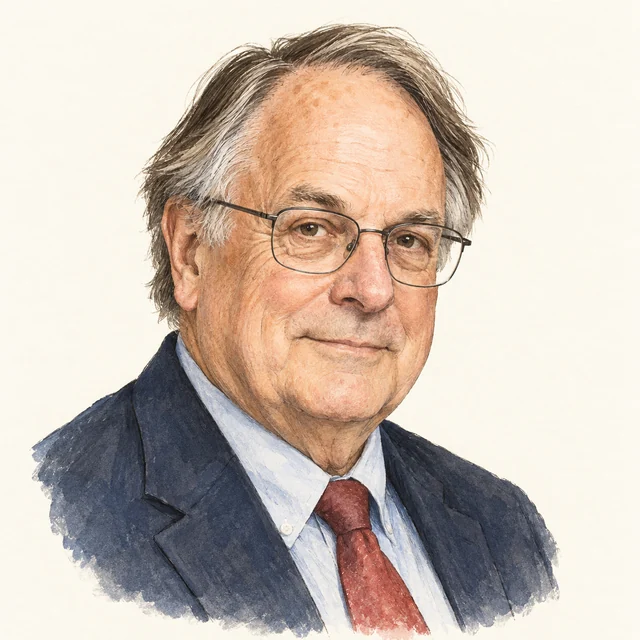
Illustrated portrait of M. Stanley Whittingham

M. Stanley Whittingham

Prize share · 1/3

During the 1970s he developed a rechargeable lithium battery using titanium disulphide as its positive electrode. Its layered structure could host lithium ions, though the metallic-lithium negative electrode created serious safety problems.

Read the biography ↗
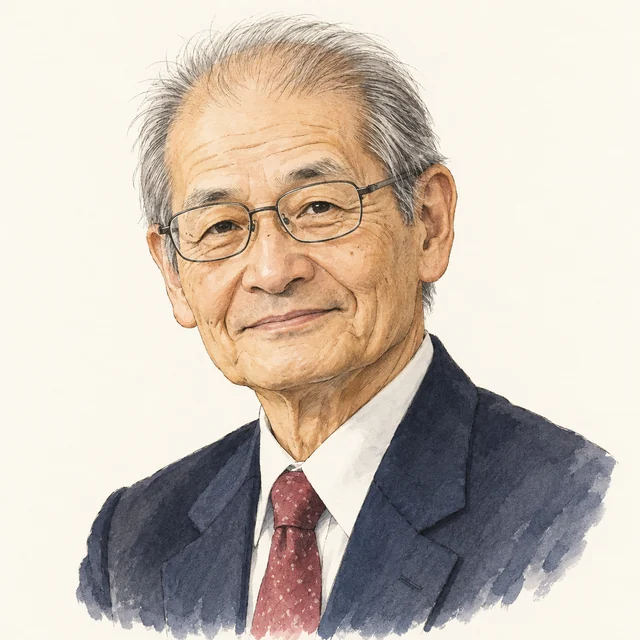
Illustrated portrait of Akira Yoshino

Akira Yoshino

Prize share · 1/3

In 1985, he developed a commercially viable battery combining a lithium-containing cobalt-oxide positive electrode with a petroleum-coke negative electrode. Hosting lithium ions in carbon removed the need for the earlier reactive metallic-lithium electrode.

Read the biography ↗

03 · Years in the making

The path here

  1. 1970s

    Whittingham develops a rechargeable battery with a layered sulphide electrode.

  2. 1980

    Goodenough’s cobalt-oxide work raises the available voltage.

  3. 1985

    Yoshino develops a practical carbon-based negative electrode combination.

04 · Read further

From the original sources

Original explanations by Curionode, based on the official records below. Biographical details and affiliations refer to the award year.

  1. Official award announcement nobelprize.org
  2. Nobel Committee’s accessible background nobelprize.org

More in Chemistry

Browse this subject ↗