A life in context
The person behind the prize
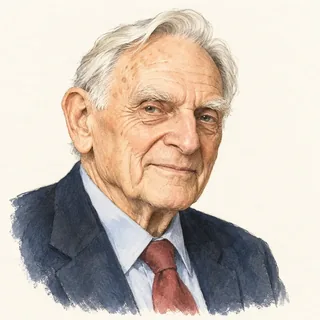
Whittingham earned his doctorate at Oxford in 1968 and undertook postdoctoral research at Stanford. Work in industrial laboratories brought his interest in solid-state chemistry into contact with energy-storage needs. He joined Binghamton University in 1988. His battery research showed the value of materials that can admit lithium ions into their structure without simply being consumed.
The contribution
During the 1970s he developed a rechargeable lithium battery using titanium disulphide as its positive electrode. Its layered structure could host lithium ions, though the metallic-lithium negative electrode created serious safety problems.
The idea in plain language
A battery stores energy through the different chemical conditions at its two electrodes. During discharge, lithium ions move through the electrolyte inside a lithium-ion battery, while electrons travel through the outside circuit and power a device. Charging supplies energy to reverse the transfer. The key is finding electrode materials that can repeatedly accept and release lithium ions.
Read the full award story ↗