A life in context
The person behind the prize
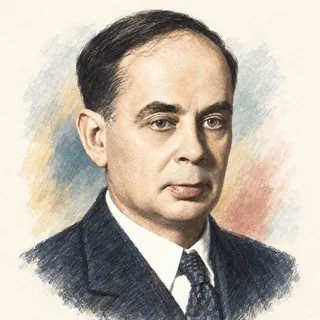
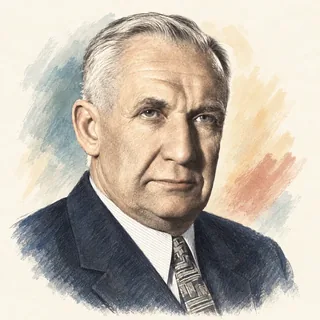
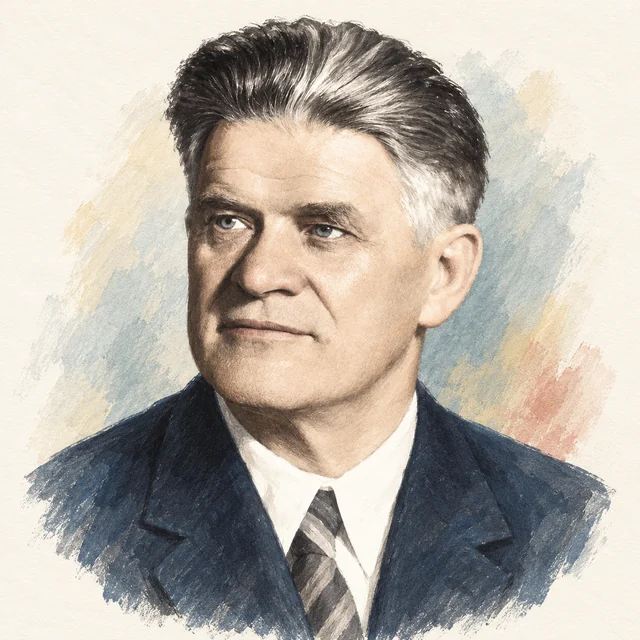
Cherenkov grew up in the Voronezh region and graduated in physics and mathematics at Voronezh in 1928. He entered research in Moscow in 1930 and worked under Sergei Vavilov. While investigating radiation passing through liquids, he pursued a faint blue glow that could not be adequately explained as ordinary fluorescence. His systematic experiments, reported from 1934 onward, associated the light with fast charged particles and established properties that Frank and Tamm explained theoretically in 1937. He completed his doctorate in 1940 and became professor of experimental physics in 1953. The effect became useful in detectors for particle research, distinct from the original observation itself. The 1958 award recognised discovery and interpretation, with each of the three recipients receiving one third. His later laboratory leadership from 1959 should not be projected backward onto the award year.
The contribution
Cherenkov experimentally established the distinctive radiation associated with fast charged particles in a medium. He received one third of the Physics Prize.
The idea in plain language
A faint blue glow appeared when radiation passed through liquids. It seemed natural to call it fluorescence, but Cherenkov’s experiments under Vavilov found properties that did not fit that explanation. A systematic account of the light was needed.
Read the full award story ↗