A life in context
The person behind the prize
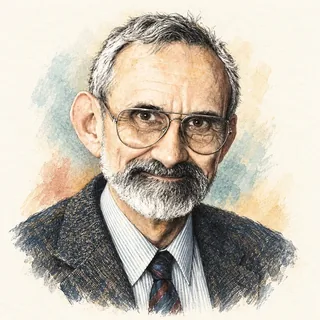
Smalley was born in Ohio and grew up in Kansas City. His path into chemical physics included graduate work at Princeton and research at Chicago before Rice. He developed ways to vaporise material with laser pulses and examine the clusters formed as it cooled. This experimental ability made it possible to study molecular structures that were difficult to obtain through ordinary chemical preparation.
The contribution
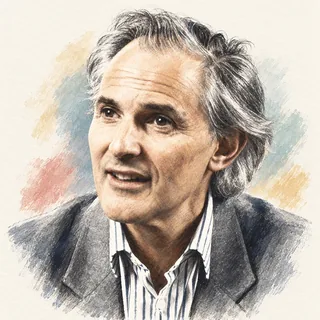
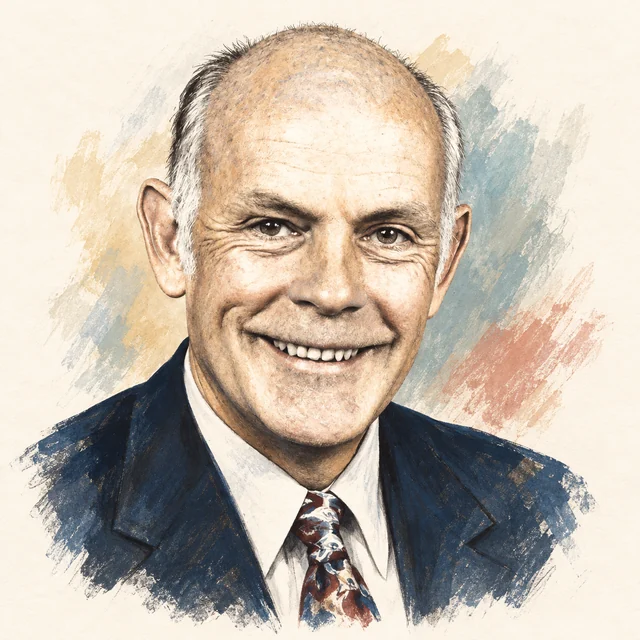
Smalley’s laser-supersonic cluster-beam apparatus provided the experimental setting for the 1985 discovery with Curl and Kroto. Carbon clusters containing 60 and 70 atoms appeared, with the remarkable stability of C60 suggesting a closed shell. He helped develop and test the cage interpretation. The resulting fullerene family opened new possibilities in molecular and materials chemistry, rather than proving every proposed application.
The idea in plain language
Carbon can form radically different structures, including diamond and graphite. In 1985, a Rice collaboration brought Kroto’s interest in carbon chains in stellar environments together with Curl’s spectroscopy and Smalley’s cluster-beam apparatus. Laser pulses vaporised graphite; the carbon cooled and assembled into clusters that could be analysed by mass spectrometry.
Read the full award story ↗