c.curionodeThe Nobel Archive

1996 · Chemistry

Carbon takes the shape of a cage

An experiment motivated by molecules in space revealed a new family of closed carbon shells: the fullerenes.

fullerenesC60carbon cagesmolecular structure
1996Chemistry

Visual guide

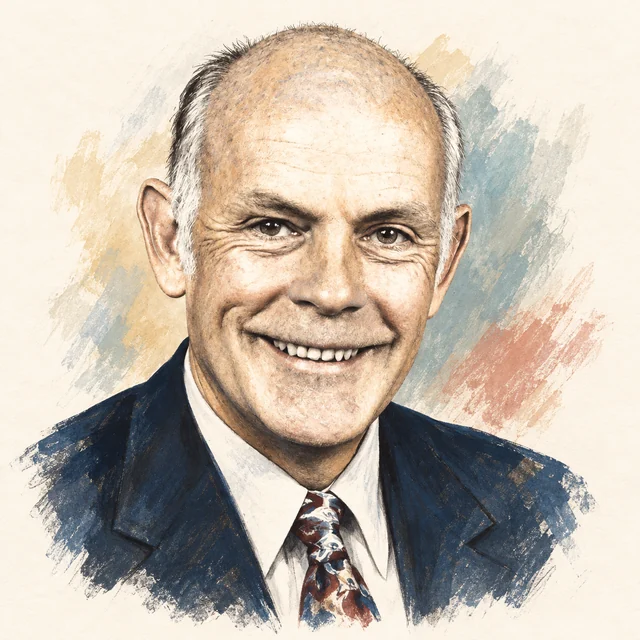
The prize, pictured

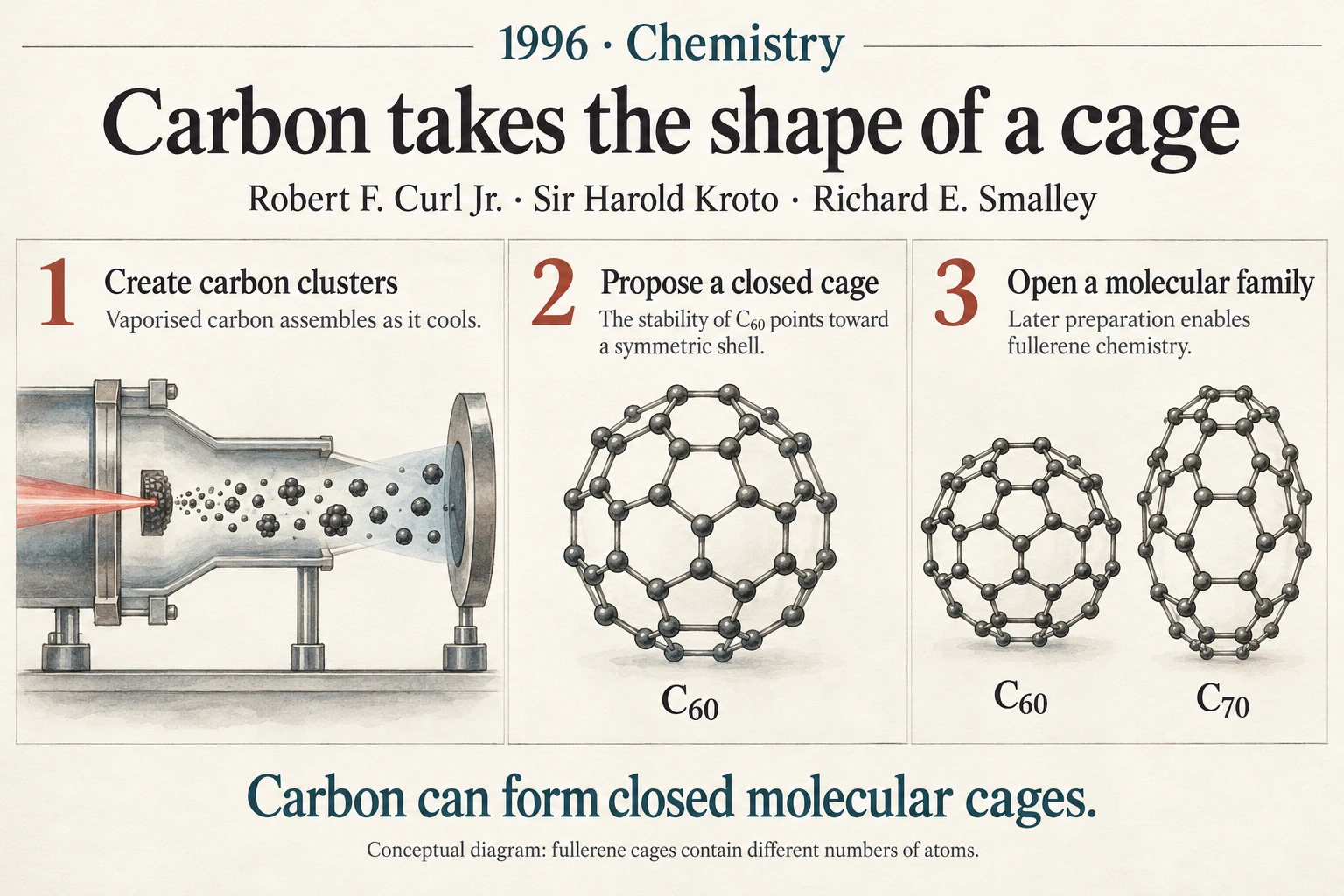
Infographic explaining Carbon takes the shape of a cage
Original AI-generated infographic. A conceptual overview; the explanations and sources below provide context.
Read the poster text

Carbon can form closed molecular cages.

  1. Create carbon clusters

    Vaporised carbon assembles as it cools.

  2. Propose a closed cage

    The stability of C60 points toward a symmetric shell.

  3. Open a molecular family

    Later preparation enables fullerene chemistry.

Conceptual diagram: fullerene cages contain different numbers of atoms.

01 · The discovery

The idea, in everyday language

Carbon can form radically different structures, including diamond and graphite. In 1985, a Rice collaboration brought Kroto’s interest in carbon chains in stellar environments together with Curl’s spectroscopy and Smalley’s cluster-beam apparatus. Laser pulses vaporised graphite; the carbon cooled and assembled into clusters that could be analysed by mass spectrometry.

Clusters with 60 carbon atoms were unusually abundant and stable. The researchers proposed a hollow, symmetric cage, with the pattern of a truncated icosahedron: 12 pentagons and 20 hexagons. They named it buckminsterfullerene after the architect Buckminster Fuller. Related cages contain other numbers of atoms. In 1990, Krätschmer and Huffman produced isolable quantities, enabling confirmation of the proposed structure and systematic study of its chemistry.

Why it matters

Fullerenes expanded the known possibilities of carbon chemistry and created a field studying molecular cages, their reactions and material properties. The work connected spectroscopy, cluster experiments, geometry and astrochemistry. Its importance lies in the new structures and research they enabled; proposed electronic or medical uses require their own evidence.
02 · The people

Who brought the idea to life?

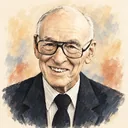
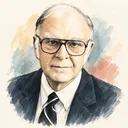
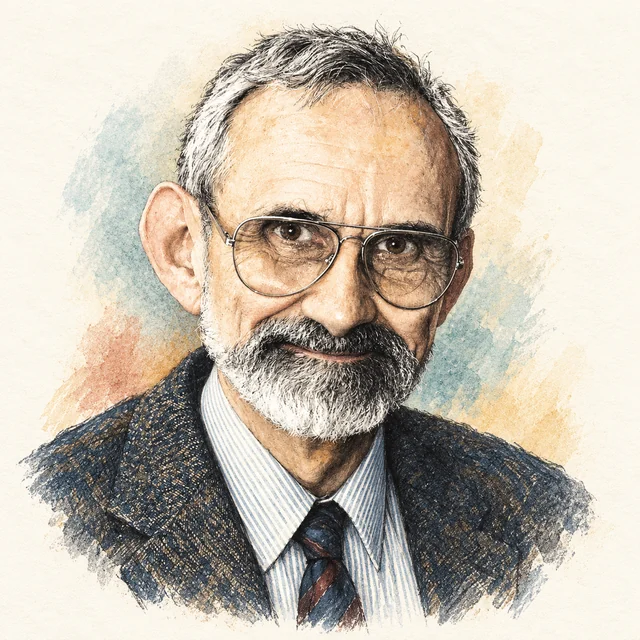
Illustrated portrait of Robert F. Curl Jr.

Robert F. Curl Jr.

Prize share · 1/3

Curl helped initiate and interpret the 1985 Rice experiments that revealed unusually stable clusters of 60 carbon atoms. His spectroscopic experience and collaboration with Kroto and Smalley contributed to proposing a closed cage rather than a long chain. The discovery of fullerenes was collaborative, including graduate researchers James Heath and Sean O’Brien; the three laureates received equal shares.

Read the biography ↗
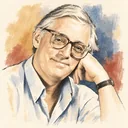
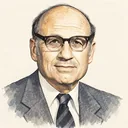
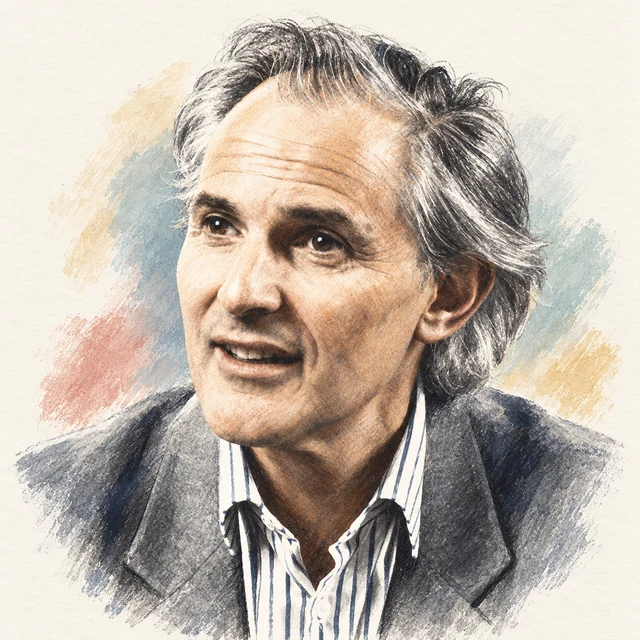
Illustrated portrait of Sir Harold Kroto

Sir Harold Kroto

Prize share · 1/3

Kroto brought the astrophysical motivation and carbon-chain expertise to the 1985 collaboration with Curl and Smalley. When stable C60 clusters appeared, the researchers proposed a highly symmetric closed carbon cage. The discovery changed their original question: carbon could assemble into molecular shells as well as chains. Bulk production by other researchers in 1990 later allowed the proposed cage structure to be confirmed.

Read the biography ↗
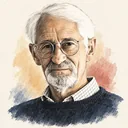
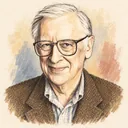
Illustrated portrait of Richard E. Smalley

Richard E. Smalley

Prize share · 1/3

Smalley’s laser-supersonic cluster-beam apparatus provided the experimental setting for the 1985 discovery with Curl and Kroto. Carbon clusters containing 60 and 70 atoms appeared, with the remarkable stability of C60 suggesting a closed shell. He helped develop and test the cage interpretation. The resulting fullerene family opened new possibilities in molecular and materials chemistry, rather than proving every proposed application.

Read the biography ↗

03 · Years in the making

The path here

  1. 1985

    The Rice experiments reveal stable C60 clusters and propose the buckminsterfullerene cage.

  2. 1990

    Krätschmer and Huffman prepare isolable fullerenes, enabling structural confirmation and chemistry.

  3. 1996

    Curl, Kroto and Smalley share the Chemistry Prize equally.

04 · Read further

From the original sources

Original explanations by Curionode, based on the official records below. Biographical details and affiliations refer to the award year.

  1. Official announcement nobelprize.org

More in Chemistry

Browse this subject ↗