A life in context
The person behind the prize
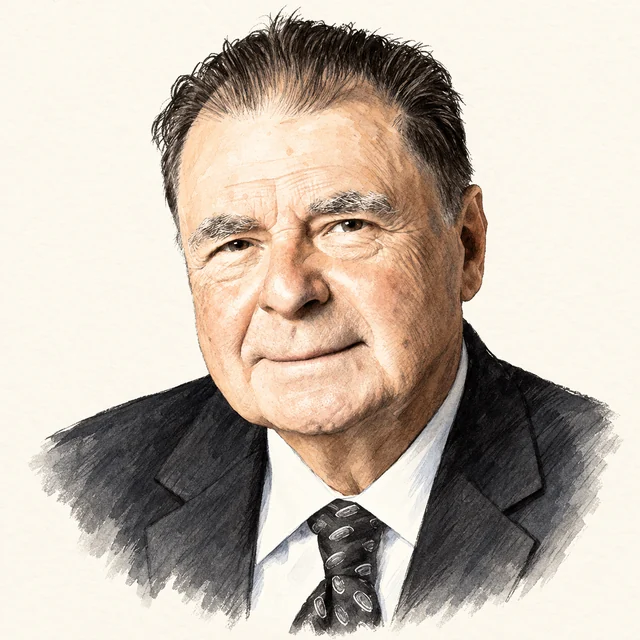
Heck earned his chemistry doctorate at the University of California, Los Angeles in 1954. He worked in industrial research before joining the University of Delaware. Industry’s interest in palladium chemistry helped motivate his experiments on building organic molecules. Work published in 1968, followed by further development, established reactions that became widely used tools of synthesis.
The contribution
Heck developed palladium-catalysed ways of connecting carbon-containing fragments, notably reactions involving an alkene. His approach helped chemists construct carbon–carbon bonds selectively instead of relying only on highly reactive reagents. The Heck reaction became useful in making pharmaceuticals and other complex products, although each target still requires suitable reactants, conditions and purification.
The idea in plain language
Many useful molecules have a skeleton of carbon atoms. Building a complicated one often means joining smaller fragments at chosen positions while leaving other features intact. A reaction that attacks everything indiscriminately can destroy the structure you are trying to make. Heck, Negishi and Suzuki developed powerful ways to form carbon–carbon bonds with the help of palladium catalysts.
Read the full award story ↗