c.curionodeThe Nobel Archive

1902 · Literature

Turn historical scholarship into powerful prose

Mommsen combined legal and documentary research with vivid interpretation. A History of Rome made the Roman past accessible as an argument and a narrative, rather than a list of dates.

Historical writingRoman historyEvidence and interpretation
1902Literature

Visual guide

The prize, pictured

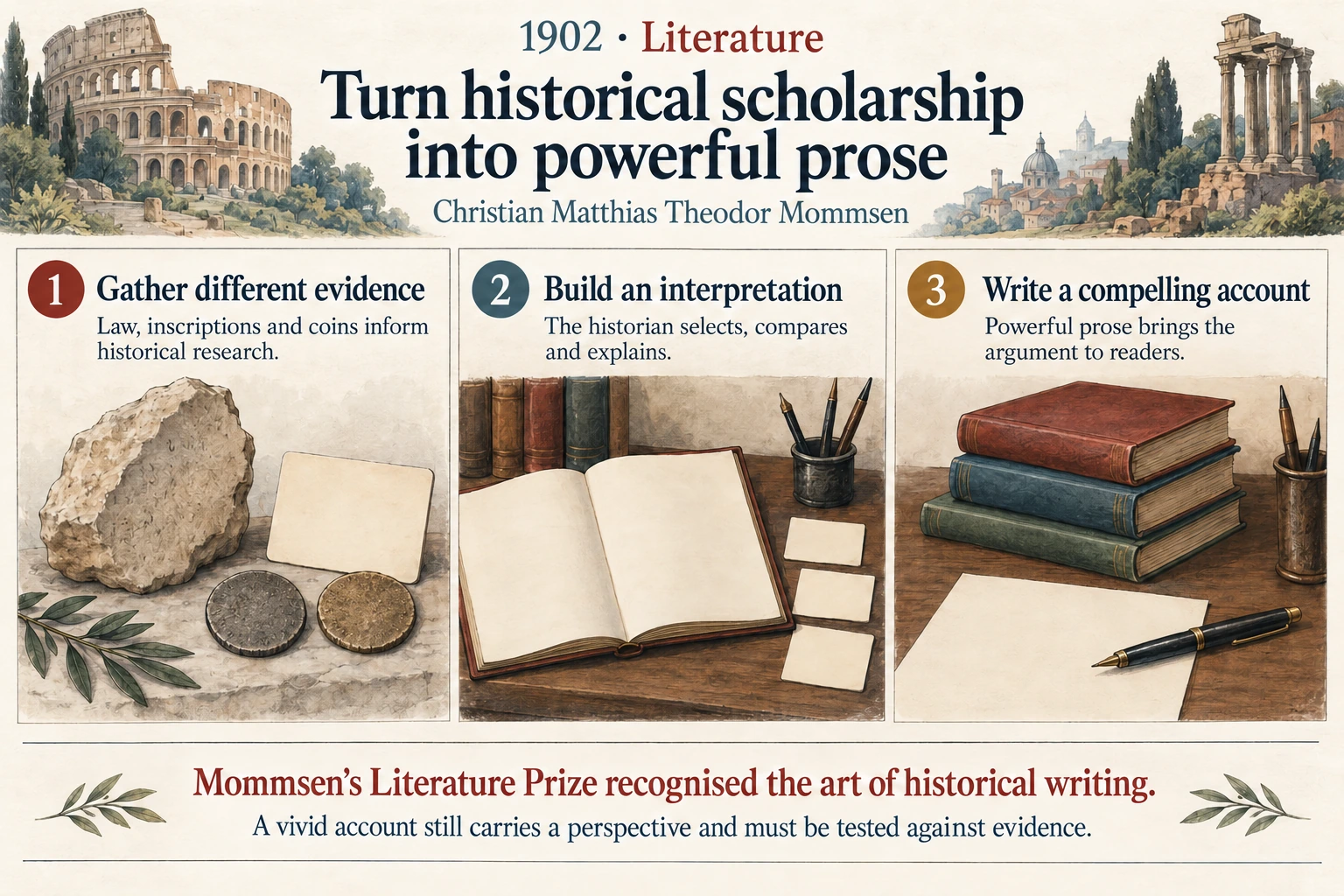
Infographic explaining Turn historical scholarship into powerful prose
Original AI-generated infographic. A conceptual overview; the explanations and sources below provide context.
Read the poster text

Mommsen’s Literature Prize recognised the art of historical writing.

  1. Gather different evidence

    Law, inscriptions and coins inform historical research.

  2. Build an interpretation

    The historian selects, compares and explains.

  3. Write a compelling account

    Powerful prose brings the argument to readers.

A vivid account still carries a perspective and must be tested against evidence.

01 · The contribution

The idea, in everyday language

Research on law, inscriptions, coins and institutions supplied a broad evidential base. Large collaborative projects organised material that could be compared and used by other scholars. Such evidence did not speak for itself: choices about questions, emphasis and explanation remained necessary.

Mommsen gave his history an energetic style and strong judgments about political actors. The 1902 Literature Prize recognised the art of historical writing, especially A History of Rome. Its first three volumes treated the Republic; the later imperial-provinces volume did not complete the planned general history of the Empire.

Why it matters

The award illustrates a broad conception of literature that includes historical exposition. Mommsen’s scholarship and organisation of evidence influenced classical studies, while his prose showed how a historical argument could engage a wide readership.
02 · The people

Who brought the idea to life?

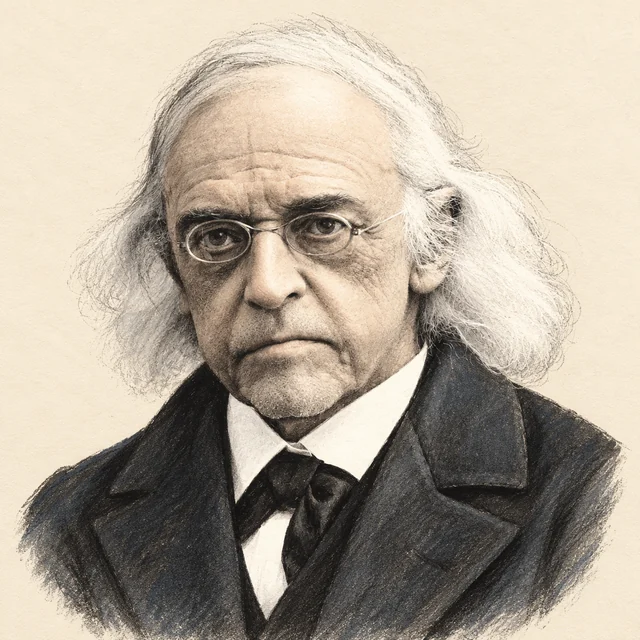
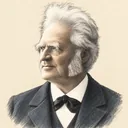
Illustrated portrait of Christian Matthias Theodor Mommsen

Christian Matthias Theodor Mommsen

Prize share · 1

Mommsen combined broad research on Rome with powerful historical prose. The Literature Prize singled out A History of Rome, while its vivid judgments and political perspective remain subjects for critical reading.

Read the biography ↗

03 · Years in the making

The path here

  1. 1817

    Mommsen is born at Garding.

  2. 1843

    He completes his studies at Kiel.

  3. 1853

    The Latin inscription corpus becomes an academy project.

  4. 1854–1855

    The first three volumes of A History of Rome appear.

  5. 1858

    He takes a Berlin chair in ancient history.

  6. 1863

    The first Latin inscription corpus volume is published.

  7. 1885

    His imperial-provinces volume appears.

  8. 1902

    He receives the full Literature Prize.

  9. 1903

    He dies at Charlottenburg.

04 · Read further

From the original sources

Original explanations by Curionode, based on the official records below. Biographical details and affiliations refer to the award year.

  1. Official award summary nobelprize.org
  2. Award ceremony speech nobelprize.org
  3. BBAW: origins of the Latin inscription corpus altewelt.bbaw.de
  4. BBAW archive: Mommsen’s biographical catalog record archiv.bbaw.de

More in Literature

Browse this subject ↗