c.curionodeThe Nobel Archive

1903 · Physics

Discover radiation that does not need prior illumination

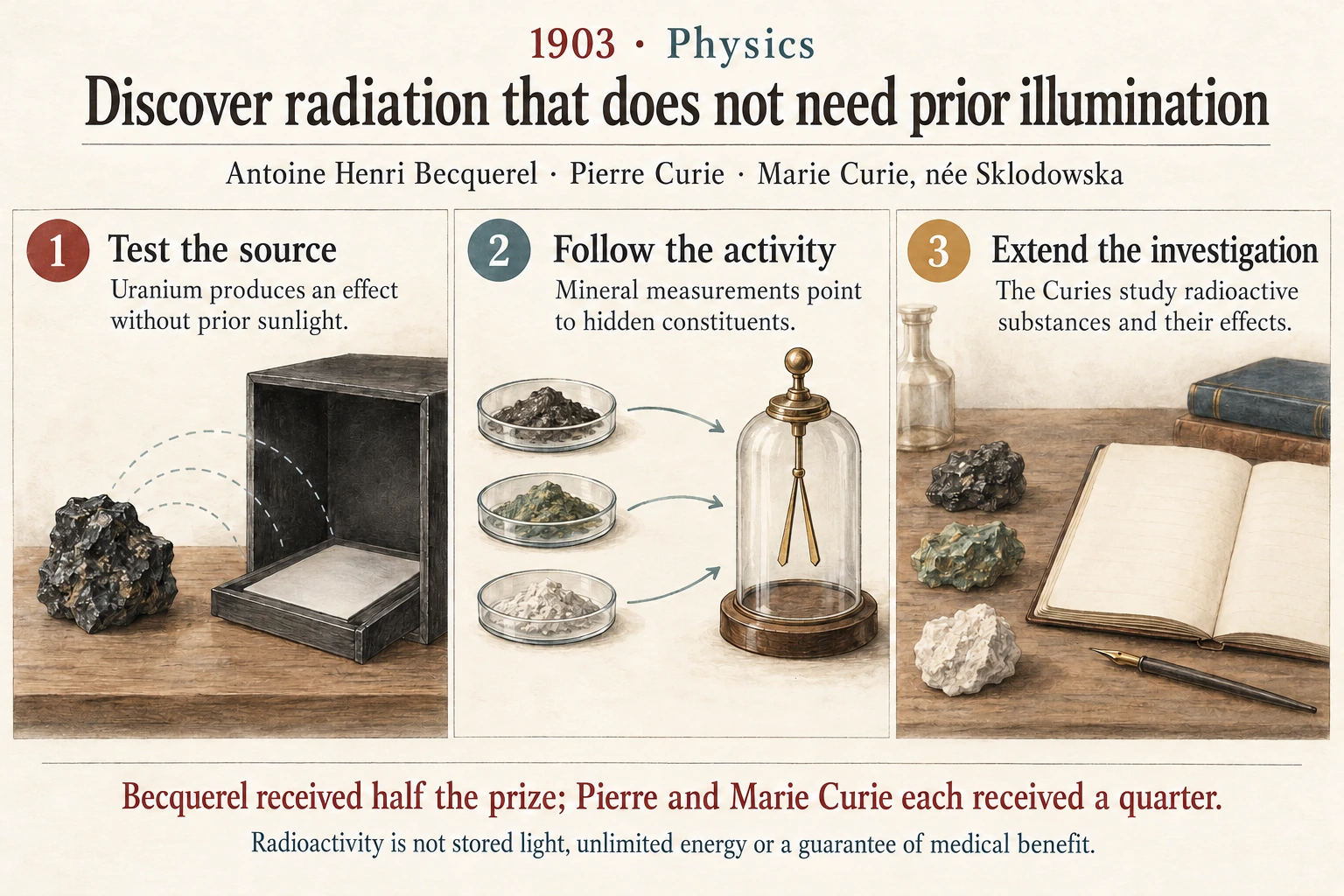
Becquerel found spontaneous radiation from uranium. Marie and Pierre Curie extended the investigation, using activity as a clue to hidden constituents of minerals and studying the radiation those substances produced.

RadioactivityMeasurementShared contributions
1903Physics

Visual guide

The prize, pictured

Infographic explaining Discover radiation that does not need prior illumination
Original AI-generated infographic. A conceptual overview; the explanations and sources below provide context.
Read the poster text

Becquerel received half the prize; Pierre and Marie Curie each received a quarter.

  1. Test the source

    Uranium produces an effect without prior sunlight.

  2. Follow the activity

    Mineral measurements point to hidden constituents.

  3. Extend the investigation

    The Curies study radioactive substances and their effects.

Radioactivity is not stored light, unlimited energy or a guarantee of medical benefit.

01 · The discovery

The idea, in everyday language

The first question concerned phosphorescence: could substances that glow after illumination also emit penetrating rays? Becquerel found that uranium affected photographic material even without prior sunlight. The effect required an explanation beyond stored visible light and became evidence for spontaneous radioactivity.

Marie’s measurements showed that some minerals were more active than their uranium content could explain. Marie and Pierre followed activity through chemical separation and announced polonium and radium in 1898; Gustave Bémont also participated in the radium announcement. Electrical measurements connected material samples with radiation effects. The 1903 award gave Becquerel one half and each Curie one quarter.

Why it matters

The work opened a way to investigate matter through spontaneous radiation and to identify highly active constituents. Later research developed the nuclear explanation, new measurement methods and applications, while also revealing serious exposure hazards.
02 · The people

Who brought the idea to life?

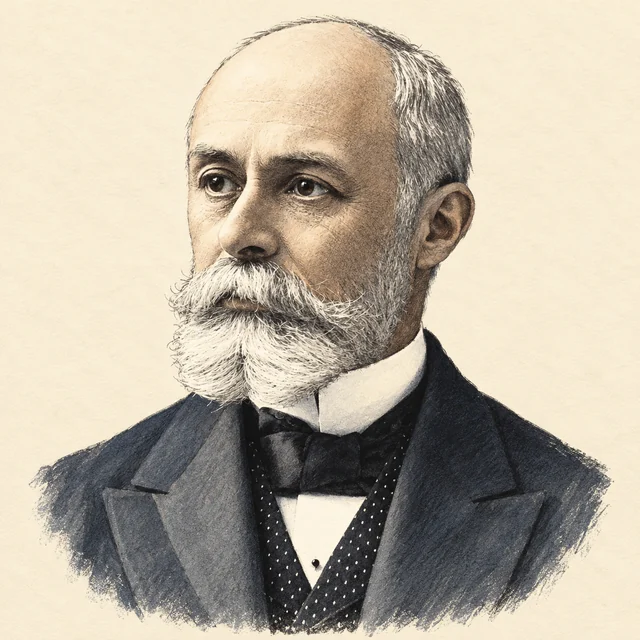
Illustrated portrait of Antoine Henri Becquerel

Antoine Henri Becquerel

Prize share · 1/2

Becquerel discovered spontaneous radiation associated with uranium. He received one half of the Physics Prize; Pierre and Marie Curie each received one quarter for further research on the radiation phenomena.

Read the biography ↗
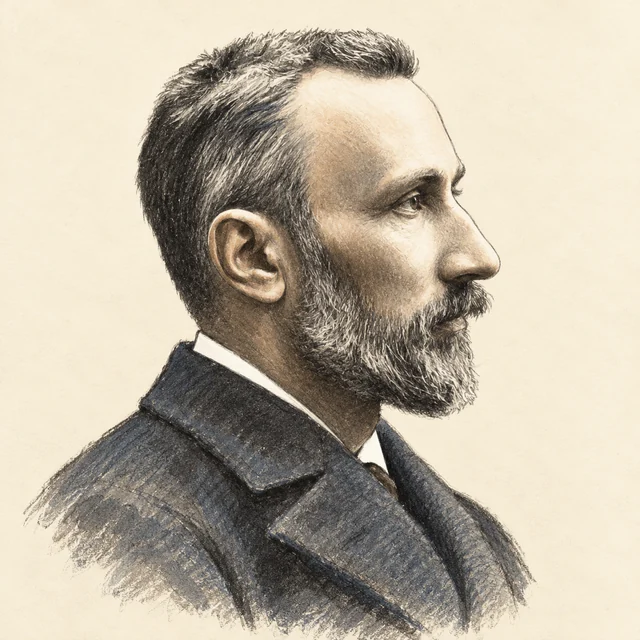
Illustrated portrait of Pierre Curie

Pierre Curie

Prize share · 1/4

Pierre Curie shared the investigation of radioactive substances with Marie Curie, contributing precision measurement and studies of their physical properties. His quarter share recognised radiation research, distinct from Marie’s later Chemistry Prize.

Read the biography ↗
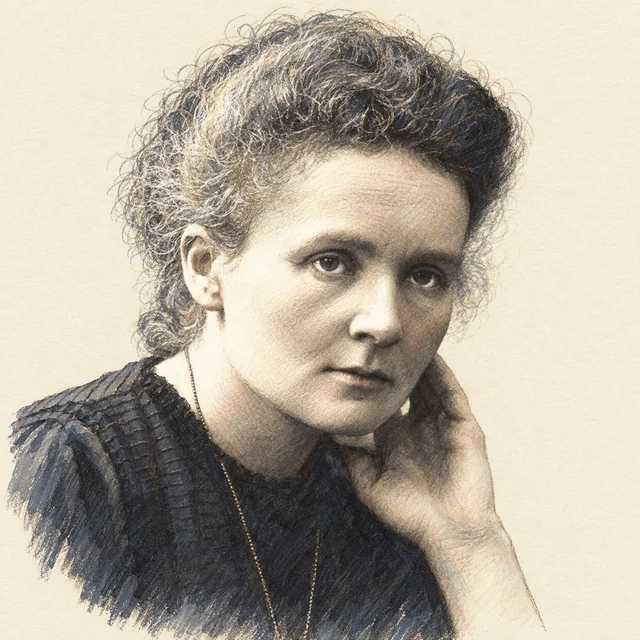
Illustrated portrait of Marie Curie

Marie Curie

Prize share · 1/4

Marie Curie initiated the investigation of unusually active minerals and shared the research on radioactive substances with Pierre. She received one quarter of the 1903 Physics Prize, alongside Pierre’s quarter and Becquerel’s half.

Read the biography ↗

03 · Years in the making

The path here

  1. 1852

    Becquerel is born in Paris.

  2. 1880

    Pierre and Jacques Curie discover piezoelectricity.

  3. 1896

    Becquerel discovers spontaneous uranium radiation.

  4. 1898

    Marie and Pierre announce polonium; the radium announcement also involves Bémont.

  5. 1903

    Becquerel receives half the Physics Prize, each Curie a quarter.

  6. 1906

    Pierre Curie dies in Paris.

  7. 1911

    Marie receives the separate Chemistry Prize.

04 · Read further

From the original sources

Original explanations by Curionode, based on the official records below. Biographical details and affiliations refer to the award year.

  1. Official award summary nobelprize.org
  2. Award ceremony speech nobelprize.org
  3. Curie and Joliot-Curie Association: the 1903 Physics Prize curie-joliotcurie.fr
  4. Curie and Joliot-Curie Association: Pierre Curie biography curie-joliotcurie.fr