01 · The discovery
The idea, in everyday language
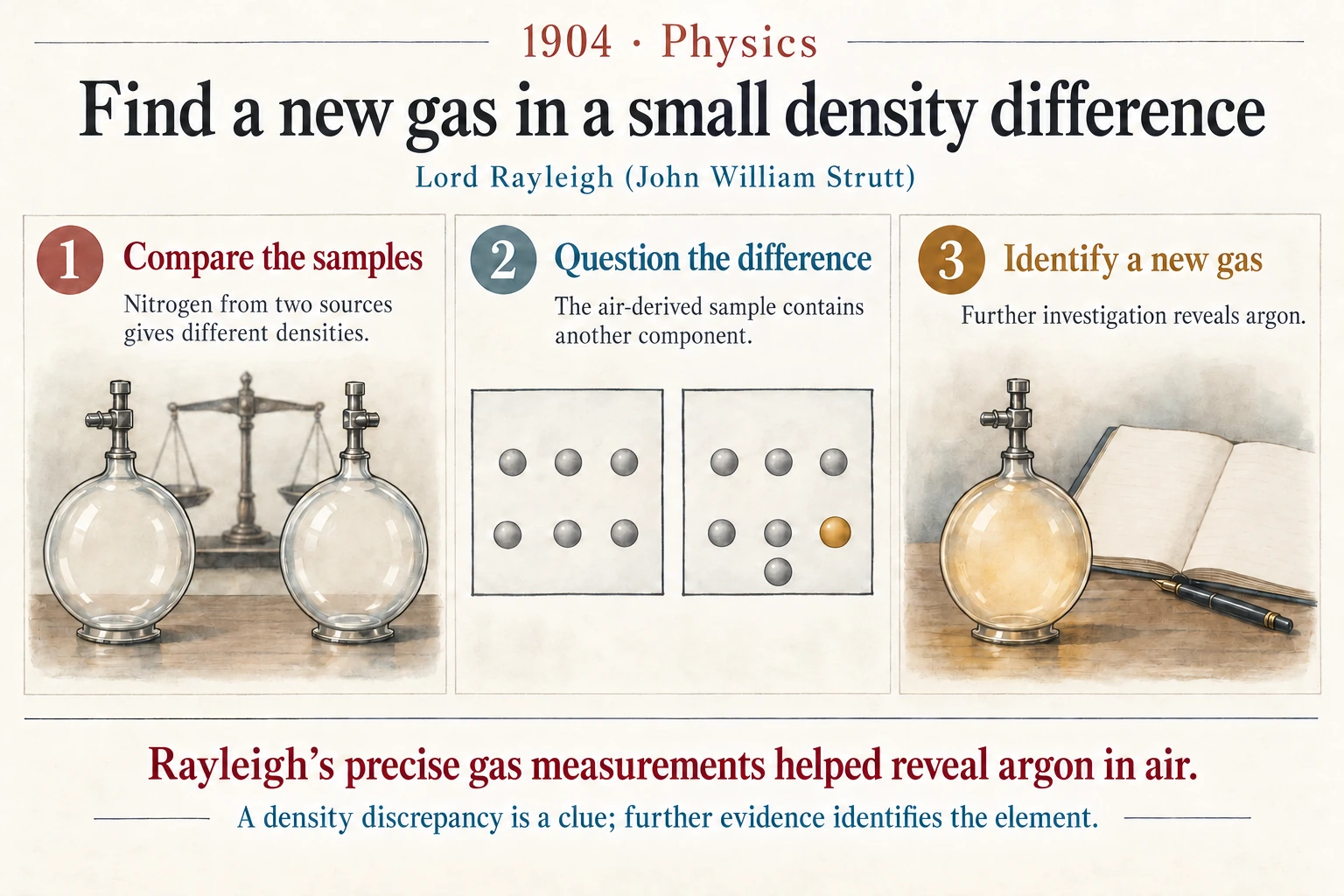
Comparing gas densities requires attention to the amount of gas, temperature, pressure and impurities. Rayleigh’s repeated measurements produced a small difference between samples that were expected to be the same substance. Checking the sources and preparation methods made the discrepancy a durable clue rather than an isolated reading.
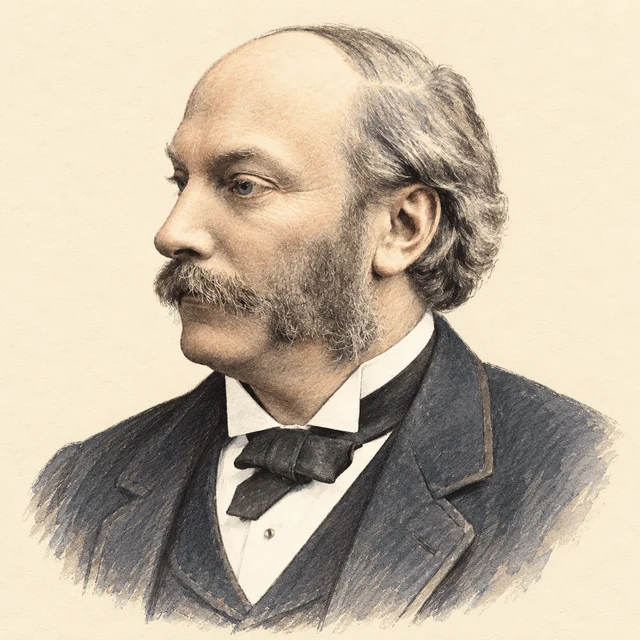
The sample from air was a mixture: alongside nitrogen it retained a heavier, previously unidentified gas. Rayleigh and Ramsay used complementary physical and chemical investigations to identify argon in 1894 and examine its properties. Rayleigh’s full Physics Prize recognised the gas-density studies and the discovery connected with them; Ramsay’s chemical work received a separate full prize.
Why it matters
The work exposed a previously unknown constituent of air and demonstrated the power of precise comparisons. An awkward measurement could lead to a new element when investigators tested assumptions about what their samples contained.