c.curionodeThe Nobel Archive

1910 · Literature

Give a short narrative a concentrated human drama

Heyse’s long literary career ranged across poetry, drama, novels, novellas and translation. His short fiction showed how a limited action and a memorable situation could carry psychological and emotional weight.

NovellaLiterary formTranslation
1910Literature

Visual guide

The prize, pictured

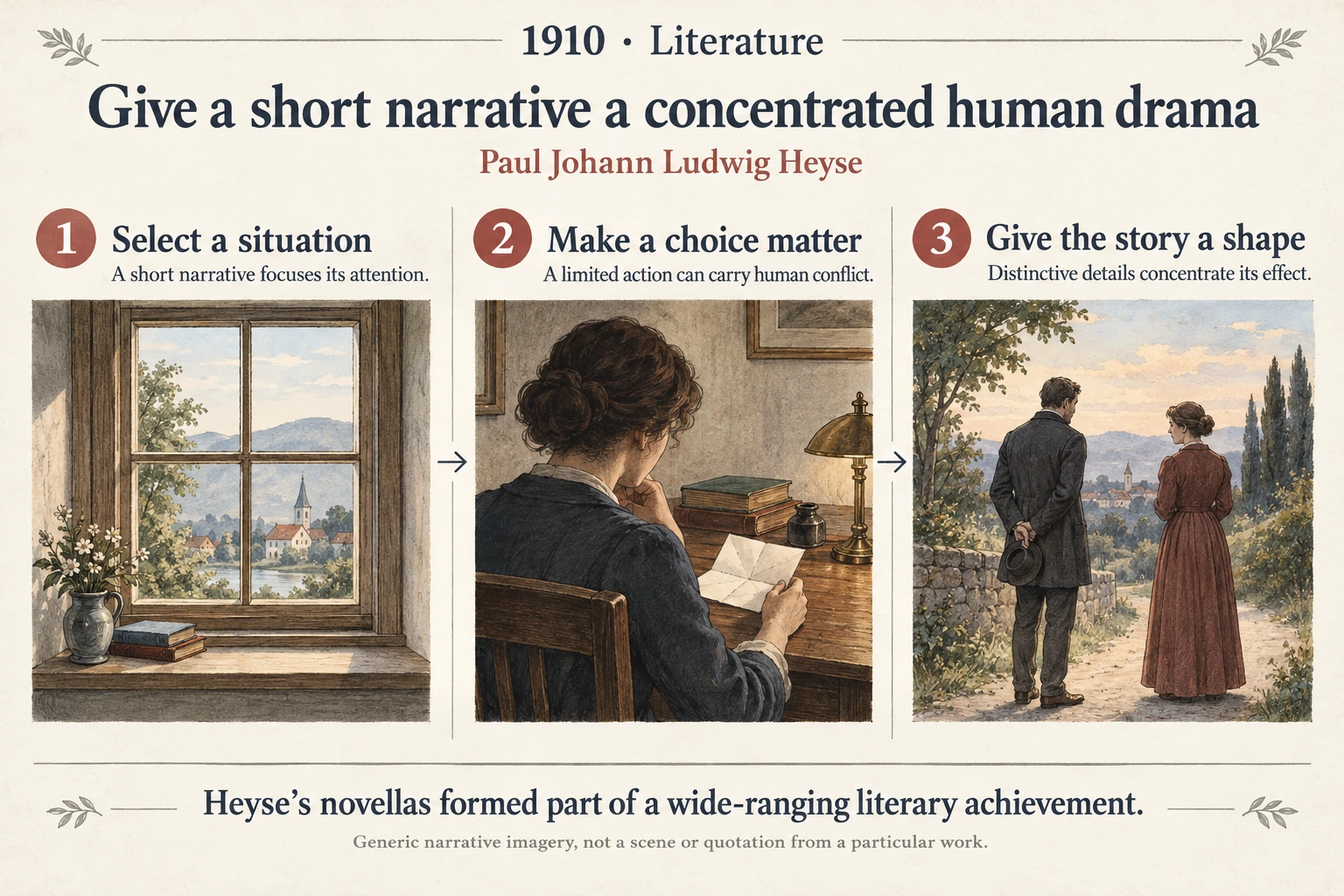
Infographic explaining Give a short narrative a concentrated human drama
Original AI-generated infographic. A conceptual overview; the explanations and sources below provide context.
Read the poster text

Heyse’s novellas formed part of a wide-ranging literary achievement.

  1. Select a situation

    A short narrative focuses its attention.

  2. Make a choice matter

    A limited action can carry human conflict.

  3. Give the story a shape

    Distinctive details concentrate its effect.

Generic narrative imagery, not a scene or quotation from a particular work.

01 · The contribution

The idea, in everyday language

A short narrative cannot include every event in a life. Heyse’s thinking about the novella emphasised concentrated action and a distinctive feature that gives an individual story its shape. Choices, relationships and conflicts can be made vivid through selection rather than through an exhaustive account. His Italian interests supplied settings, literary connections and translation work, alongside writing rooted in German culture.

L’Arrabbiata became a well-known early example, but the 1910 award addressed a much wider achievement. Heyse also wrote lyric and narrative poetry, plays and novels, and helped edit anthologies of German and foreign stories. The Nobel presentation praised his artistry and ideal of form from a particular historical critical perspective. His disagreement with Naturalism was part of contemporary literary debate, not a universal test of what good literature must be.

Why it matters

Heyse helped make the novella a prominent literary form and brought Italian writing and international short fiction to German readers. His career also illustrates the tension between artistic independence, court support, prize institutions and censorship.
02 · The people

Who brought the idea to life?

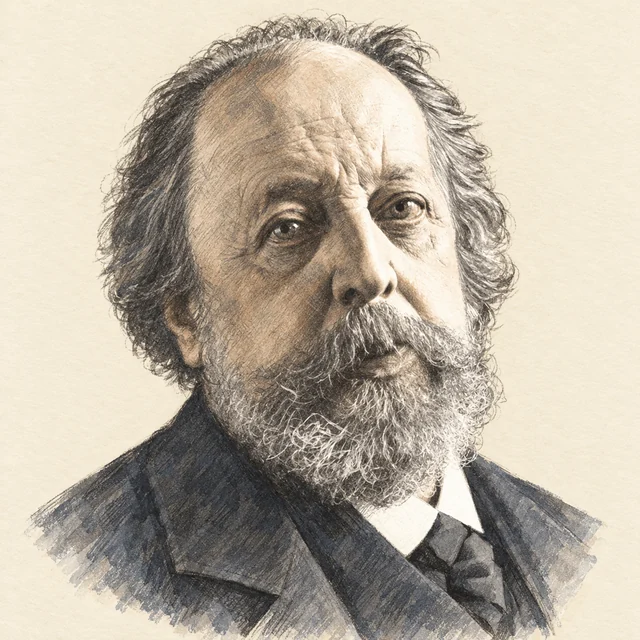
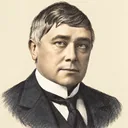
Illustrated portrait of Paul Johann Ludwig Heyse

Paul Johann Ludwig Heyse

Prize share · 1

Heyse received the full Literature Prize for a long career spanning poetry, drama, novels and short stories. The concentrated form and psychological interest of his novellas were especially important within that wider achievement.

Read the biography ↗

03 · Years in the making

The path here

  1. 1852

    Heyse completes a doctorate on Provençal poetry.

  2. 1854

    He moves to Munich with royal literary support.

  3. 1871

    He begins helping edit short-fiction anthologies.

  4. 1891

    He resigns from the Schiller Prize jury after interference.

  5. 1901

    Maria von Magdala encounters censorship.

  6. 1910

    He receives the full Literature Prize.

  7. 1914

    He dies in Munich.

04 · Read further

From the original sources

Original explanations by Curionode, based on the official records below. Biographical details and affiliations refer to the award year.

  1. Official award summary nobelprize.org
  2. Award ceremony speech nobelprize.org
  3. Bavarian State Library: Heyse’s literary career literaturportal-bayern.de
  4. German Historical Museum: Heyse’s life and literary independence dhm.de

More in Literature

Browse this subject ↗