01 · The contribution
The idea, in everyday language
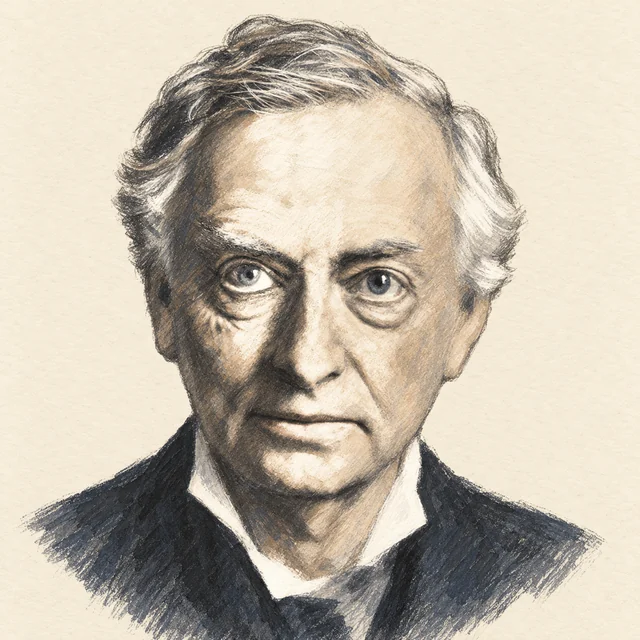
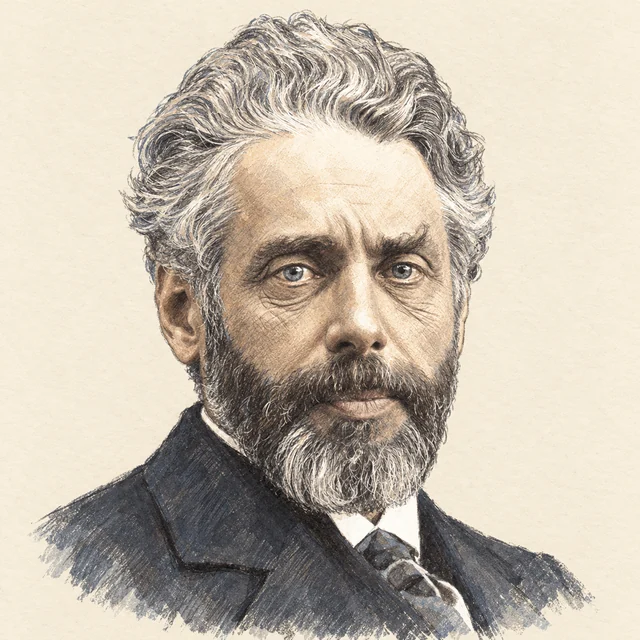
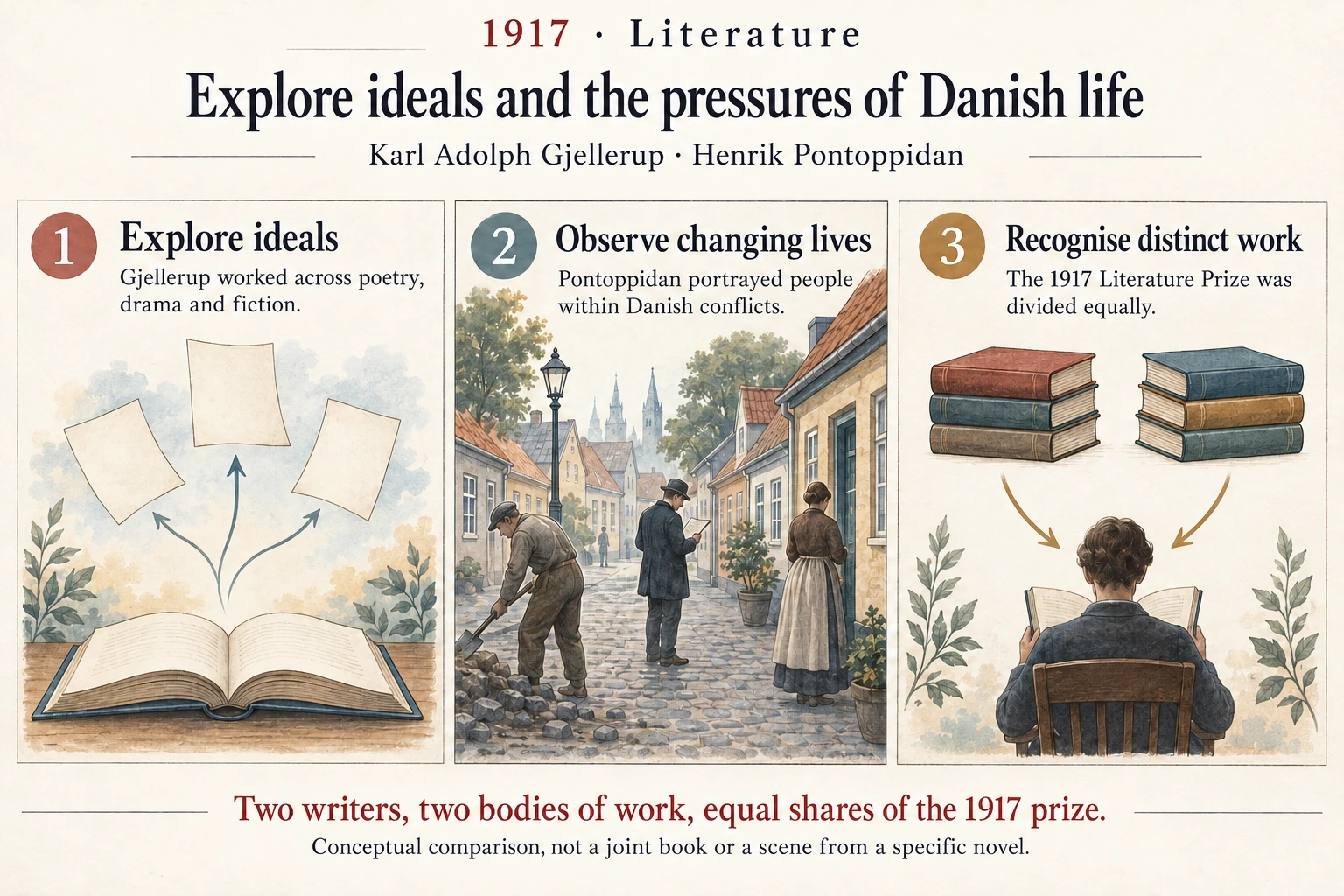
Gjellerup’s writing moved through changing philosophical commitments and literary forms. Poetry and drama, alongside novels such as Minna and the later Der Pilger Kamanita, made different contributions to his work. The award recognised his varied writing and ideal aspirations, rather than naming one book as its sole object. His later interest in Buddhist ideas should not be projected onto every earlier work.
Pontoppidan’s fiction examined people whose ambitions and beliefs collided with family, religion, class and politics. Det forjættede land, Lykke-Per and De dødes rige built extended pictures of Danish life through individual minds and fates. His half of the prize had its own reason: the portrayal of contemporary Denmark. The equal division was recognition of two writers, not a collaboration, one shared literary method or proof that both held the same ideals.
Why it matters
The shared award makes visible more than one literary route: philosophical and ideal exploration, and sustained attention to social experience and psychology. Both depend on artistic form, voice and character. These descriptions explain the recognition without requiring agreement with every belief expressed by an author or a fictional character.