01 · The contribution
The idea, in everyday language
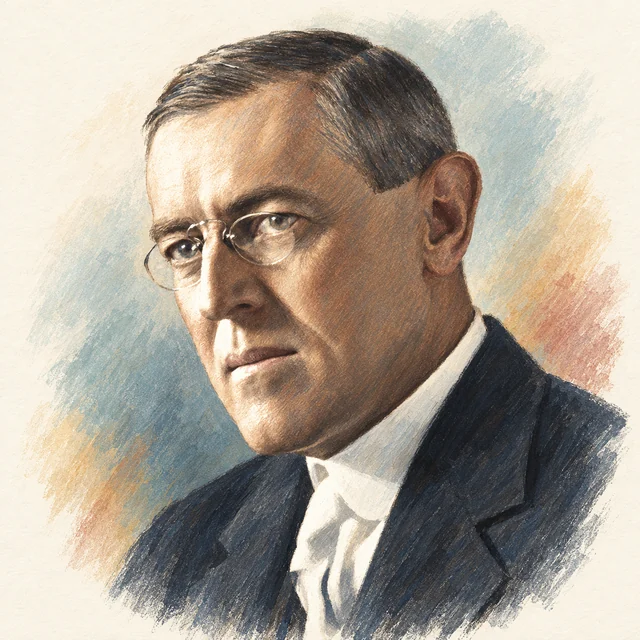
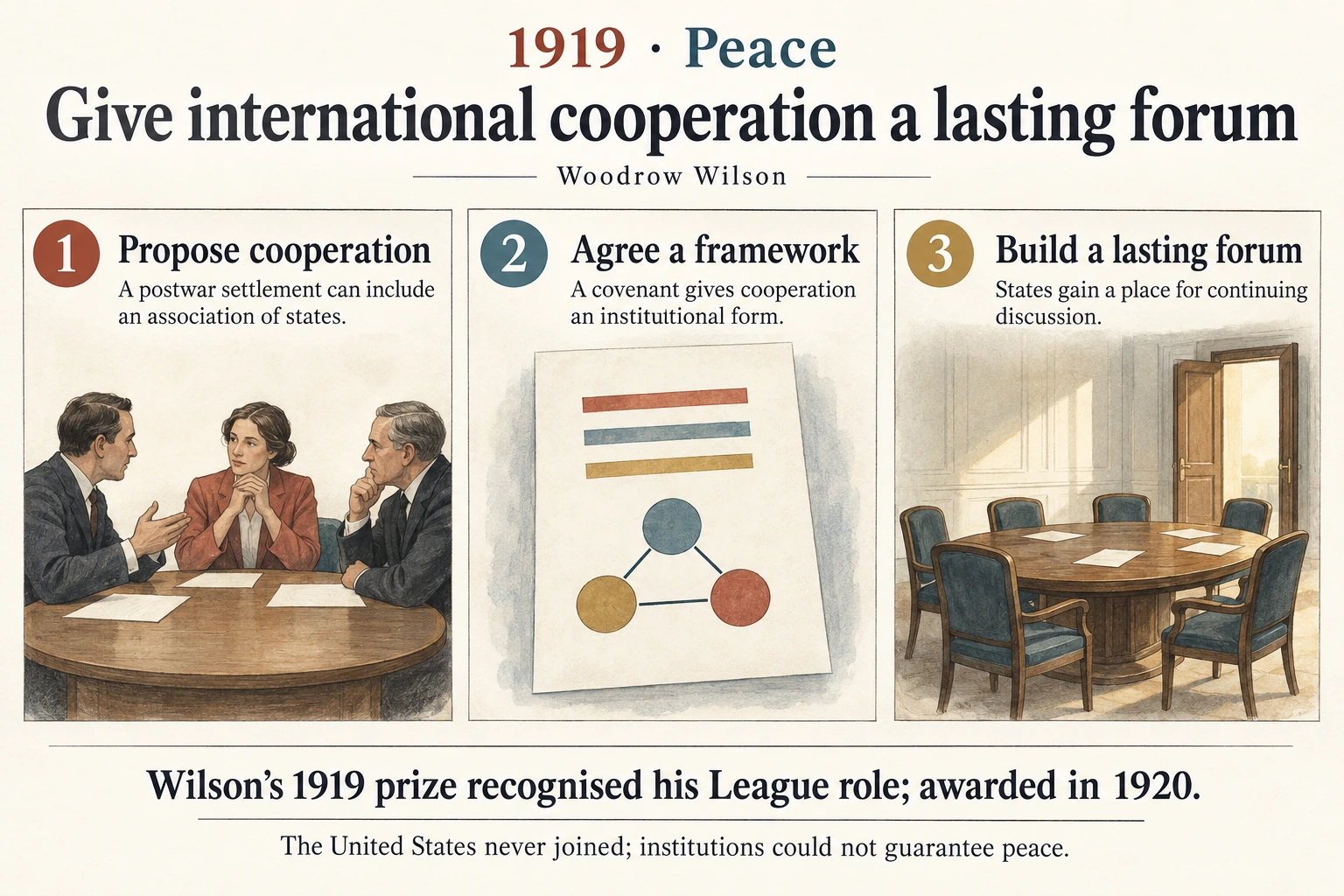
A peace settlement can end a particular war without providing a durable way to handle later disputes. In the Fourteen Points of 8 January 1918, Wilson proposed an association of nations. During the 1919 negotiations he worked to make the League of Nations part of the postwar settlement. Other governments and political figures also shaped the institution and its covenant.
The League offered a continuing forum for international cooperation and the handling of disputes. It depended on decisions and participation by states, however, and the United States Senate refused to approve the settlement needed for American membership. The reserved 1919 Peace Prize was awarded to Wilson in 1920. The public ceremony page contains selected remarks by Anders Johnsen Buen, president of the Norwegian Parliament, on 10 December 1920. Wilson and the 1920 laureate Léon Bourgeois were absent; their diplomatic representatives received the awards. This is not a full presentation speech.
Why it matters
Wilson helped place a standing international organisation at the centre of debate about the postwar order. The League became an important experiment in continuing cooperation among states. Its limitations, including the absence of the United States, show why designing an institution and securing effective political commitments are different tasks.