01 · The discovery
The idea, in everyday language
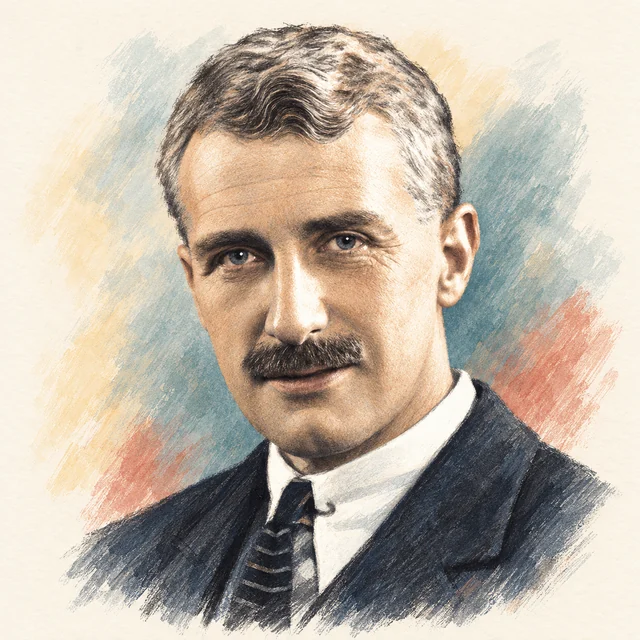
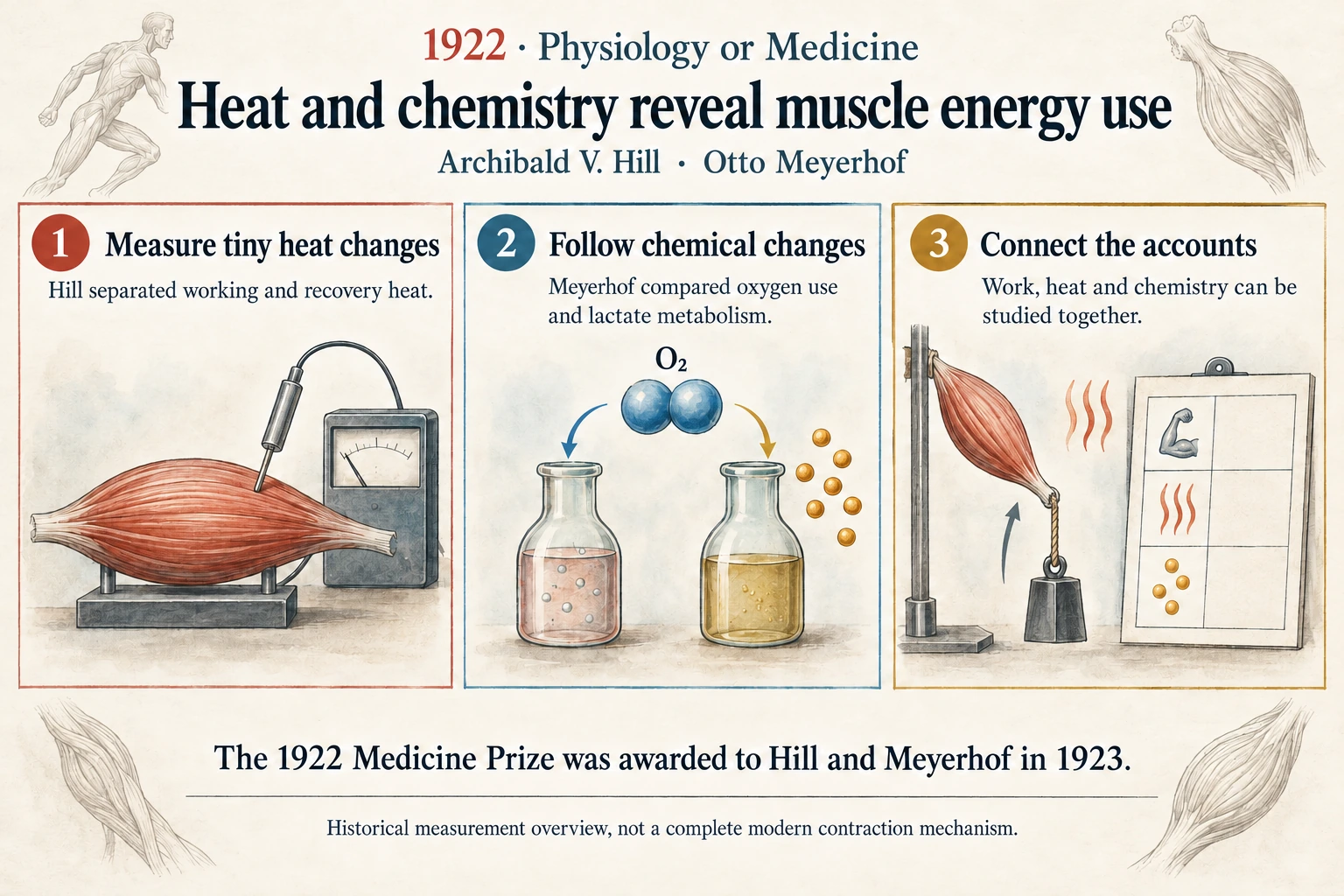
A contracting muscle does work and gives off heat, but how are these changes connected with chemistry? Hill used sensitive thermal measurements on isolated frog muscle to distinguish heat associated with the working phase from later recovery heat. In those experiments the initial process could occur without a fresh oxygen supply, whereas the recovery heat depended on oxygen.
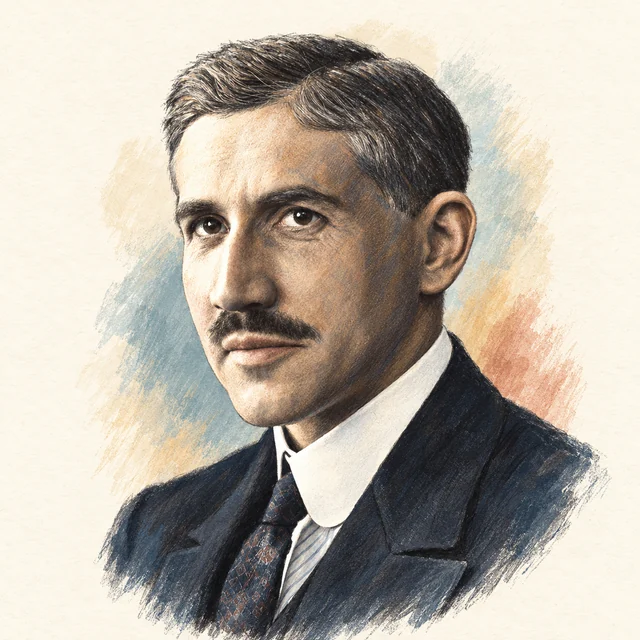
Meyerhof approached the same problem through chemical measurements. He compared oxygen consumption with changes in carbohydrates and lactic acid during work and recovery. Together the two approaches made muscle activity an energy-accounting problem that could be tested by experiment. Their results were complementary, rather than two identical discoveries. The prize retained the year 1922 even though the decision and presentation came in 1923.
Why it matters
The work joined precise physical measurement to physiological chemistry. It helped researchers investigate how chemical transformations support activity and recovery, while encouraging later studies of enzymes and energy transfer in living cells.