01 · The discovery
The idea, in everyday language
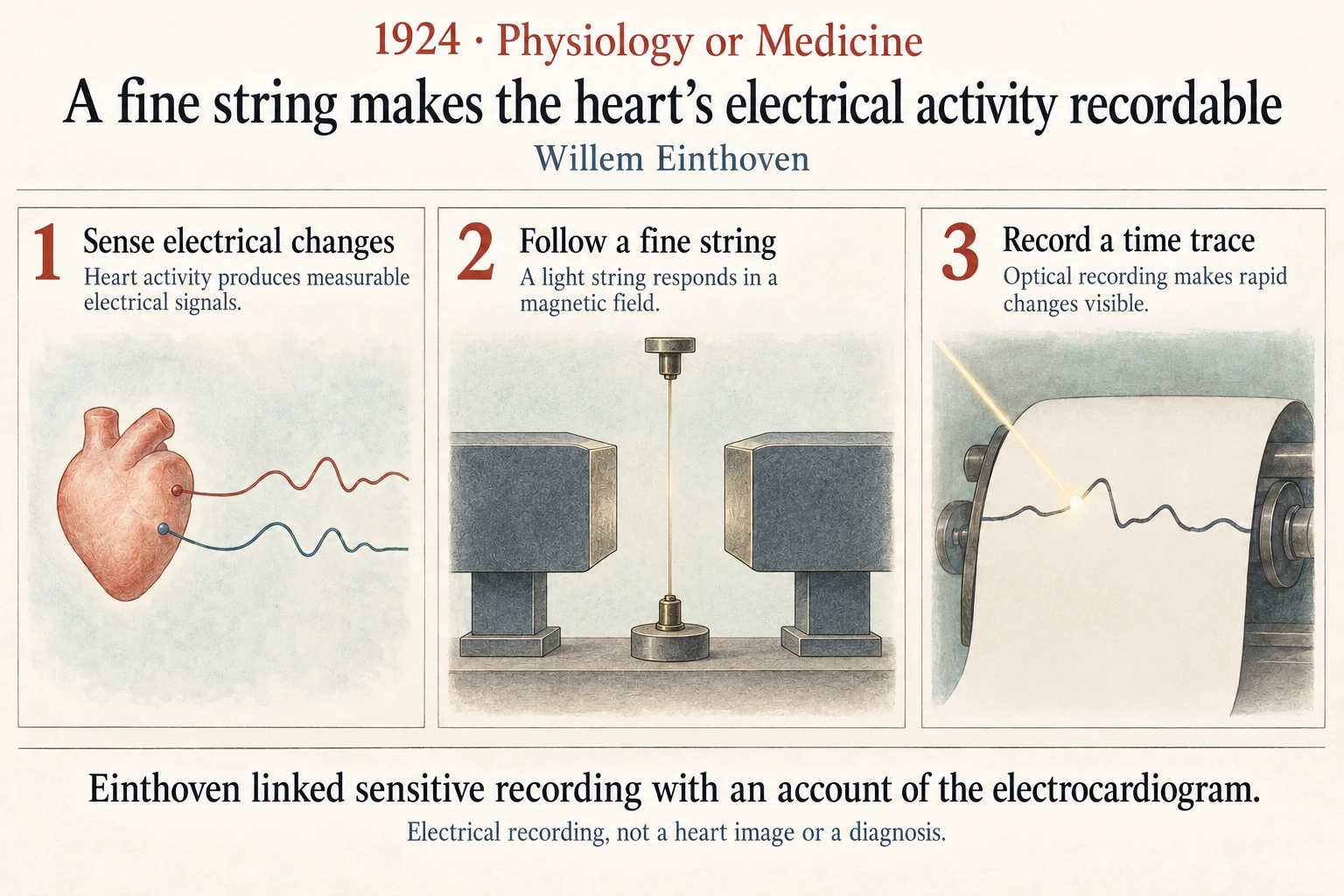
The heartbeat is accompanied by electrical changes that can be measured at the body surface. Earlier researchers had recorded them, but slow or distorted instrument responses made the traces hard to interpret. Einthoven studied these limitations and developed a more responsive instrument.
In the string galvanometer, a very light conducting string lies in a magnetic field. Small currents deflect it, and optical recording makes the motion visible on a trace. Einthoven connected the resulting patterns with the sequence of heart activity and developed standard ways to compare recordings. The award concerned the mechanism of the electrocardiogram, including interpretation, rather than merely the construction of a sensitive meter.
Why it matters
The instrument and its interpretation helped move electrical recording from a difficult laboratory observation towards a useful method of physiological and clinical investigation. Earlier investigators and later collaborators, including Thomas Lewis, also contributed to understanding the traces.