c.curionodeThe Nobel Archive

1926 · Chemistry

Spinning solutions reveal molecular properties

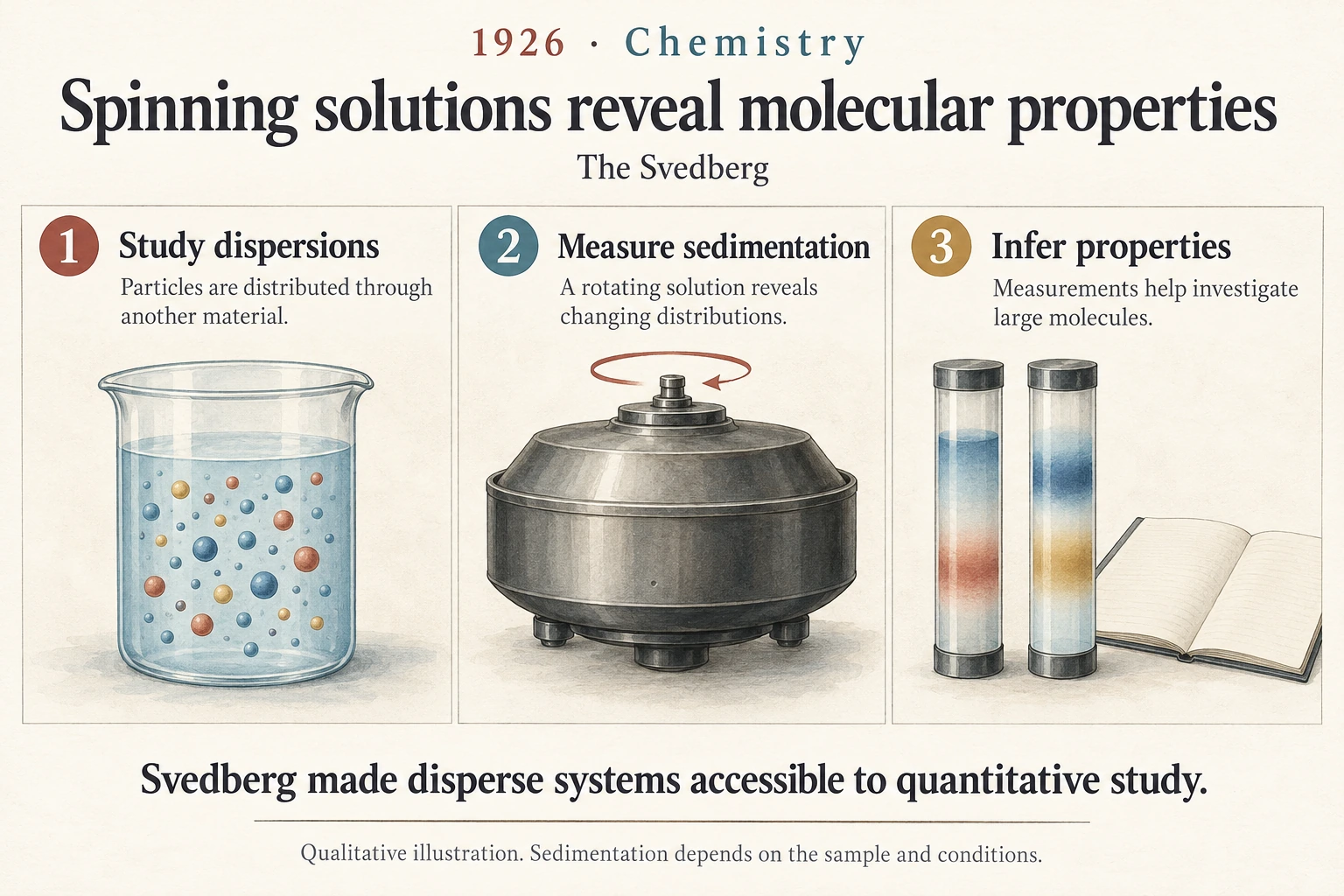
Svedberg studied disperse systems and developed the ultracentrifuge. Measuring how material redistributes in a rotating solution opened a new route to investigating large molecules.

Disperse systemsUltracentrifugeProtein measurements
1926Chemistry

Visual guide

The prize, pictured

Infographic explaining Spinning solutions reveal molecular properties
Original AI-generated infographic. A conceptual overview; the explanations and sources below provide context.
Read the poster text

Svedberg made disperse systems accessible to quantitative study.

  1. Study dispersions

    Particles are distributed through another material.

  2. Measure sedimentation

    A rotating solution reveals changing distributions.

  3. Infer properties

    Measurements help investigate large molecules.

Qualitative illustration. Sedimentation depends on the sample and conditions.

01 · The discovery

The idea, in everyday language

In a disperse system, small particles or large molecules are distributed through another material. They may be too small to study by ordinary visual inspection. Svedberg investigated their diffusion, motion and concentration fluctuations, connecting colloid chemistry with the molecular picture of matter.

His ultracentrifuge made the redistribution of material in a rotating solution observable and measurable. Concentration profiles and their changes could help infer molecular properties, including masses, under specified conditions. Protein studies helped distinguish relatively uniform preparations from mixtures. The 1926 Chemistry Prize recognised his broader work on disperse systems, alongside Perrin’s separate full Physics Prize.

Why it matters

The ultracentrifuge became a powerful analytical instrument for colloids and biological macromolecules. It helped make proteins objects of quantitative physical chemistry rather than substances described only by their biological source.
02 · The people

Who brought the idea to life?

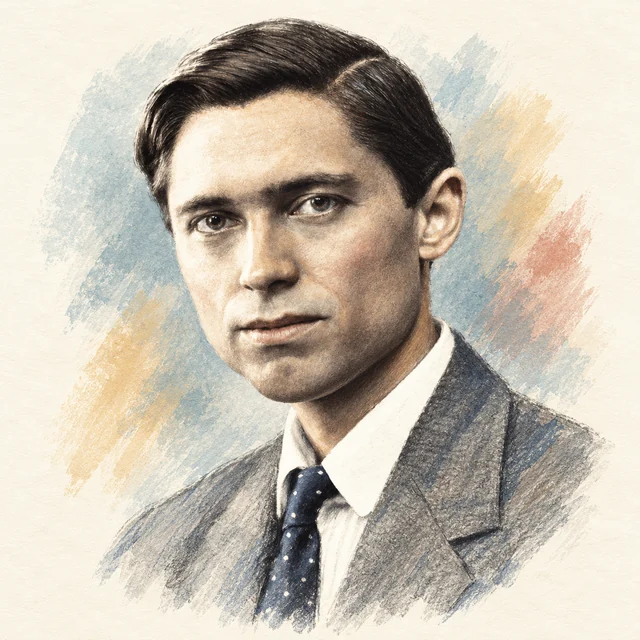
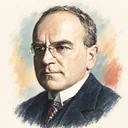
Illustrated portrait of The Svedberg

The Svedberg

Prize share · 1

Svedberg received the full Chemistry Prize for work on disperse systems. His colloid studies and ultracentrifuge made sedimentation and molecular properties accessible to quantitative investigation.

Read the biography ↗

03 · Years in the making

The path here

  1. 1908

    Svedberg completes his doctorate at Uppsala.

  2. 1912

    He becomes professor of physical chemistry at Uppsala.

  3. 1925

    He develops the ultracentrifuge for investigating material in rotating solutions.

  4. 1926

    The Chemistry Prize recognises his work on disperse systems.

04 · Read further

From the original sources

Original explanations by Curionode, based on the official records below. Biographical details and affiliations refer to the award year.

  1. Official award summary nobelprize.org
  2. Award ceremony speech nobelprize.org

More in Chemistry

Browse this subject ↗