c.curionodeThe Nobel Archive

1929 · Chemistry

Fermentation depends on cooperating components

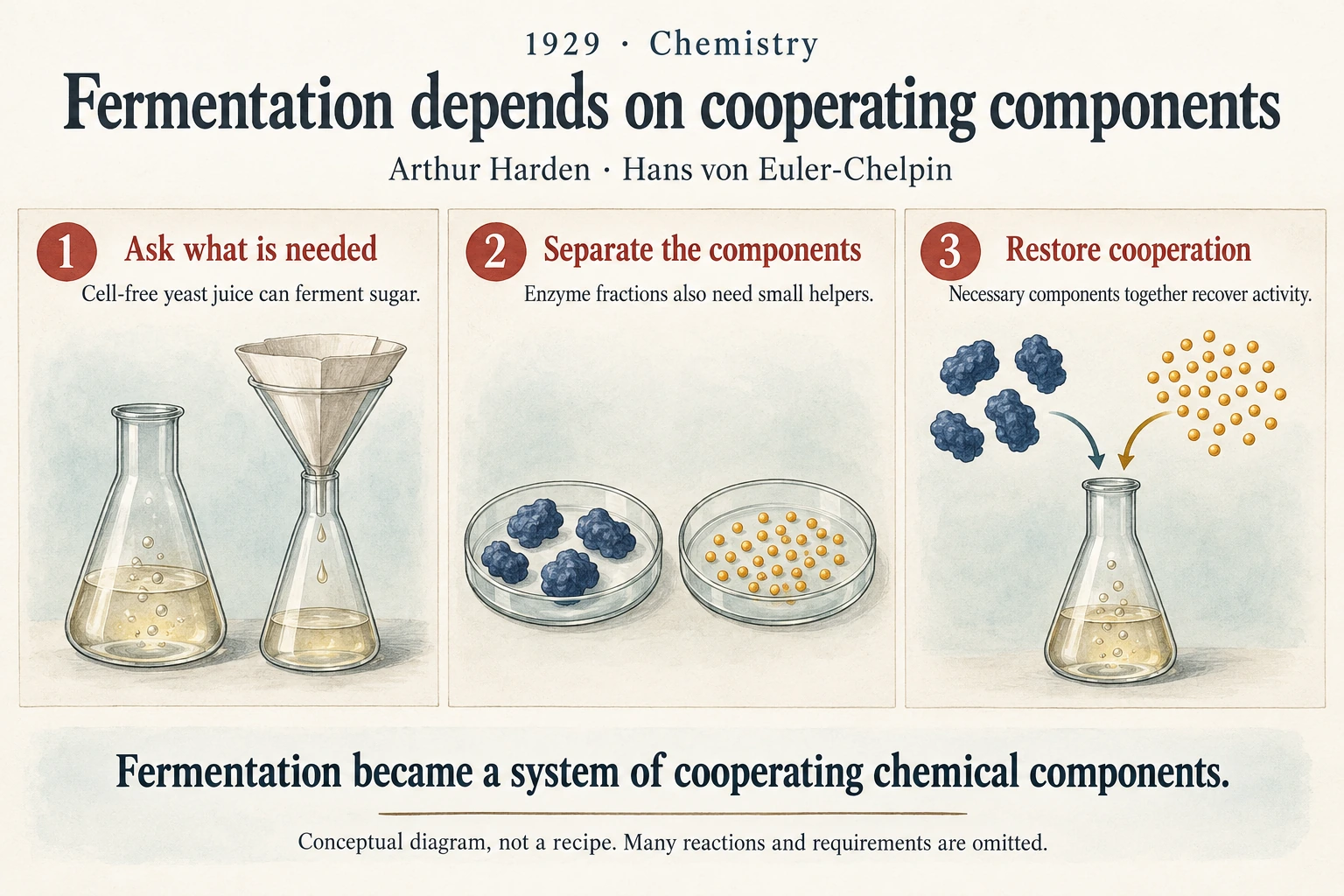
Harden and von Euler-Chelpin studied how cell-free yeast preparations ferment sugar. Enzyme components, small helpers and phosphate chemistry made the process open to chemical investigation.

FermentationEnzymesCofactorsPhosphate
1929Chemistry

Visual guide

The prize, pictured

Infographic explaining Fermentation depends on cooperating components
Original AI-generated infographic. A conceptual overview; the explanations and sources below provide context.
Read the poster text

Fermentation became a system of cooperating chemical components.

  1. Ask what is needed

    Cell-free yeast juice can ferment sugar.

  2. Separate the components

    Enzyme fractions also need small helpers.

  3. Restore cooperation

    Necessary components together recover activity.

Conceptual diagram, not a recipe. Many reactions and requirements are omitted.

01 · The discovery

The idea, in everyday language

Buchner had shown that fermentation could occur without intact yeast cells. Harden and his collaborators, including William John Young, asked what the active juice required. Separating it into fractions could remove activity from each fraction; bringing necessary components together restored it. Their 1906 coferment paper described a small, heat-stable activating component.

Harden also investigated phosphate and sugar-phosphate compounds. Von Euler-Chelpin and his group developed studies of phosphorylation and concentrated cozymase to examine its properties. Together these lines of work helped replace a single undivided account of fermentation with a system of cooperating chemical steps and components.

Why it matters

The research strengthened biochemistry’s ability to separate, test and reconnect the parts of metabolism. It linked fermentation chemistry with questions about carbohydrate transformations in living organisms. A complete modern pathway and the later structural understanding of coenzymes were not all established by these two laureates in 1929.
02 · The people

Who brought the idea to life?

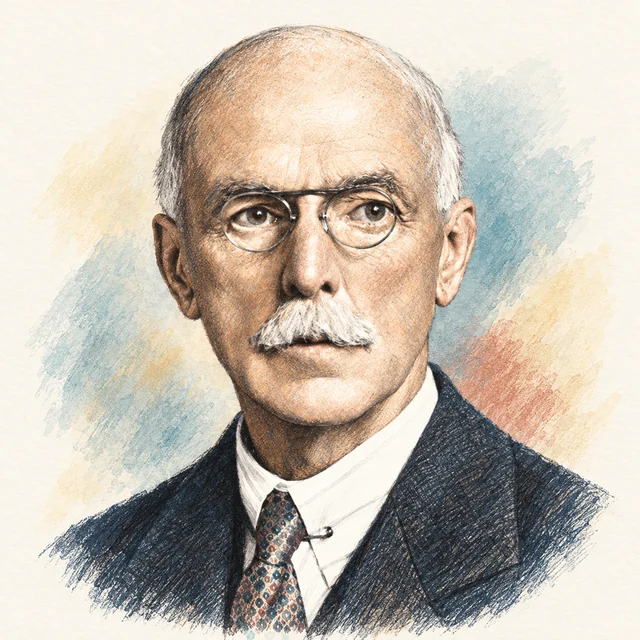
Illustrated portrait of Arthur Harden

Arthur Harden

Prize share · 1/2

Harden received half the Chemistry Prize for investigations of sugar fermentation and fermentative enzymes. Work with Young distinguished necessary components of cell-free fermentation and established the importance of phosphate.

Read the biography ↗
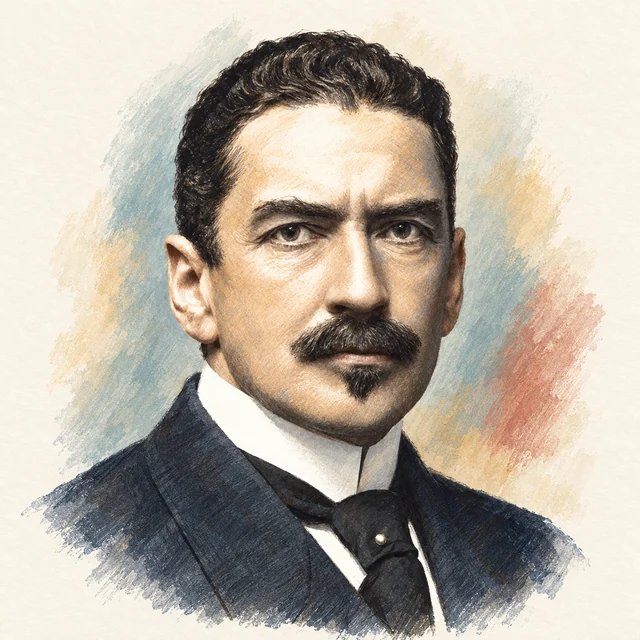
Illustrated portrait of Hans von Euler-Chelpin

Hans von Euler-Chelpin

Prize share · 1/2

Von Euler-Chelpin received half the Chemistry Prize for investigations of fermentation and fermentative enzymes. His group developed chemical studies of phosphorylation and cozymase that deepened understanding of the cooperating reaction system.

Read the biography ↗

03 · Years in the making

The path here

  1. 1906

    Harden and Young publish their study of the coferment of yeast juice.

  2. 1920s

    Von Euler-Chelpin and colleagues develop studies of enzymes and cozymase.

  3. 1929

    Harden and von Euler-Chelpin share the Chemistry Prize equally.

04 · Read further

From the original sources

Original explanations by Curionode, based on the official records below. Biographical details and affiliations refer to the award year.

  1. Official award summary nobelprize.org
  2. Award ceremony speech nobelprize.org
  3. 1906 paper: Harden and Young doi.org
  4. Chemistry Prize history: fermentation and cofactors nobelprize.org

More in Chemistry

Browse this subject ↗