c.curionodeThe Nobel Archive

1931 · Literature

Giving regional memory an inventive poetic voice

Karlfeldt made the language, seasons and traditions of Dalarna part of a richly crafted poetry. His 1931 Literature Prize was awarded after his death.

PoetryDalarnaFridolinPosthumous award
1931Literature

Visual guide

The prize, pictured

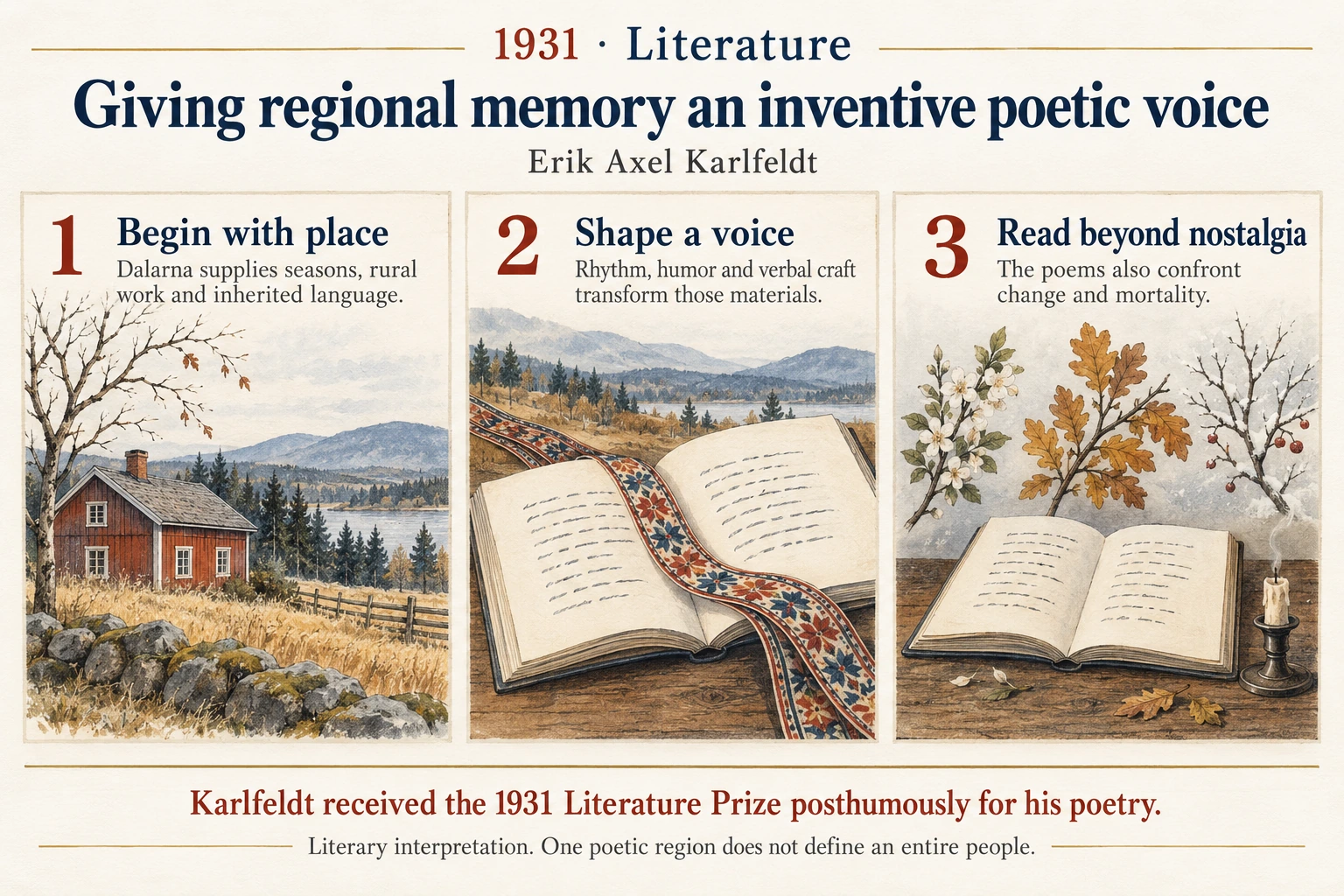
Infographic explaining Giving regional memory an inventive poetic voice
Original AI-generated infographic. A conceptual overview; the explanations and sources below provide context.
Read the poster text

Karlfeldt received the 1931 Literature Prize posthumously for his poetry.

  1. Begin with place

    Dalarna supplies seasons, rural work and inherited language.

  2. Shape a voice

    Rhythm, humor and verbal craft transform those materials.

  3. Read beyond nostalgia

    The poems also confront change and mortality.

Literary interpretation. One poetic region does not define an entire people.

01 · The contribution

The idea, in everyday language

Karlfeldt’s poems draw on rural work, seasonal change, folk song and religious language. Their local setting is a resource for verbal invention, not a claim that one region expresses an unchanging national essence. Humor, sensual life, mortality and historical disturbance complicate the landscape. Sound, rhythm and unusual combinations of words matter alongside the subjects described.

The figure Fridolin combines familiarity with rural life and the perspective of an educated speaker. Fridolins visor appeared in 1898 and Fridolins lustgård in 1901; later collections include Flora och Bellona and Hösthorn. These are crafted literary voices, rather than documentary transcripts of village life. Karlfeldt was also a Swedish Academy member and permanent secretary. He died on 8 April 1931, before the posthumous award later that year.

Why it matters

Karlfeldt’s writing gave regional experience an elaborate literary form and demonstrated the possibilities of Swedish poetic language. Its effects depend on wording and sound as well as imagery, which makes translation an act of interpretation. The award recognizes a body of poetry, rather than one discovery or a single collection.

02 · The people

Who brought the idea to life?

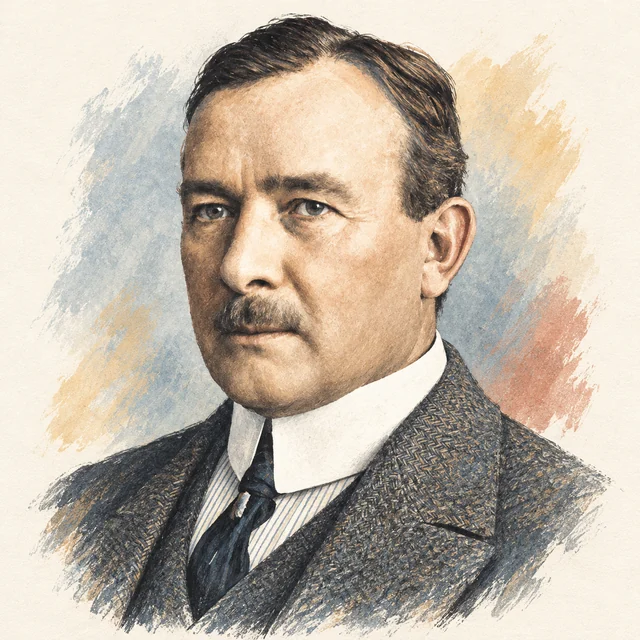
Illustrated portrait of Erik Axel Karlfeldt

Erik Axel Karlfeldt

Prize share · 1

Karlfeldt received the full Literature Prize posthumously for his poetry. Its distinctive achievement joins the language and traditions of Dalarna with a highly crafted, inventive poetic voice.

Read the biography ↗

03 · Years in the making

The path here

  1. 1895

    Karlfeldt publishes his first poetry collection.

  2. 1898–1901

    The Fridolin collections develop a distinctive poetic voice.

  3. 1931

    He dies in April and receives the Literature Prize posthumously later that year.

04 · Read further

From the original sources

Original explanations by Curionode, based on the official records below. Biographical details and affiliations refer to the award year.

  1. Official award summary nobelprize.org
  2. Award ceremony speech nobelprize.org
  3. Swedish Academy: Karlfeldt register svenskaakademien.se

More in Literature

Browse this subject ↗