c.curionodeThe Nobel Archive

1938 · Chemistry

Separate natural colours and identify active molecules

Kuhn’s school connected separation and structural analysis with carotenoid chemistry and the study of vitamins.

CarotenoidsChromatographyMolecular structureVitamins B2 and B6
1938Chemistry

Visual guide

The prize, pictured

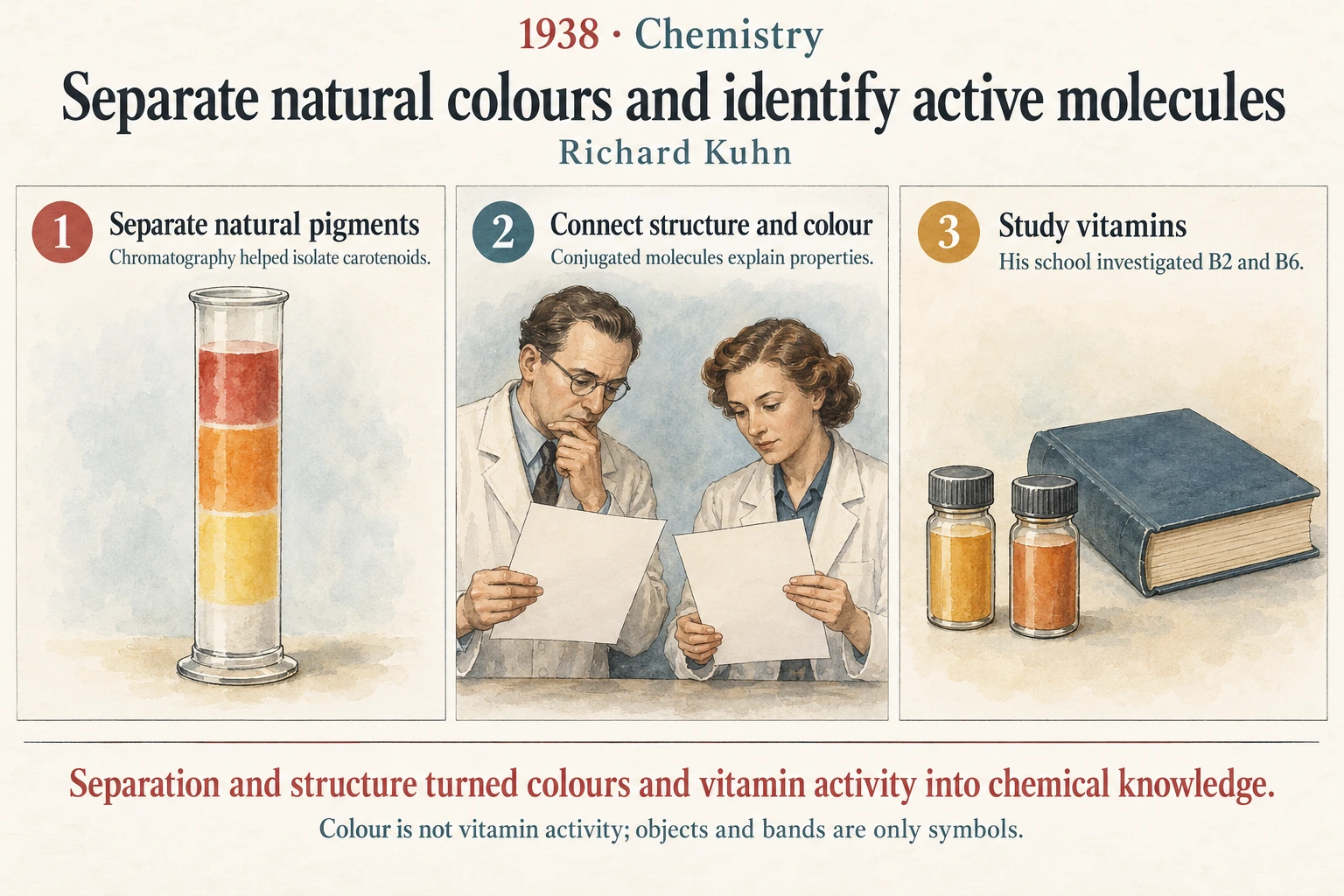
Infographic explaining Separate natural colours and identify active molecules
Original AI-generated infographic. A conceptual overview; the explanations and sources below provide context.
Read the poster text

Separation and structure turned colours and vitamin activity into chemical knowledge.

  1. Separate natural pigments

    Chromatography helped isolate carotenoids.

  2. Connect structure and colour

    Conjugated molecules explain properties.

  3. Study vitamins

    His school investigated B2 and B6.

Colour is not vitamin activity; objects and bands are only symbols.

01 · The discovery

The idea, in everyday language

A brightly coloured natural extract may contain several related compounds. Its appearance alone does not tell a chemist which molecules are present or how they are arranged. Kuhn investigated conjugated molecules and the relationship between chemical structure and physical properties. His school’s improvements to chromatographic methods helped separate carotenoids so that individual substances could be studied.

The programme established structures and distinctions among natural pigments, including another carotene isomer in 1933. It also extended into vitamins. Kuhn, Szent-Györgyi, Wagner-Jauregg and other investigators contributed to riboflavin, or B2, research; Kuhn and collaborators studied B6 as well. These were related examples of chemical identification, not evidence that all coloured compounds were vitamins or that every carotenoid had the same biological activity.

Why it matters

The work made natural-product research more precise: separation, structural analysis and synthesis could connect an observed property with a defined chemical substance. Some carotenoids can serve as vitamin A precursors, but that does not apply to every carotenoid. B2 and B6 are different vitamins, and colour alone does not establish nutritional activity.
02 · The people

Who brought the idea to life?

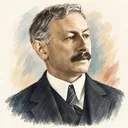
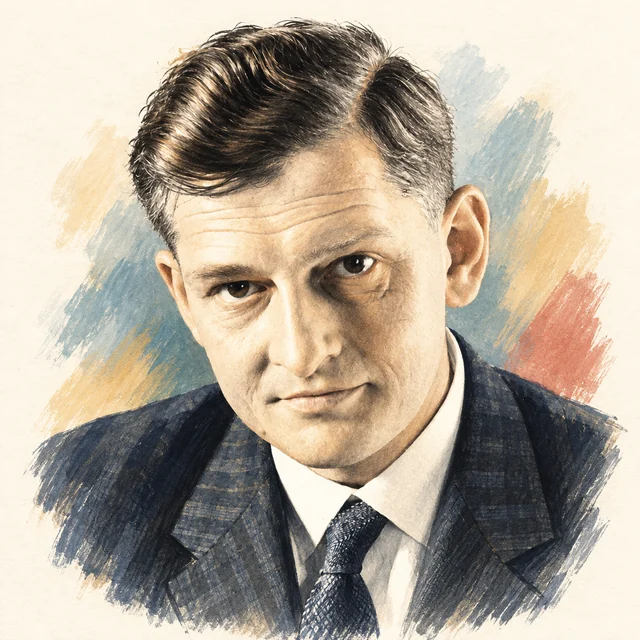
Illustrated portrait of Richard Kuhn

Richard Kuhn

Prize share · 1

Kuhn received the whole Chemistry Prize for work on carotenoids and vitamins, including separation, structural elucidation and relationships between molecular structure and properties. His collaborators and parallel researchers also contributed.

Read the biography ↗

03 · Years in the making

The path here

  1. 1922

    Kuhn completes his doctorate under Willstätter.

  2. 1926

    He begins work at ETH Zurich on conjugated molecules.

  3. 1929

    He moves to the Kaiser Wilhelm institute in Heidelberg.

  4. 1933

    His carotenoid work identifies another carotene isomer.

  5. 1937

    He becomes director of the wider institute.

  6. 1939

    The reserved 1938 Chemistry Prize is awarded to him.

  7. 1949

    He receives the medal and diploma.

04 · Read further

From the original sources

Original explanations by Curionode, based on the official records below. Biographical details and affiliations refer to the award year.

  1. Official award summary nobelprize.org
  2. Award ceremony speech nobelprize.org
  3. Institute history: Kuhn under National Socialism mr.mpg.de
  4. Official biography: Richard Kuhn nobelprize.org

More in Chemistry

Browse this subject ↗