c.curionodeThe Nobel Archive

1943 · Physics

Make tiny magnetic properties measurable

Stern developed the molecular-beam method into a powerful probe of atoms, molecules and nuclei, including the proton’s unexpected magnetic moment.

Molecular beamsProtonMagnetic momentQuantum measurement
1943Physics

Visual guide

The prize, pictured

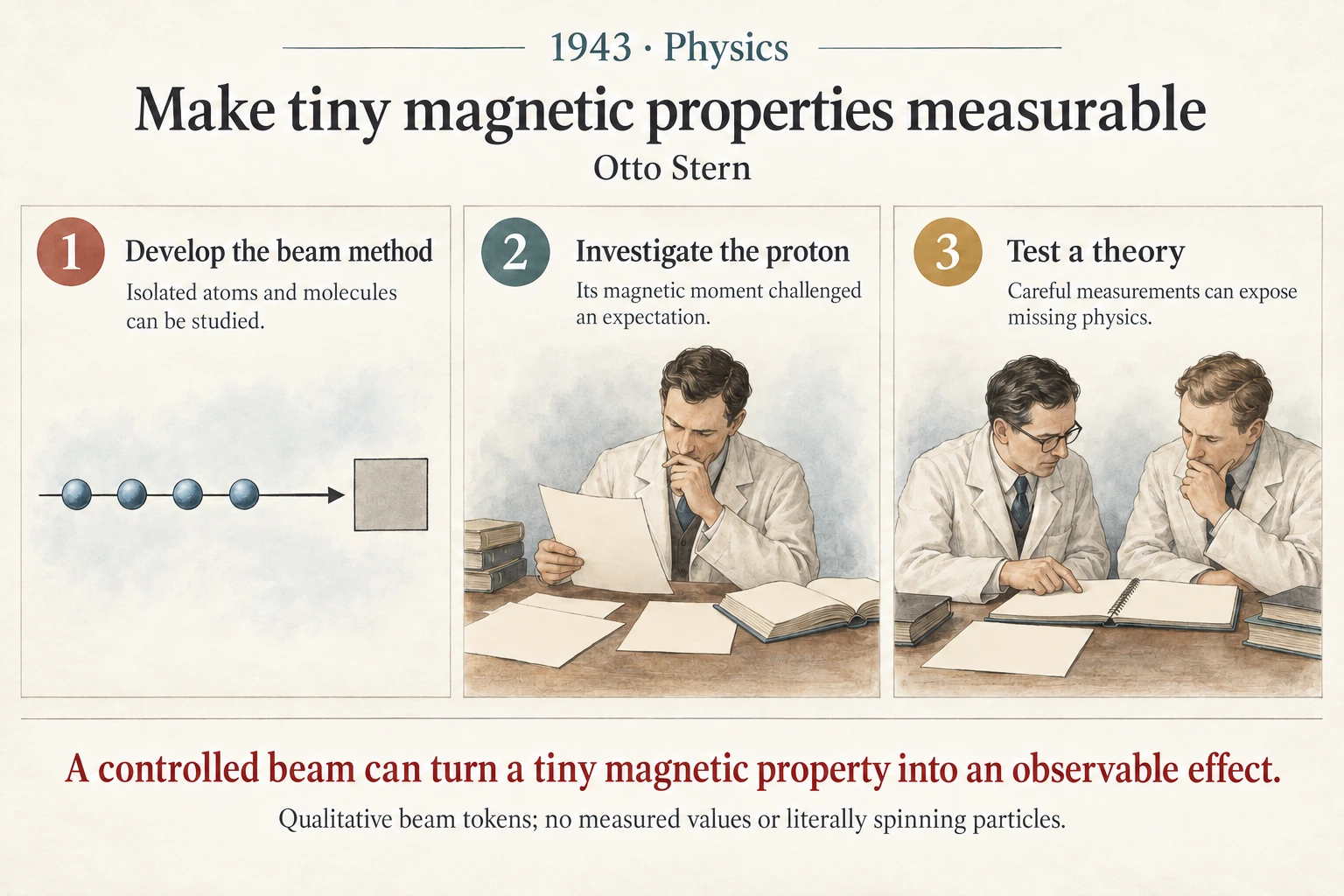
Infographic explaining Make tiny magnetic properties measurable
Original AI-generated infographic. A conceptual overview; the explanations and sources below provide context.
Read the poster text

A controlled beam can turn a tiny magnetic property into an observable effect.

  1. Develop the beam method

    Isolated atoms and molecules can be studied.

  2. Investigate the proton

    Its magnetic moment challenged an expectation.

  3. Test a theory

    Careful measurements can expose missing physics.

Qualitative beam tokens; no measured values or literally spinning particles.

01 · The discovery

The idea, in everyday language

How can the magnetic properties of a particle far too small to see become measurable? A narrow beam of isolated atoms or molecules lets investigators connect microscopic properties with the beam’s observable motion. Stern developed and refined this approach rather than treating a substance only as a bulk sample.

The 1922 Stern–Gerlach experiment with silver atoms revealed distinct beam components in a non-uniform magnetic field, challenging the expected continuous spread. A later programme at Hamburg reached a different target: nuclear magnetic properties. In 1933 Stern and colleagues found the proton’s magnetic moment substantially different from a simple theoretical expectation. The 1943 award recognised both his development of the beam method and this proton result; it should not be reduced to the silver-beam experiment alone.

Why it matters

The beam method made important quantum and magnetic questions experimentally accessible. The unexpected proton result showed the limits of a simple account of the particle and supplied a challenge for theory. It was not, by itself, a direct image of the proton’s internal structure or a discovery of the later quark model.
02 · The people

Who brought the idea to life?

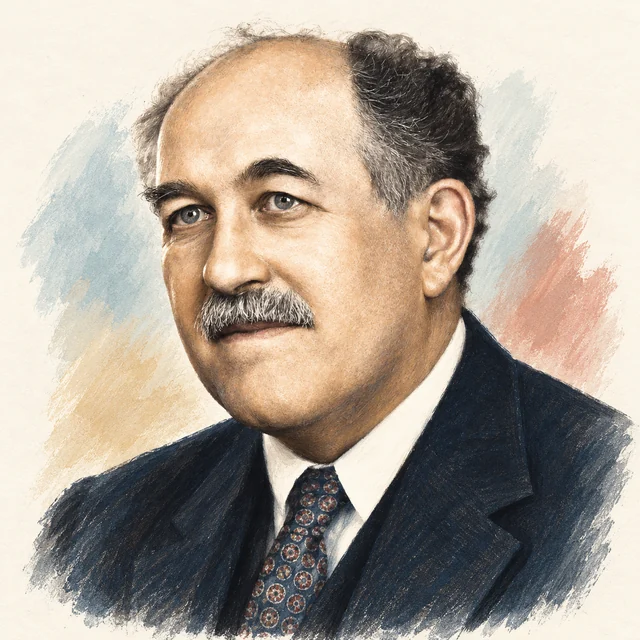
Illustrated portrait of Otto Stern

Otto Stern

Prize share · 1

Stern received the whole Physics Prize for developing the molecular-ray method and discovering the proton’s magnetic moment. The work included important contributions from collaborators.

Read the biography ↗

03 · Years in the making

The path here

  1. 1912

    Stern completes his doctorate at Breslau.

  2. 1922

    Stern and Gerlach observe distinct components of a silver-atom beam.

  3. 1923

    Stern begins directing beam research in Hamburg.

  4. 1933

    The proton magnetic-moment result challenges a simple expectation.

  5. 1933

    Forced into exile, Stern continues at Carnegie Institute of Technology.

  6. 1944

    The reserved 1943 Physics Prize is announced for Stern.

04 · Read further

From the original sources

Original explanations by Curionode, based on the official records below. Biographical details and affiliations refer to the award year.

  1. Official award summary nobelprize.org
  2. Award ceremony speech nobelprize.org
  3. Hamburg institutional history: Stern’s career chemie.uni-hamburg.de
  4. National Academy memoir: Stern and the beam method nasonline.org
  5. Official biography: Otto Stern nobelprize.org