c.curionodeThe Nobel Archive

1946 · Literature

Follow the individual between inner life and society

Hesse’s novels, stories and poems explored personal searching, conflicting expectations and humane ways of attending to life.

Individual lifeLiterary formHumanismPoetry and fiction
1946Literature

Visual guide

The prize, pictured

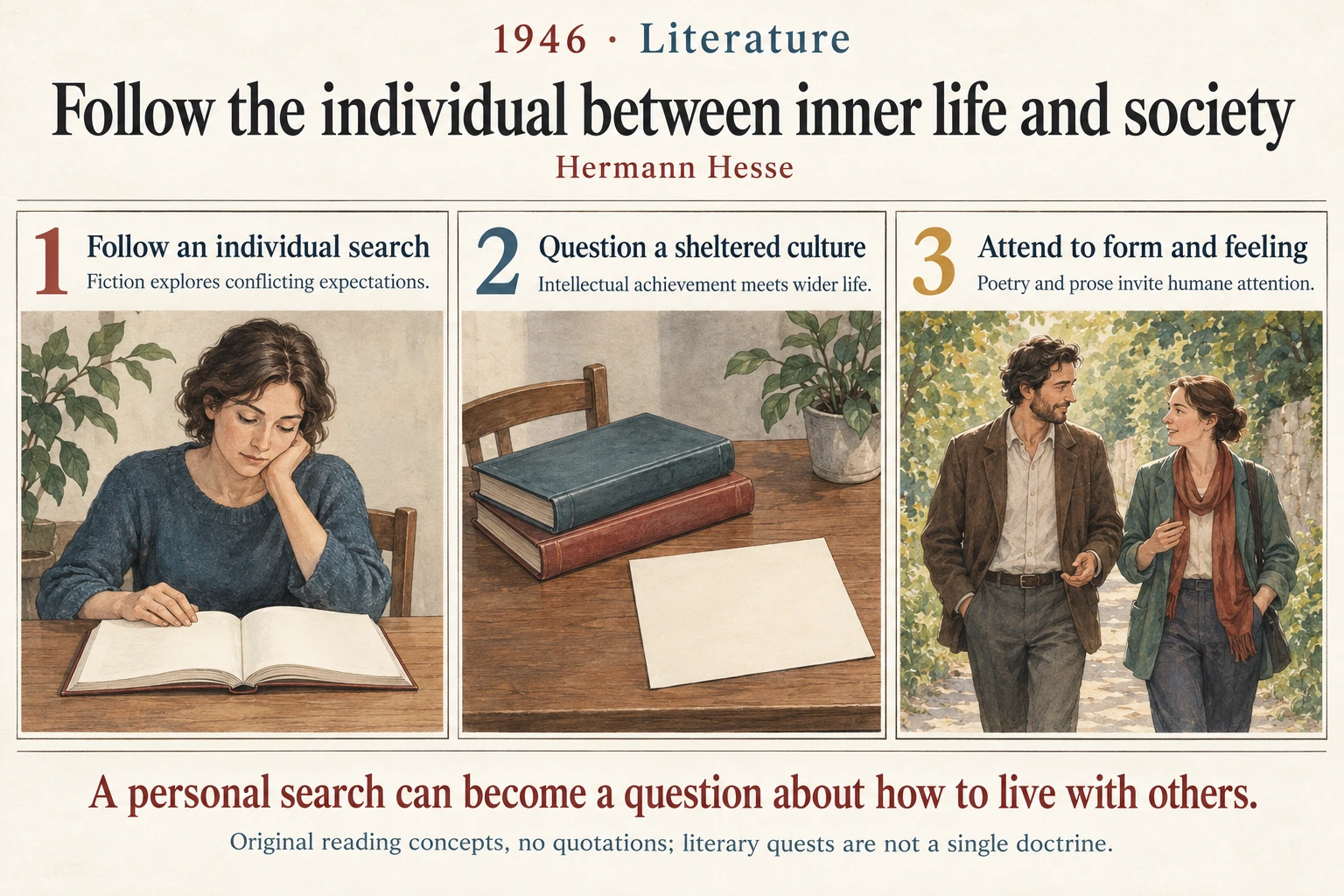
Infographic explaining Follow the individual between inner life and society
Original AI-generated infographic. A conceptual overview; the explanations and sources below provide context.
Read the poster text

A personal search can become a question about how to live with others.

  1. Follow an individual search

    Fiction explores conflicting expectations.

  2. Question a sheltered culture

    Intellectual achievement meets wider life.

  3. Attend to form and feeling

    Poetry and prose invite humane attention.

Original reading concepts, no quotations; literary quests are not a single doctrine.

01 · The contribution

The idea, in everyday language

How does a person find a way through inherited expectations, inward conflict and obligations to others? Hesse returned to these questions through different literary forms. The individual’s search in his fiction is rarely a simple escape into a settled answer; encounters, doubts and changes of perspective shape the journey.

His writing ranges from the personal conflicts of Demian and Der Steppenwolf to the imagined intellectual order of Das Glasperlenspiel. The latter asks what cultural achievement gains and loses when separated from wider life. Poetry, music and close attention to style also belong to the achievement recognised in 1946, rather than forming a background to one prize-winning novel.

Why it matters

Hesse made the search for an individual life a subject for fiction and poetry while testing it against social, spiritual and cultural claims. His work drew on several philosophical and literary traditions and resisted the reduction of culture to nationalist demands. The award recognised writing, humane ideals and style across that varied body of work.
02 · The people

Who brought the idea to life?

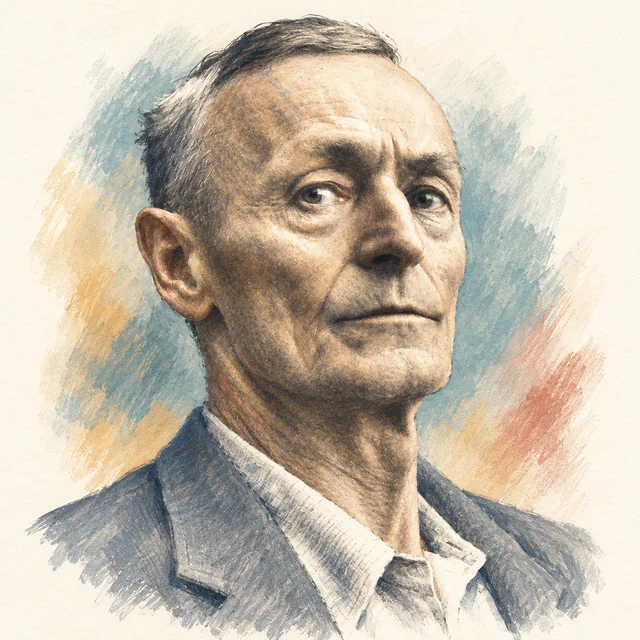
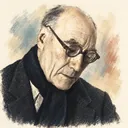
Illustrated portrait of Hermann Hesse

Hermann Hesse

Prize share · 1

Hesse received the full Literature Prize for inspired writing, humane ideals and qualities of style across novels, stories and poetry. His fictional searches are literary explorations, rather than a single programme for living or therapy.

Read the biography ↗

03 · Years in the making

The path here

  1. 1899

    Romantische Lieder is published.

  2. 1904

    Peter Camenzind brings wider recognition.

  3. 1919

    Demian is published in German under the name Emil Sinclair.

  4. 1922

    Siddhartha is published.

  5. 1927

    Der Steppenwolf is published.

  6. 1943

    Das Glasperlenspiel is published in Switzerland.

  7. 1946

    Receives the Literature Prize; a Swiss envoy accepts because of his ill health.

04 · Read further

From the original sources

Original explanations by Curionode, based on the official records below. Biographical details and affiliations refer to the award year.

  1. Official award summary nobelprize.org
  2. Award ceremony speech nobelprize.org
  3. Official bibliography: Hesse’s original editions nobelprize.org
  4. Swiss literary archive: Demian, 1919 ead.nb.admin.ch
  5. Official biography: Hermann Hesse nobelprize.org

More in Literature

Browse this subject ↗