c.curionodeThe Nobel Archive

1950 · Literature

Writing that invites readers to think freely

Russell’s clear, varied public writing championed humanitarian ideals, independent judgement and freedom of thought.

Freedom of thoughtPublic philosophyCritical judgement
1950Literature

Visual guide

The prize, pictured

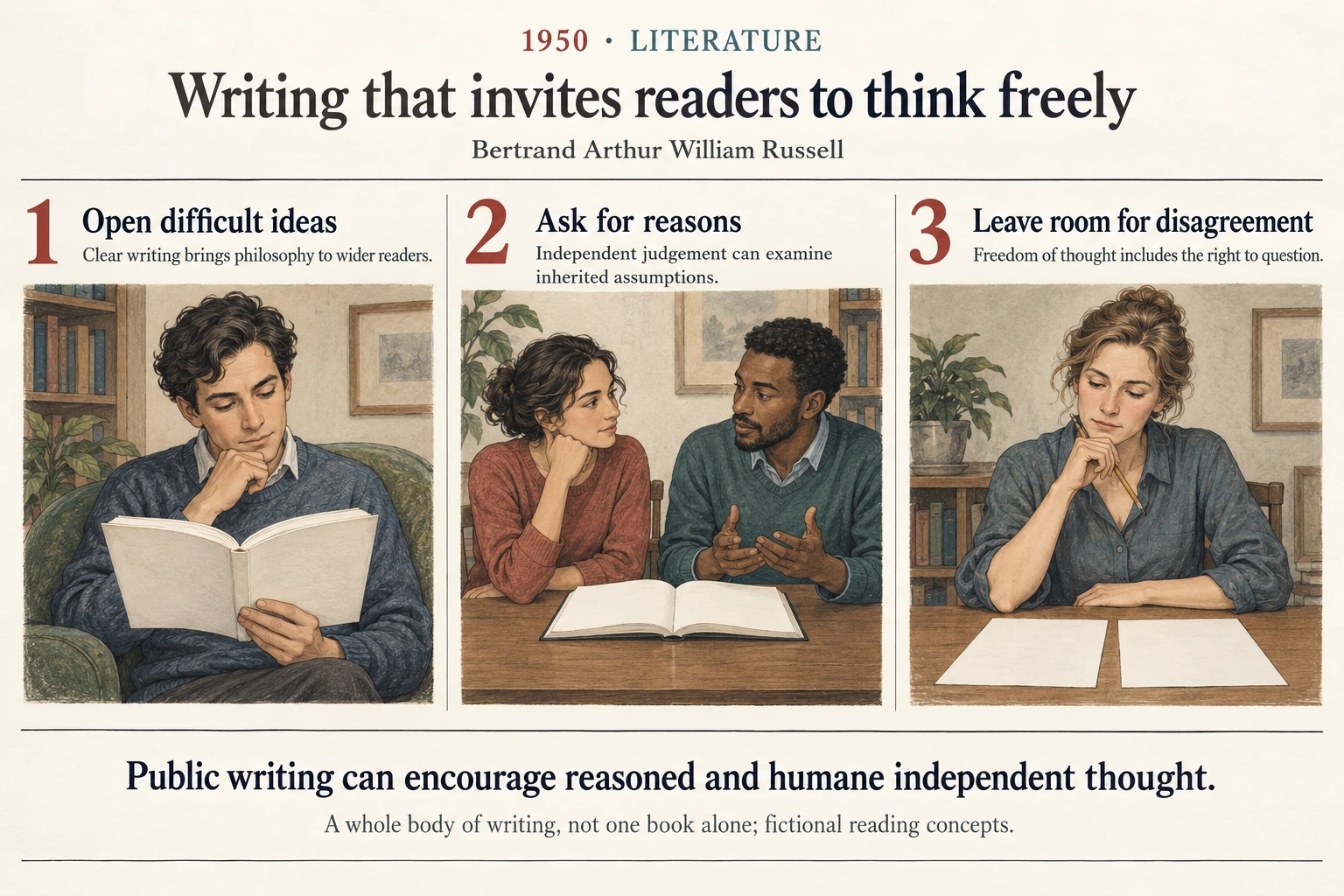
Infographic explaining Writing that invites readers to think freely
Original AI-generated infographic. A conceptual overview; the explanations and sources below provide context.
Read the poster text

Public writing can encourage reasoned and humane independent thought.

  1. Open difficult ideas

    Clear writing brings philosophy to wider readers.

  2. Ask for reasons

    Independent judgement can examine inherited assumptions.

  3. Leave room for disagreement

    Freedom of thought includes the right to question.

A whole body of writing, not one book alone; fictional reading concepts.

01 · The contribution

The idea, in everyday language

How can difficult ideas become part of public reasoning? Russell addressed readers beyond the specialists who knew his work in mathematical logic. Essays and books on philosophy, science, education and society used clarity, argument and wit to challenge inherited assumptions and make intellectual questions widely accessible.

The 1950 award recognised this varied body of writing in support of humanitarian ideals and free thought. History of Western Philosophy was an important part of his public authorship, but the prize was not awarded for that book alone. His work invited readers to examine reasons and uncertainty, rather than to replace one unquestioned authority with another.

Why it matters

The recognition highlighted philosophy as public literature as well as specialist inquiry. His books helped bring questions about knowledge, social arrangements and human welfare to a broad readership. Authority and the Individual appeared in 1949 and Unpopular Essays in 1950, among many works available before the prize.
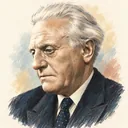
02 · The people

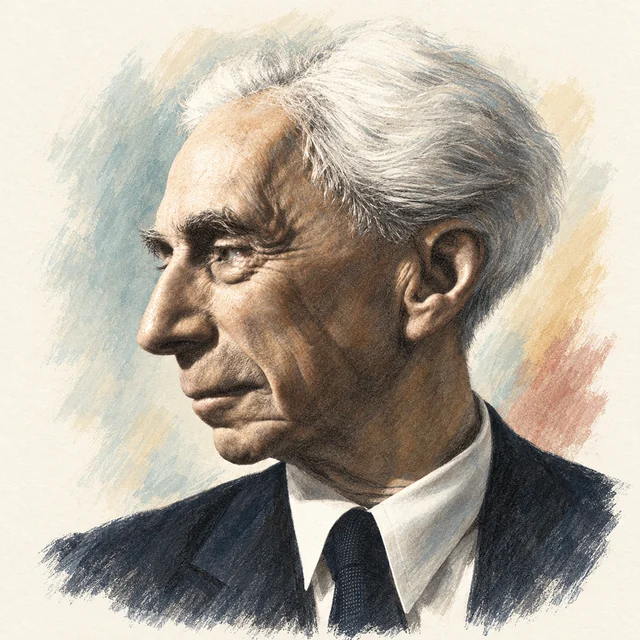
Who brought the idea to life?

03 · Years in the making

The path here

  1. 1890

    Russell begins studies at Trinity College Cambridge.

  2. 1903

    The Principles of Mathematics appears.

  3. 1910

    The first volume of Principia Mathematica appears, with Whitehead.

  4. 1918

    He is imprisoned for a wartime article.

  5. 1944

    He is re-elected a Trinity Fellow.

  6. 1949

    Authority and the Individual appears.

  7. 1950

    Unpopular Essays appears; Russell receives the Literature Prize.

04 · Read further

From the original sources

Original explanations by Curionode, based on the official records below. Biographical details and affiliations refer to the award year.

  1. Official award summary nobelprize.org
  2. Award ceremony speech nobelprize.org
  3. Official biography: Bertrand Arthur William Russell nobelprize.org

More in Literature

Browse this subject ↗