c.curionodeThe Nobel Archive

1950 · Peace

Negotiating armistices without claiming a final peace

Bunche’s UN mediation helped secure the 1949 armistice agreements after the fighting of 1948, while major political questions remained unresolved.

MediationArmistice agreementsUnresolved questions
1950Peace

Visual guide

The prize, pictured

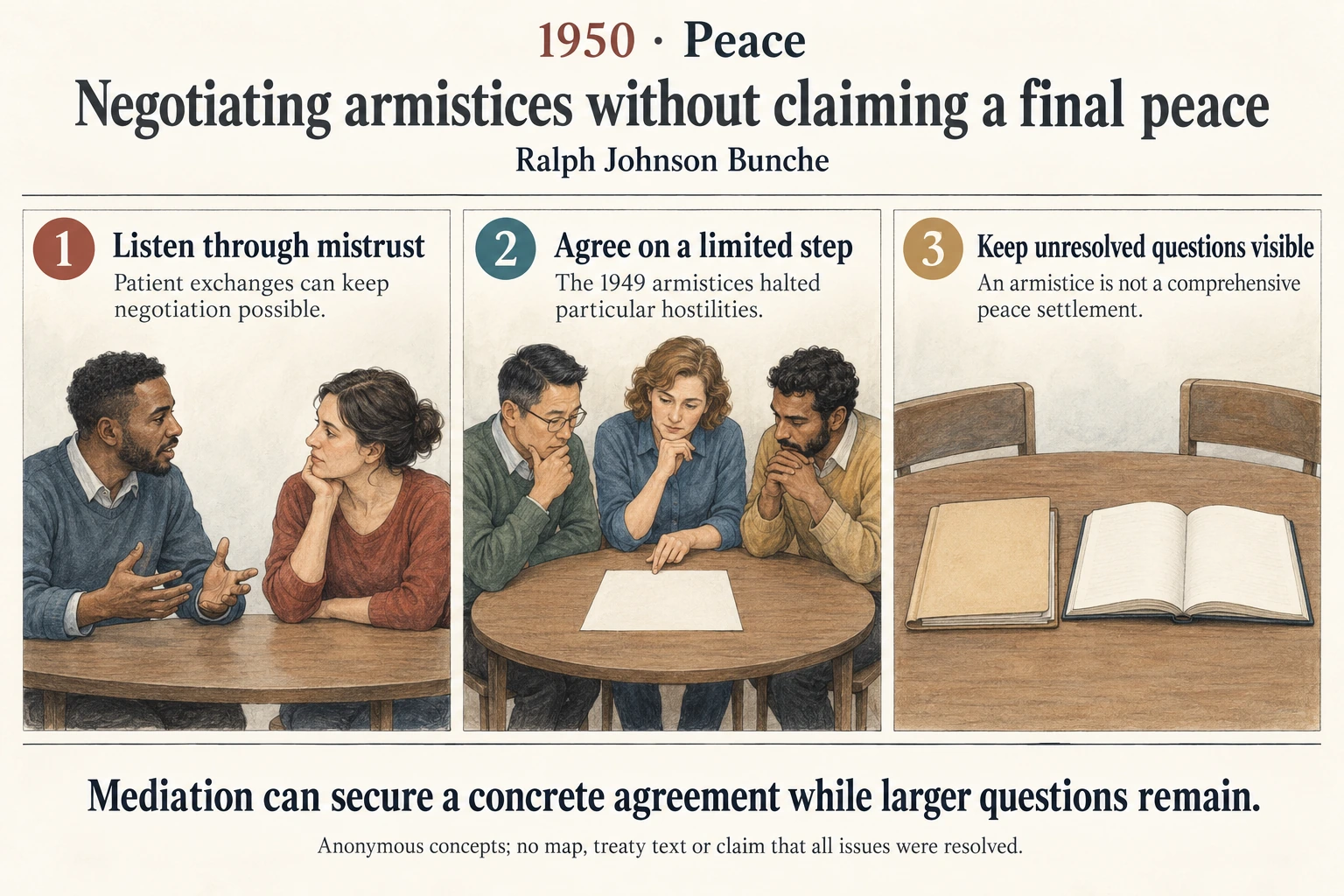
Infographic explaining Negotiating armistices without claiming a final peace
Original AI-generated infographic. A conceptual overview; the explanations and sources below provide context.
Read the poster text

Mediation can secure a concrete agreement while larger questions remain.

  1. Listen through mistrust

    Patient exchanges can keep negotiation possible.

  2. Agree on a limited step

    The 1949 armistices halted particular hostilities.

  3. Keep unresolved questions visible

    An armistice is not a comprehensive peace settlement.

Anonymous concepts; no map, treaty text or claim that all issues were resolved.

01 · The contribution

The idea, in everyday language

How can parties who distrust one another move from fighting toward an agreed halt? Bunche worked with UN mediator Folke Bernadotte in 1948 and took over as acting mediator after Bernadotte’s assassination in September. Patient discussion, separate exchanges with parties and attention to practicable terms helped keep negotiations moving.

The resulting 1949 armistice agreements were between Israel and four states: Egypt, Lebanon, Jordan and Syria. UN Security Council resolution 72 of August 1949 recognised Bunche and the mission staff. These were agreements to end particular hostilities and establish arrangements for observing the armistices, not a comprehensive final settlement of the conflict or its political and territorial questions.

Why it matters

The 1950 prize recognised Bunche’s mediation in Palestine in 1948–1949. It highlighted practical negotiation within the UN and the work of a diplomat who had studied colonial administration and racial inequality. Bunche became the first African American Peace laureate. His achievement depended on staff, negotiating parties and institutions, alongside his own persistence.
02 · The people

Who brought the idea to life?

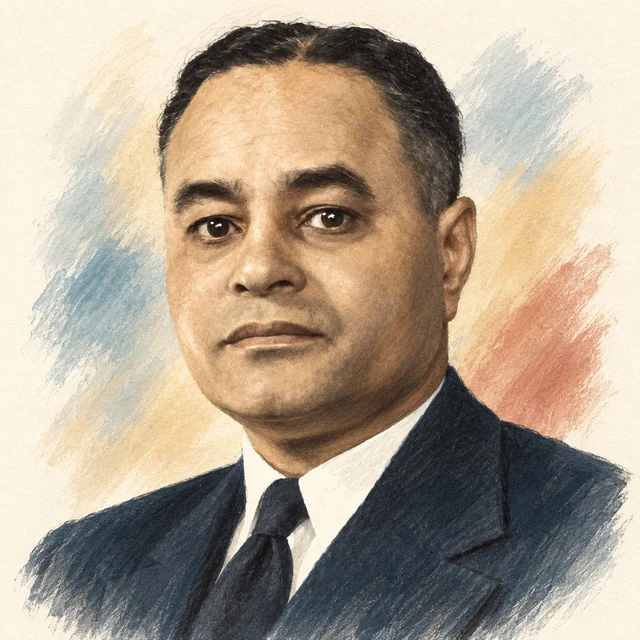
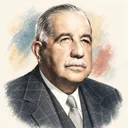
Illustrated portrait of Ralph Johnson Bunche

Ralph Johnson Bunche

Prize share · 1

As acting UN mediator following Bernadotte’s assassination, Bunche helped secure the 1949 armistice agreements. He received the full Peace Prize for mediation in Palestine in 1948–1949.

Read the biography ↗

03 · Years in the making

The path here

  1. 1927

    Bunche graduates from UCLA.

  2. 1934

    He completes his Harvard doctorate.

  3. 1946

    He joins the UN’s trusteeship work.

  4. 1948

    After Bernadotte’s assassination, he becomes acting mediator.

  5. 1949

    Four armistice agreements are negotiated; Security Council resolution 72 recognises the work.

  6. 1950

    He receives the Peace Prize for his 1948–1949 mediation.

04 · Read further

From the original sources

Original explanations by Curionode, based on the official records below. Biographical details and affiliations refer to the award year.

  1. Official award summary nobelprize.org
  2. Award ceremony speech nobelprize.org
  3. UN Security Council: the four armistice partners and mission staff un.org
  4. United Nations: Bunche’s 1950 recognition un.org
  5. Official biography: Ralph Johnson Bunche nobelprize.org