01 · The contribution
The idea, in everyday language
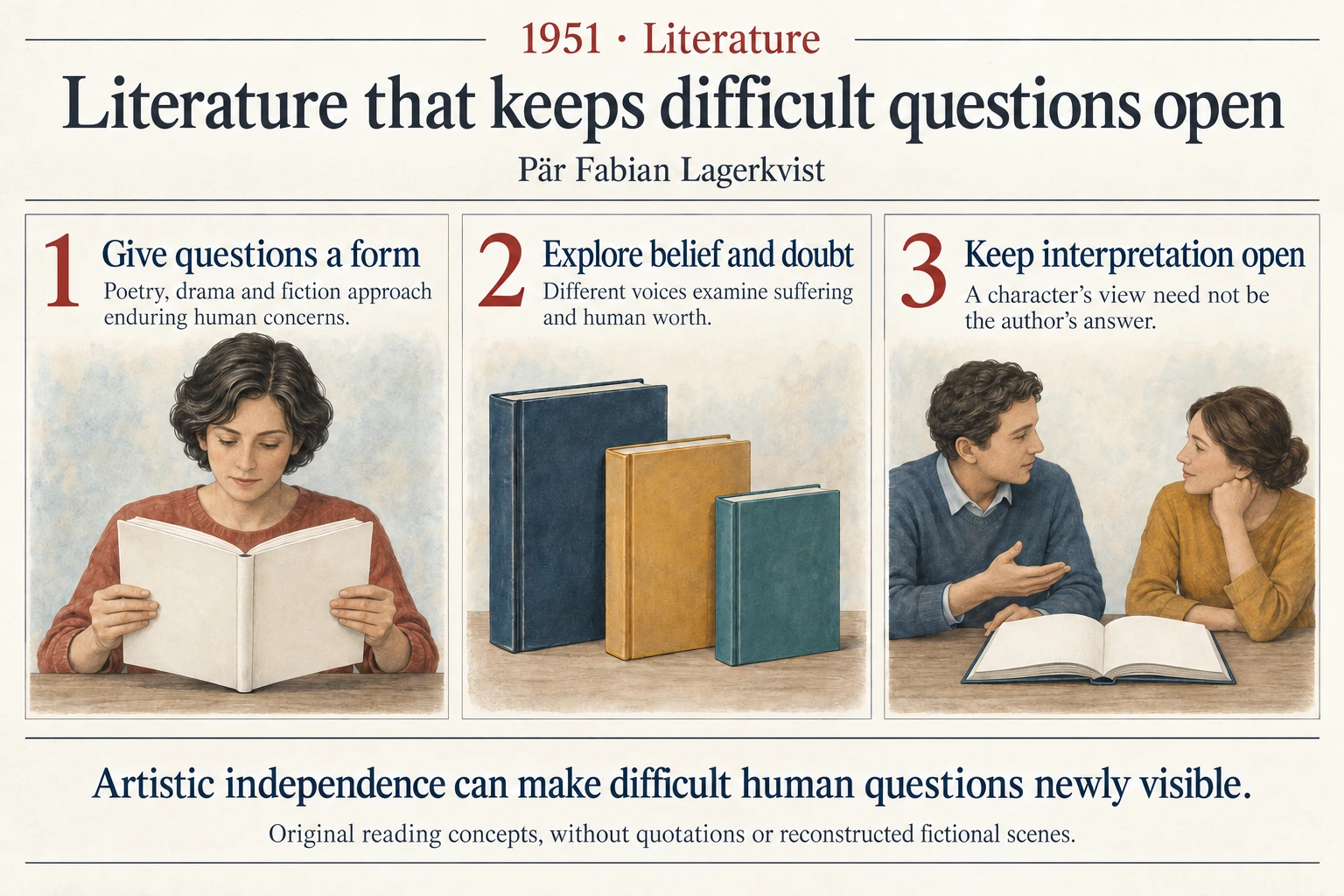
How can literary form confront fear, cruelty and the search for meaning without reducing them to a ready answer? Lagerkvist’s writing moved among lyric poetry, drama and prose. His 1913 manifesto drew on encounters with modern art; Ångest in 1916 made anguish a central poetic subject in an age of upheaval.
Works such as Bödeln, Dvärgen and Barabbas examine moral responsibility, violence, belief and exclusion through different forms and voices. The 1951 citation’s reference to poetry belongs to this wider literary achievement. The award was not simply a prize for Barabbas, though the 1950 novel had brought international attention. Questions in a work need not be settled by identifying a character’s outlook with the author’s own.
Why it matters
The recognition drew attention to a Swedish-language writer whose concentrated forms could address readers beyond his immediate setting. Religious imagery and doubt invite interpretation; engagement does not require sharing a religious belief or agreeing with the narrator.