c.curionodeThe Nobel Archive

1955 · Chemistry

Build a peptide hormone with the right connections

Du Vigneaud’s work linked sulfur biochemistry, molecular structure and the synthesis of oxytocin.

Sulfur biochemistryOxytocinPeptide synthesis
1955Chemistry

Visual guide

The prize, pictured

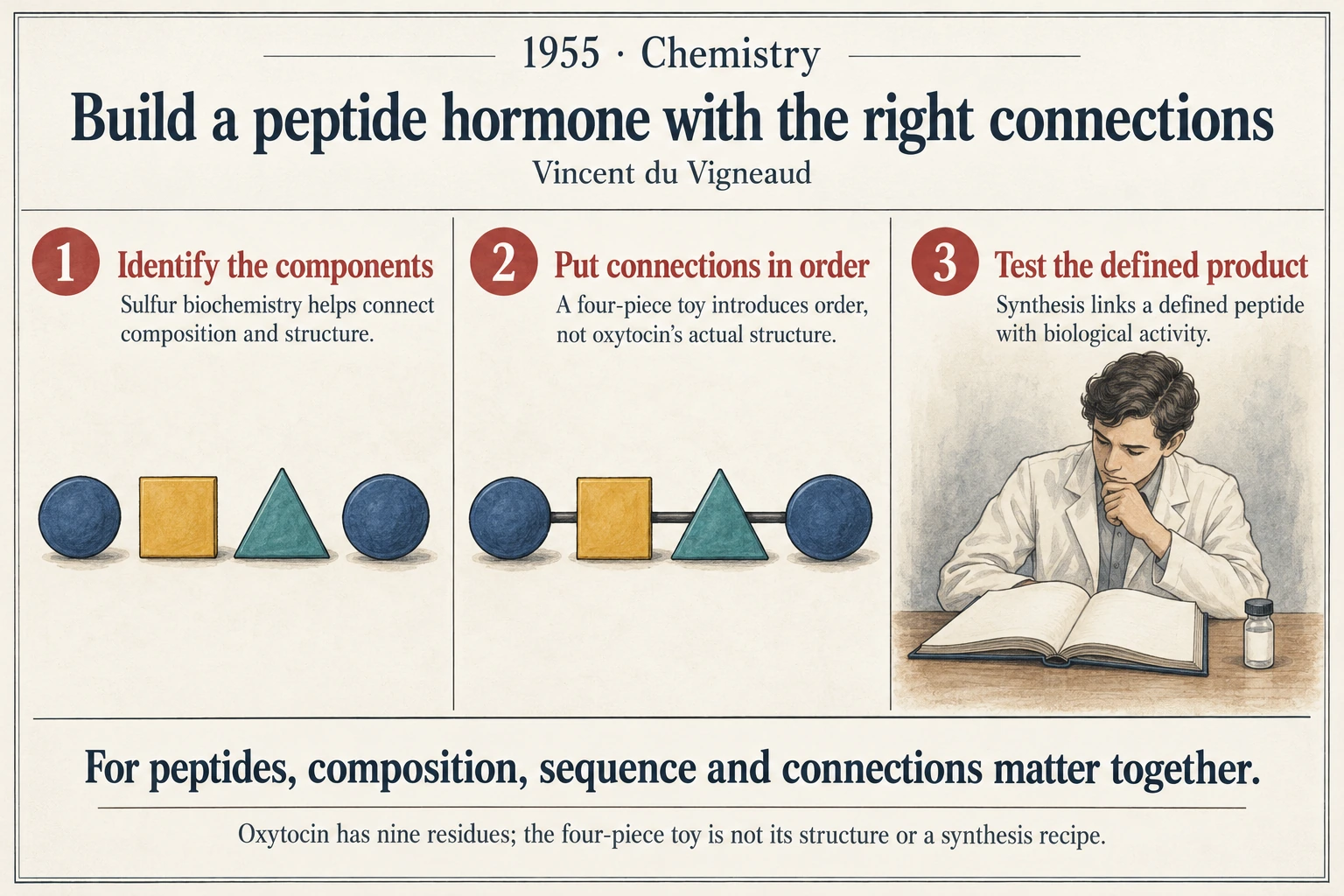
Infographic explaining Build a peptide hormone with the right connections
Original AI-generated infographic. A conceptual overview; the explanations and sources below provide context.
Read the poster text

For peptides, composition, sequence and connections matter together.

  1. Identify the components

    Sulfur biochemistry helps connect composition and structure.

  2. Put connections in order

    A four-piece toy introduces order, not oxytocin’s actual structure.

  3. Test the defined product

    Synthesis links a defined peptide with biological activity.

Oxytocin has nine residues; the four-piece toy is not its structure or a synthesis recipe.

01 · The discovery

The idea, in everyday language

Could a biologically active peptide be understood well enough to make it? Du Vigneaud investigated sulfur-containing biological compounds, including amino acids, insulin-related questions and peptide hormones. His group purified oxytocin in 1949. Establishing its composition and connections prepared the way for synthesis.

Oxytocin contains nine amino-acid residues and a disulfide connection between the cysteines at positions one and six. Its amino-acid order and connections matter, rather than merely the presence of the right ingredients. The group reported synthesis in 1953 and a fuller account in 1954. Charlotte Ressler, John M. Swan, Carleton W. Roberts, Panayotis G. Katsoyannis and Samuel Gordon contributed to the 1953 report. Du Vigneaud received the full 1955 Chemistry Prize for sulfur biochemistry, especially the first synthesis of a peptide hormone.

Why it matters

Relating a defined molecular structure to biological activity helped establish peptide chemistry as an experimental field. Oxytocin participates in uterine contraction and milk ejection; milk ejection should not be confused with milk production. Historical synthesis and biological tests do not supply instructions for clinical use.
02 · The people

Who brought the idea to life?

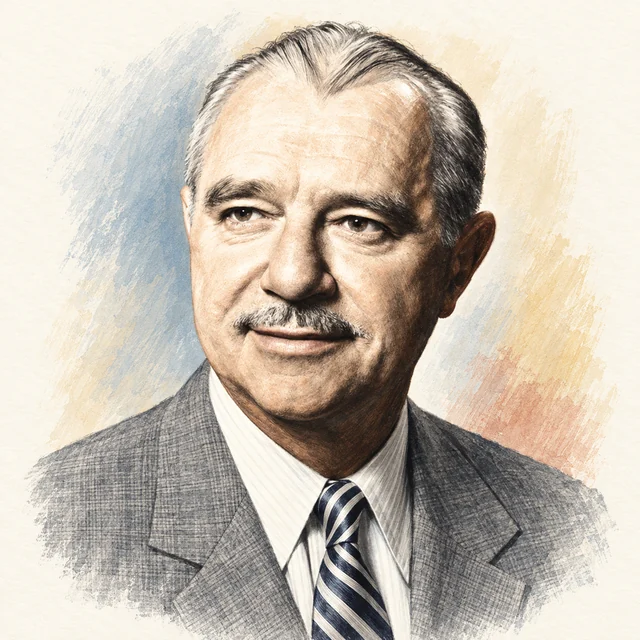
Illustrated portrait of Vincent du Vigneaud

Vincent du Vigneaud

Prize share · 1

Du Vigneaud investigated biologically important sulfur compounds and led the first synthesis of a peptide hormone, oxytocin. He received the full Chemistry Prize.

Read the biography ↗

03 · Years in the making

The path here

  1. 1901

    Du Vigneaud is born in Chicago.

  2. 1927

    He completes his Rochester doctorate.

  3. 1932

    He heads biochemistry at George Washington’s medical school.

  4. 1938

    He heads biochemistry at Cornell University Medical College in New York.

  5. 1949

    His group purifies oxytocin.

  6. 1953

    The group publishes its synthesis report.

  7. 1954

    A fuller synthesis paper appears.

  8. 1955

    Du Vigneaud receives the full Chemistry Prize.

04 · Read further

From the original sources

Original explanations by Curionode, based on the official records below. Biographical details and affiliations refer to the award year.

  1. Official award summary nobelprize.org
  2. Award ceremony speech nobelprize.org
  3. Weill Cornell: du Vigneaud’s research and appointments gradschool.weill.cornell.edu
  4. Original oxytocin synthesis report, 1953 pubs.acs.org
  5. Fuller oxytocin synthesis report, 1954 pubs.acs.org
  6. PubChem: oxytocin structure and biological roles pubchem.ncbi.nlm.nih.gov
  7. Official biography: Vincent du Vigneaud nobelprize.org

More in Chemistry

Browse this subject ↗