c.curionodeThe Nobel Archive

1957 · Peace

Building a multilateral path toward a ceasefire

Pearson helped develop international arrangements for the Suez ceasefire, especially a United Nations Emergency Force.

Multilateral diplomacySuez ceasefireUN peacekeeping
1957Peace

Visual guide

The prize, pictured

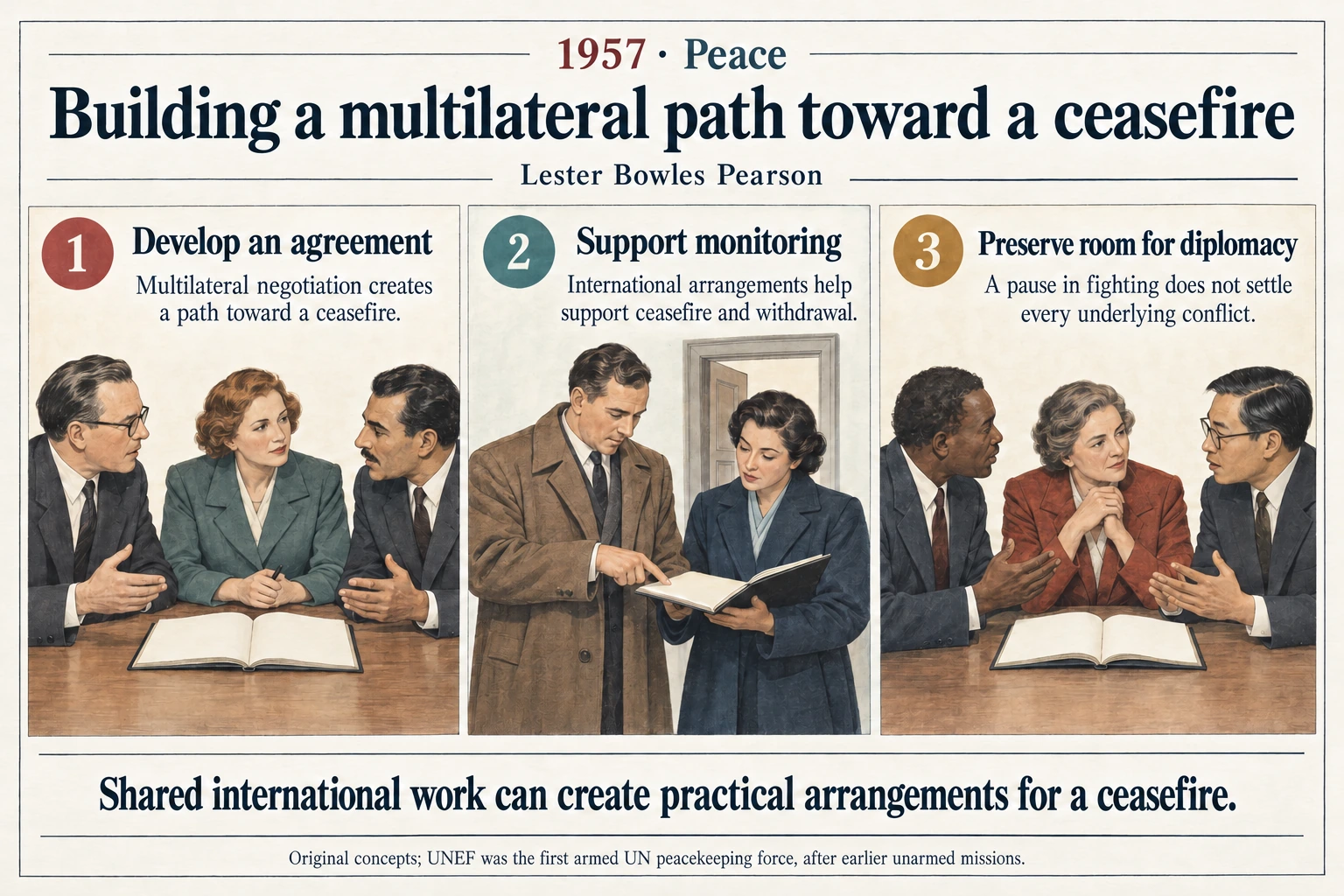
Infographic explaining Building a multilateral path toward a ceasefire
Original AI-generated infographic. A conceptual overview; the explanations and sources below provide context.
Read the poster text

Shared international work can create practical arrangements for a ceasefire.

  1. Develop an agreement

    Multilateral negotiation creates a path toward a ceasefire.

  2. Support monitoring

    International arrangements help support ceasefire and withdrawal.

  3. Preserve room for diplomacy

    A pause in fighting does not settle every underlying conflict.

Original concepts; UNEF was the first armed UN peacekeeping force, after earlier unarmed missions.

01 · The contribution

The idea, in everyday language

The 1956 Suez crisis involved military intervention by Israel, Britain and France in Egypt and posed a wider threat to international relations. A ceasefire needed more than a declaration: negotiation had to create practical arrangements supporting withdrawal and reducing the danger of renewed fighting.

Pearson helped develop the proposal for a United Nations Emergency Force, working through the General Assembly and international diplomacy. The arrangements depended on shared work, including Hammarskjöld and Bunche, cooperation by contributing states and consent for the operation. UNEF became the first armed UN peacekeeping force in 1956. Earlier UN missions, beginning with unarmed observers in 1948, had already established peacekeeping activity.

Why it matters

The initiative helped provide an international means of supporting the Suez ceasefire and withdrawal. The 1957 award recognised Pearson’s diplomatic contribution to peace, with the full share assigned to him as an individual. It did not turn the force into his personal organisation or mean that one proposal resolved every underlying regional conflict.
02 · The people

Who brought the idea to life?

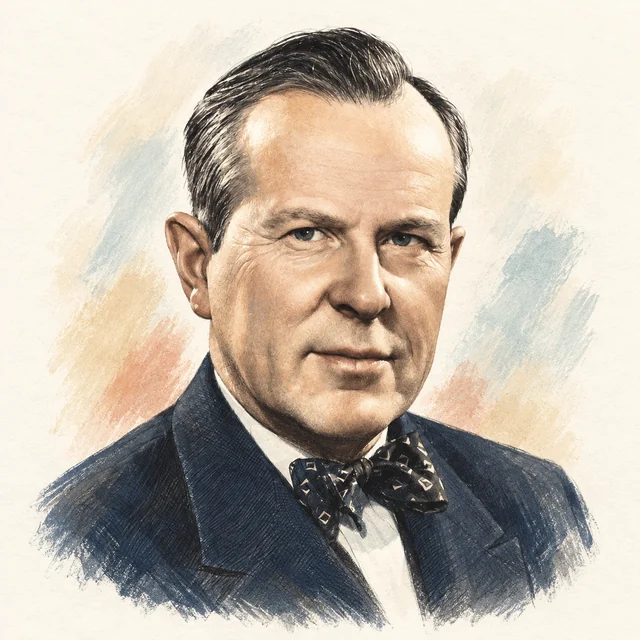
Illustrated portrait of Lester Bowles Pearson

Lester Bowles Pearson

Prize share · 1

Pearson helped develop multilateral arrangements for the Suez ceasefire, especially the proposal for a United Nations Emergency Force. He received the full Peace Prize.

Read the biography ↗

03 · Years in the making

The path here

  1. 1919

    Pearson graduates at Toronto before later Oxford study.

  2. 1924

    He begins teaching history in Toronto.

  3. 1928

    He enters Canada’s diplomatic service.

  4. 1946

    He becomes undersecretary for external affairs.

  5. 1948

    He becomes Secretary of State for External Affairs; UN unarmed observer peacekeeping begins.

  6. 1952–1953

    He presides over the UN General Assembly’s seventh session.

  7. 1956

    He helps develop the UNEF proposal during the Suez crisis.

  8. June 1957

    His external-affairs ministerial service ends.

  9. 1957

    He receives the full Peace Prize as a former minister.

  10. 1963–1968

    Later: he serves as Canada’s prime minister.

04 · Read further

From the original sources

Original explanations by Curionode, based on the official records below. Biographical details and affiliations refer to the award year.

  1. Official award summary nobelprize.org
  2. Award ceremony speech nobelprize.org
  3. Canadian ministry archive: Pearson’s service guide-ministries.canada.ca
  4. UN peacekeeping history peacekeeping.un.org
  5. Official biography: Lester Bowles Pearson nobelprize.org