c.curionodeThe Nobel Archive

1959 · Peace

Making disarmament a practical international question

Noel-Baker combined public service, international cooperation and sustained study of disarmament.

DisarmamentInternational cooperationNegotiation and verification
1959Peace

Visual guide

The prize, pictured

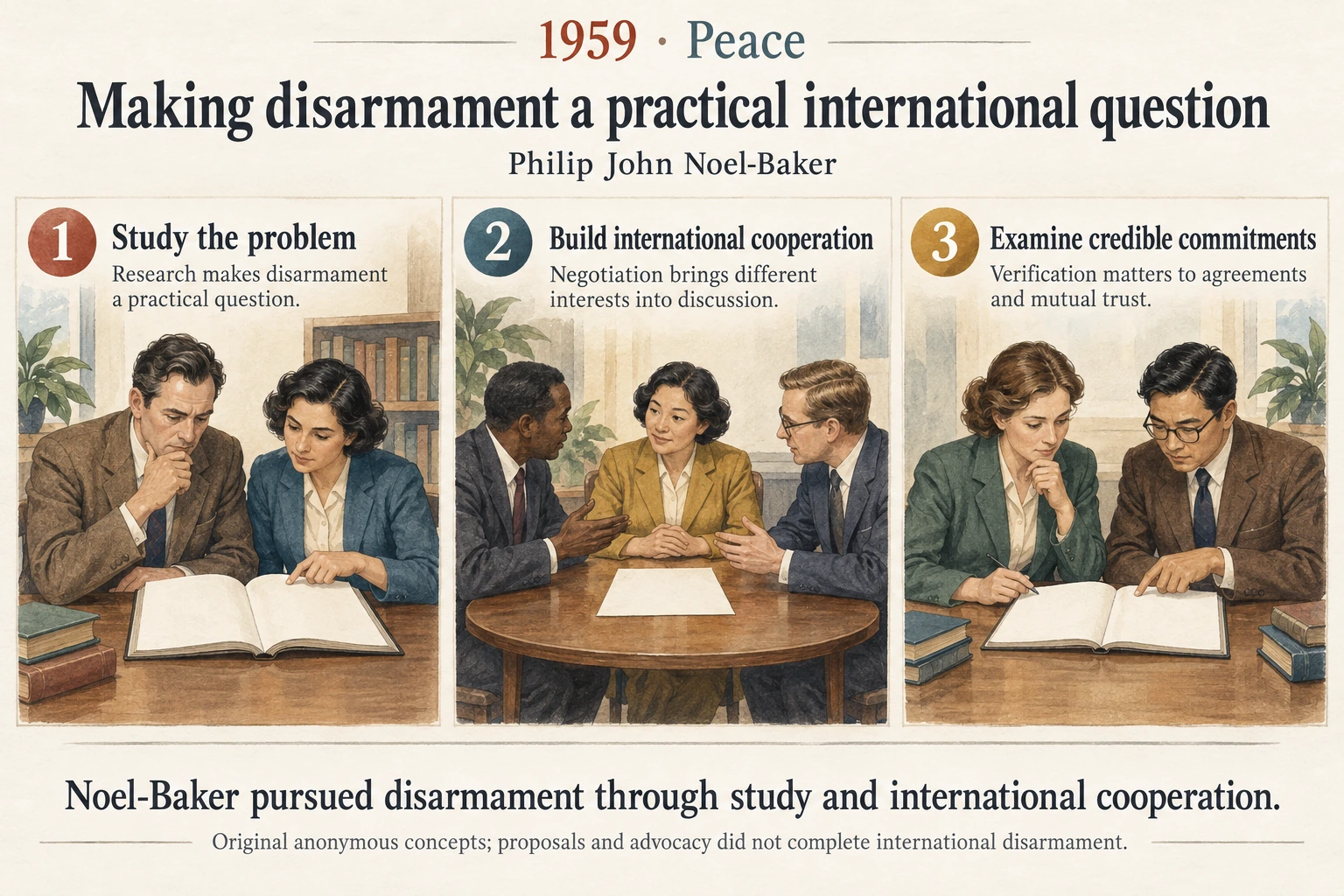
Infographic explaining Making disarmament a practical international question
Original AI-generated infographic. A conceptual overview; the explanations and sources below provide context.
Read the poster text

Noel-Baker pursued disarmament through study and international cooperation.

  1. Study the problem

    Research makes disarmament a practical question.

  2. Build international cooperation

    Negotiation brings different interests into discussion.

  3. Examine credible commitments

    Verification matters to agreements and mutual trust.

Original anonymous concepts; proposals and advocacy did not complete international disarmament.

01 · The contribution

The idea, in everyday language

Declarations against war did not settle how governments might reduce weapons while maintaining trust. Disarmament required attention to negotiation, institutions, reciprocal commitments and ways to check whether agreements were being kept.

Noel-Baker served in wartime ambulance work and then helped build international cooperation through the League of Nations, work with Cecil and Nansen, and later the United Nations. As a parliamentarian and Minister of State at the Foreign Office in 1945–1946, he pursued public service alongside his writing. The Arms Race, published in 1958, examined disarmament as a practical political and international problem.

Why it matters

The full Peace Prize recognised a long contribution to international understanding and disarmament. Noel-Baker helped keep the reduction of armaments on the agenda through research, advocacy and institutional work. His individual award also reflected efforts involving many officials, scholars and organisations; it did not mean that international disarmament had already been achieved.
02 · The people

Who brought the idea to life?

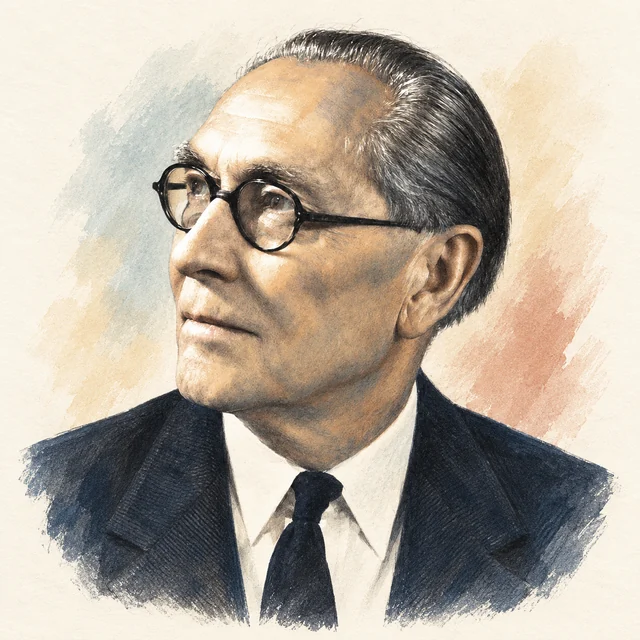
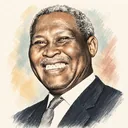
Illustrated portrait of Philip John Noel-Baker

Philip John Noel-Baker

Prize share · 1

Noel-Baker combined research, public service and international institution-building in a sustained campaign for disarmament and peace. He received the full Peace Prize.

Read the biography ↗

03 · Years in the making

The path here

  1. 1910

    Noel-Baker completes his Cambridge history studies.

  2. 1912

    He completes his economics studies.

  3. 1914–1918

    He serves in wartime ambulance work in France and Italy.

  4. 1918–1919

    He works with Cecil on the League Covenant.

  5. 1920–1922

    He works in the League Secretariat.

  6. 1924–1929

    He teaches international law at the University of London.

  7. 1926

    Disarmament is published.

  8. 1929

    He enters the House of Commons.

  9. 1945–1946

    He serves as Minister of State at the Foreign Office.

  10. 1958

    The Arms Race is published.

  11. 1959

    He receives the full Peace Prize.

04 · Read further

From the original sources

Original explanations by Curionode, based on the official records below. Biographical details and affiliations refer to the award year.

  1. Official award summary nobelprize.org
  2. Award ceremony speech nobelprize.org
  3. Parliament Minister of State office record api.parliament.uk
  4. Official biography: Philip John Noel-Baker nobelprize.org