c.curionodeThe Nobel Archive

1962 · Physiology or Medicine

A molecular structure with copying implications

DNA’s complementary double helix connected molecular organisation with the storage and transfer of genetic information.

DNA structureComplementary pairingGenetic information
1962Physiology or Medicine

Visual guide

The prize, pictured

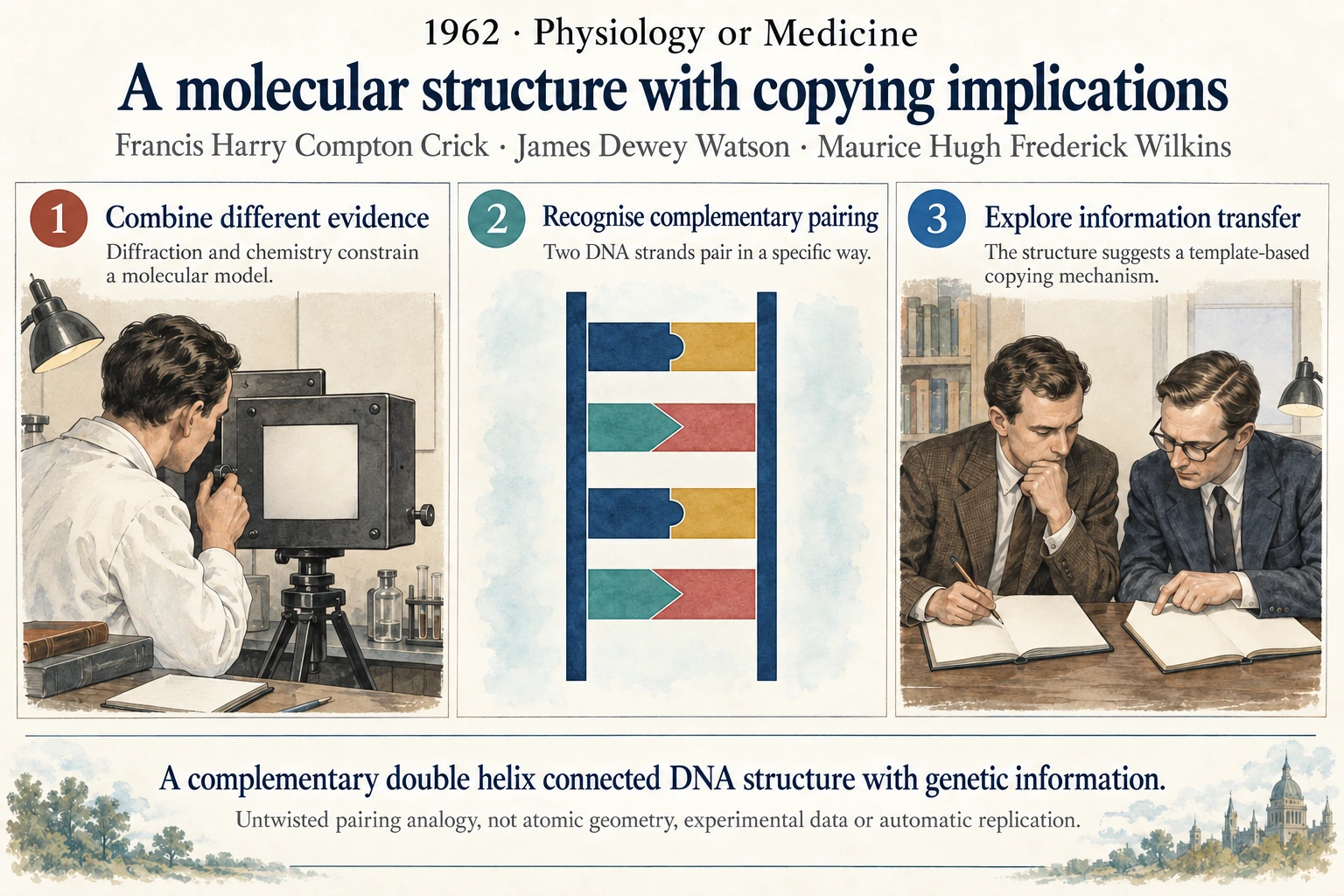
Infographic explaining A molecular structure with copying implications
Original AI-generated infographic. A conceptual overview; the explanations and sources below provide context.
Read the poster text

A complementary double helix connected DNA structure with genetic information.

  1. Combine different evidence

    Diffraction and chemistry constrain a molecular model.

  2. Recognise complementary pairing

    Two DNA strands pair in a specific way.

  3. Explore information transfer

    The structure suggests a template-based copying mechanism.

Untwisted pairing analogy, not atomic geometry, experimental data or automatic replication.

01 · The discovery

The idea, in everyday language

DNA was implicated in heredity, but its arrangement and the way information could be preserved needed explanation. Experimental diffraction, chemical composition and model building supplied different constraints on a plausible structure.

Watson and Crick proposed two oppositely directed strands wound together, with sugar–phosphate backbones outside and paired bases inside. Adenine pairs with thymine and guanine with cytosine. Wilkins, Stokes, Wilson and colleagues supplied diffraction evidence; Franklin and Gosling’s essential work appeared alongside the model in April 1953. Chargaff’s base proportions and Donohue’s chemical advice also contributed.

Why it matters

The arrangement suggested how genetic material could provide templates for copying and opened new approaches to information transfer. The three laureates each received one third. The Nobel award and the broader history of the discovery are distinct: important contributors were not all recipients.
02 · The people

Who brought the idea to life?

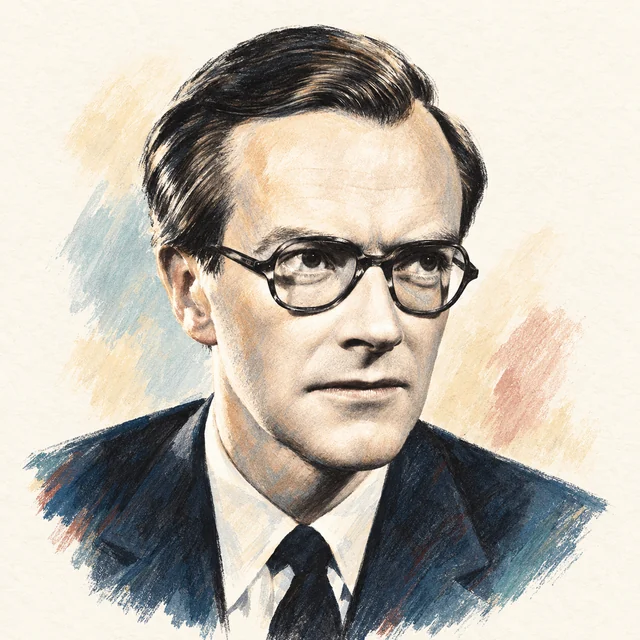
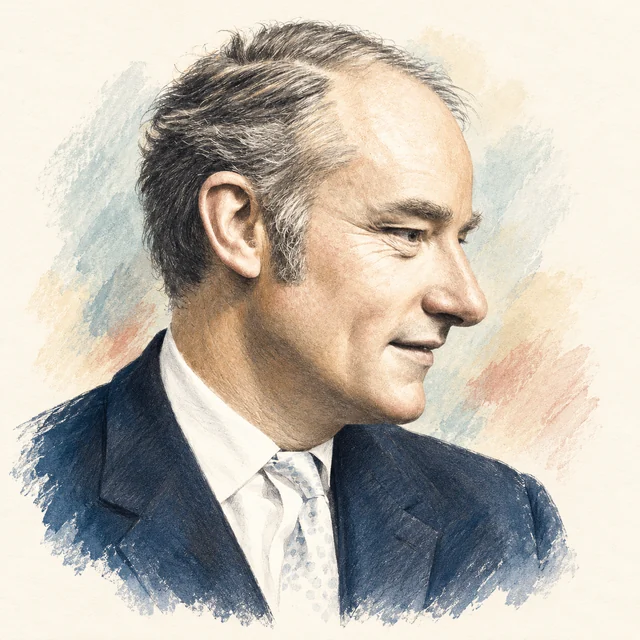
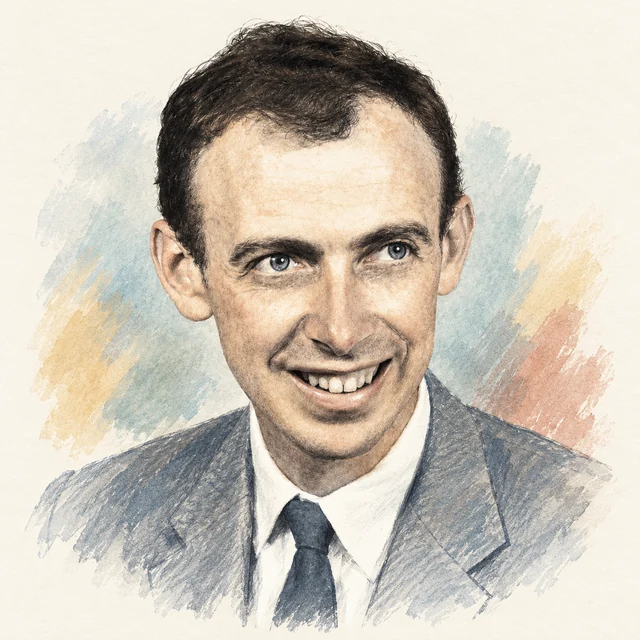
Illustrated portrait of James Dewey Watson

James Dewey Watson

Prize share · 1/3

Watson and Crick proposed DNA’s complementary double-helical structure using experimental and chemical constraints. Watson received one third.

Read the biography ↗

03 · Years in the making

The path here

  1. 1940

    Wilkins completes his Birmingham doctorate.

  2. 1946

    He joins King’s College London.

  3. 1951

    Watson joins Cambridge and meets Crick.

  4. 1953

    Three Nature papers present the model and experimental evidence.

  5. 1954

    Crick completes his Cambridge doctorate.

  6. 1956

    Watson joins Harvard.

  7. 1962

    Crick, Watson and Wilkins share the Medicine Prize.

04 · Read further

From the original sources

Original explanations by Curionode, based on the official records below. Biographical details and affiliations refer to the award year.

  1. Official award summary nobelprize.org
  2. Award ceremony speech nobelprize.org
  3. Watson–Crick 1953 paper nature.com
  4. Wilkins, Stokes and Wilson 1953 paper nature.com
  5. Franklin–Gosling 1953 paper nature.com
  6. Original 1953 DNA papers mun.ca
  7. Official biography: Francis Harry Compton Crick nobelprize.org
  8. Official biography: James Dewey Watson nobelprize.org
  9. Official biography: Maurice Hugh Frederick Wilkins nobelprize.org

More in Physiology or Medicine

Browse this subject ↗