c.curionodeThe Nobel Archive

1967 · Chemistry

Following reactions too fast to watch directly

Eigen’s relaxation methods and Norrish and Porter’s flash photolysis made fleeting chemical changes accessible to measurement.

Reaction kineticsRelaxationFlash photolysis
1967Chemistry

Visual guide

The prize, pictured

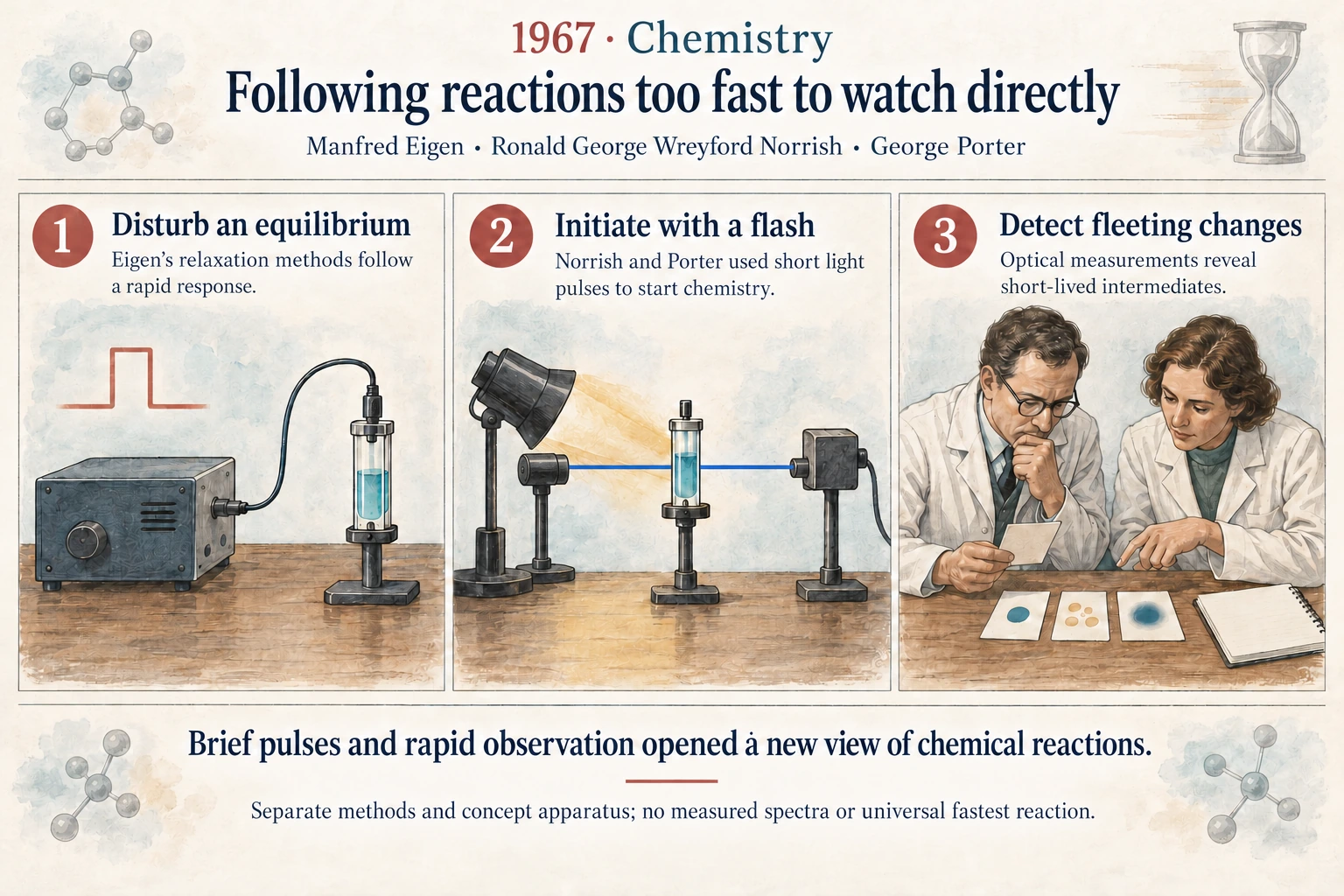
Infographic explaining Following reactions too fast to watch directly
Original AI-generated infographic. A conceptual overview; the explanations and sources below provide context.
Read the poster text

Brief pulses and rapid observation opened a new view of chemical reactions.

  1. Disturb an equilibrium

    Eigen’s relaxation methods follow a rapid response.

  2. Initiate with a flash

    Norrish and Porter used short light pulses to start chemistry.

  3. Detect fleeting changes

    Optical measurements reveal short-lived intermediates.

Separate methods and concept apparatus; no measured spectra or universal fastest reaction.

01 · The discovery

The idea, in everyday language

Some chemical transformations happen before ordinary mixing and sampling can reveal their steps. Eigen developed methods that perturb an equilibrium very rapidly, then follow the system’s relaxation. Ultrasound, electrical changes and temperature jumps offered different ways to investigate fast processes.

Norrish and Porter developed flash photolysis: a short burst of light initiates chemistry, and optical measurements follow transient species. Their kinetic spectroscopy revealed intermediates that may appear and disappear rapidly. The approaches supplied evidence for reaction mechanisms rather than simply recording final products.

Why it matters

The techniques expanded the time range of chemical kinetics and connected it with spectroscopy. Researchers could test steps in reactions across physical, organic and biological chemistry. Eigen received one half of the prize; Norrish and Porter each received one quarter.
02 · The people

Who brought the idea to life?

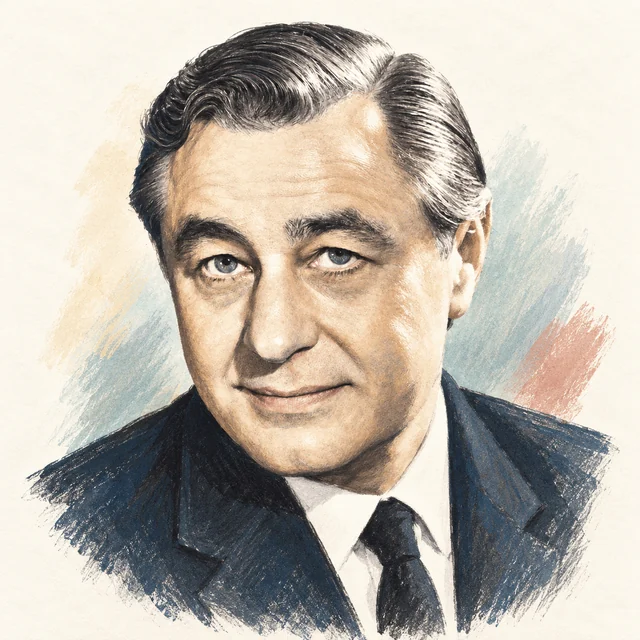
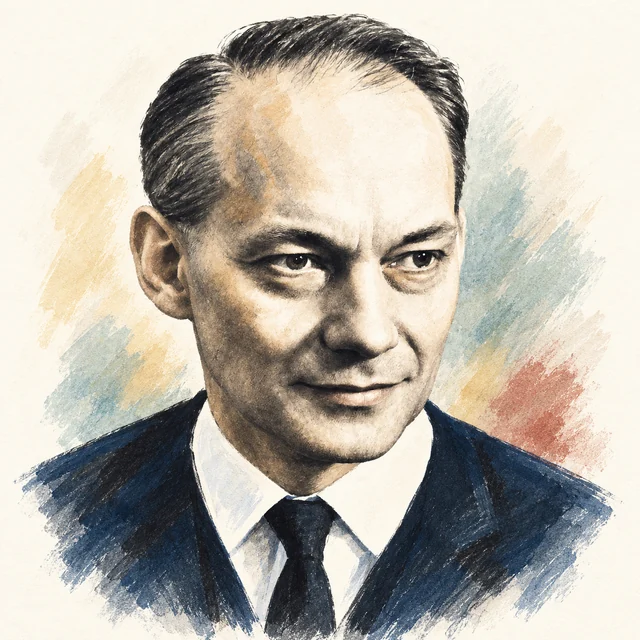
Illustrated portrait of Manfred Eigen

Manfred Eigen

Prize share · 1/2

Eigen developed relaxation methods for studying very fast chemical reactions. He received one half of the Chemistry Prize.

Read the biography ↗
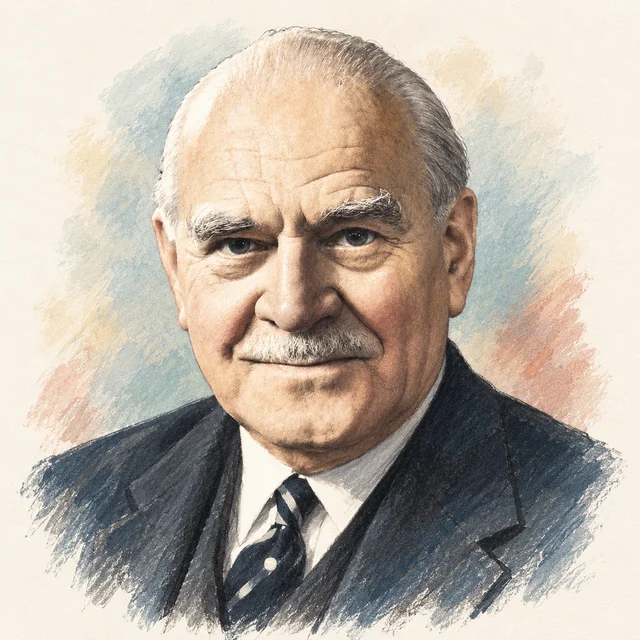
Illustrated portrait of George Porter

George Porter

Prize share · 1/4

Porter, with Norrish, developed flash photolysis and extended its applications. He received one quarter of the Chemistry Prize.

Read the biography ↗

03 · Years in the making

The path here

  1. 1945

    Porter begins research with Norrish at Cambridge.

  2. 1947

    Porter starts building short-flash apparatus.

  3. 1949

    The team observes transient absorption spectra in time sequence.

  4. 1951–1953

    Eigen develops work on fast ionic reactions and relaxation.

  5. 1954

    Leo de Maeyer joins Eigen’s laboratory.

  6. 1967

    Eigen, Norrish and Porter share the Chemistry Prize.

04 · Read further

From the original sources

Original explanations by Curionode, based on the official records below. Biographical details and affiliations refer to the award year.

  1. Official award summary nobelprize.org
  2. Award ceremony speech nobelprize.org
  3. Official biography: Manfred Eigen nobelprize.org
  4. Official biography: Ronald George Wreyford Norrish nobelprize.org
  5. Official biography: George Porter nobelprize.org

More in Chemistry

Browse this subject ↗