01 · The discovery
The idea, in everyday language
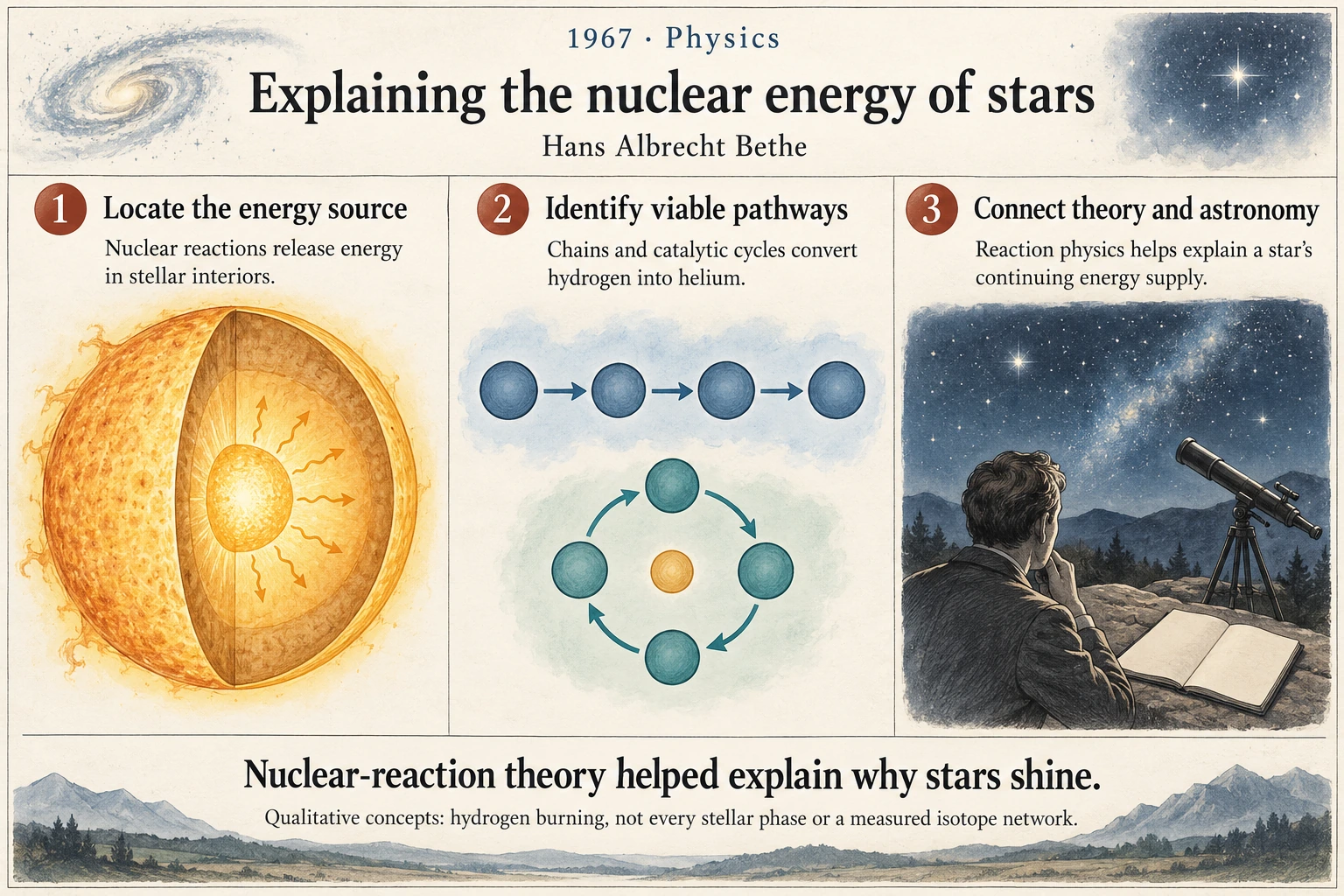
A star can shine for immense periods because nuclear reactions in its interior release energy. Bethe assessed possible reactions using nuclear physics and stellar conditions, helping explain why hydrogen burning can support this energy supply.
The proton–proton chain and carbon–nitrogen–oxygen cycle both convert hydrogen into helium through multiple reactions. Their relative importance depends on stellar conditions: proton–proton reactions dominate in the Sun, while the catalytic cycle is more important in hotter, more massive main-sequence stars. Carbon, nitrogen and oxygen participate in the cycle rather than providing its main consumed fuel.
Why it matters
This work connected microscopic nuclear processes with a major astronomical question. The award also recognised Bethe’s broader contributions to nuclear-reaction theory, building on earlier research and other scientists’ work.