c.curionodeThe Nobel Archive

1969 · Peace

Working conditions as a foundation for peace

The International Labour Organization received the Peace Prize for developing international norms for working conditions. Its work connects social justice with the prospects for peace.

Labour standardsTripartite cooperationSocial justice
1969Peace

Visual guide

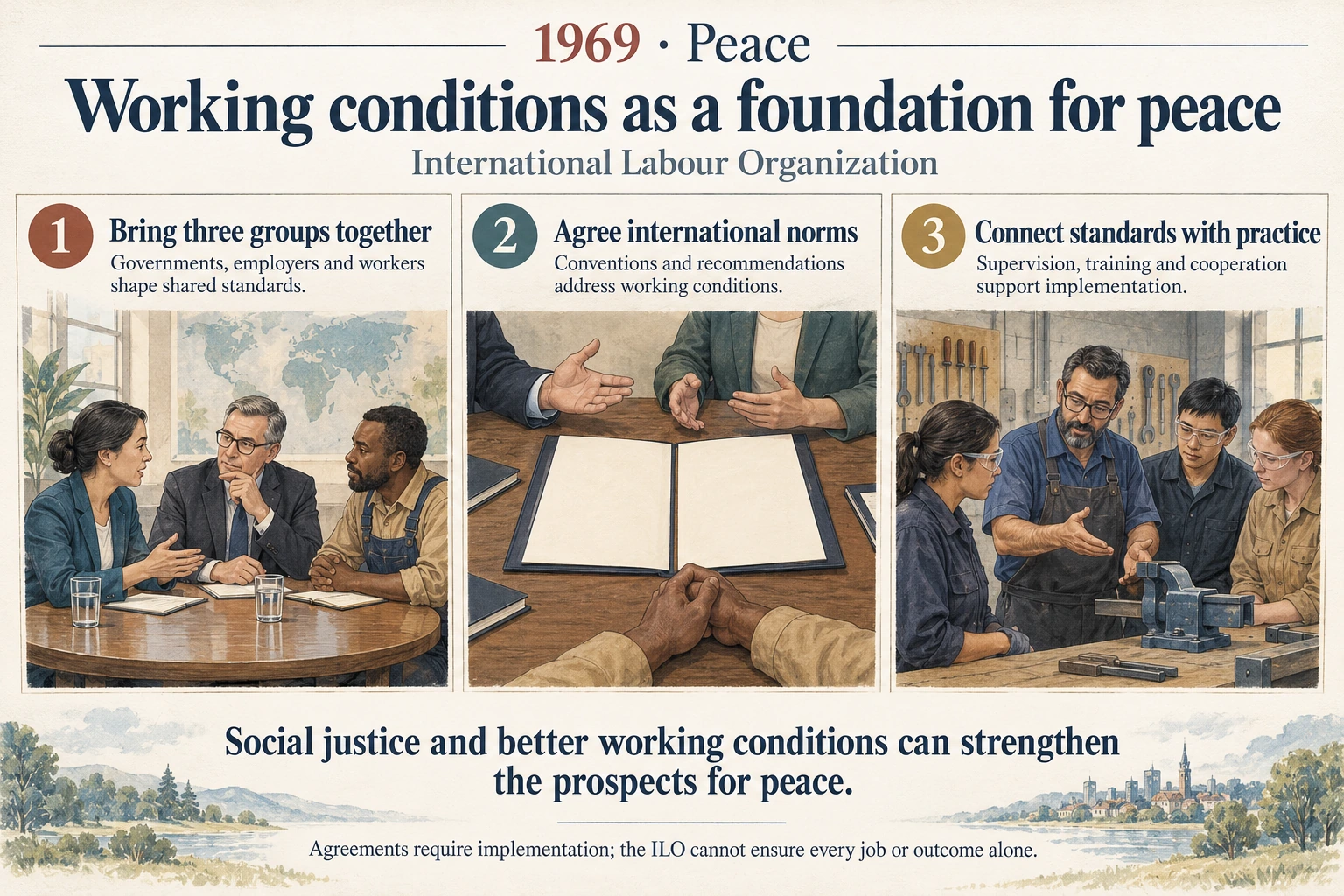
The prize, pictured

Infographic explaining Working conditions as a foundation for peace
Original AI-generated infographic. A conceptual overview; the explanations and sources below provide context.
Read the poster text

Social justice and better working conditions can strengthen the prospects for peace.

  1. Bring three groups together

    Governments, employers and workers shape shared standards.

  2. Agree international norms

    Conventions and recommendations address working conditions.

  3. Connect standards with practice

    Supervision, training and cooperation support implementation.

Agreements require implementation; the ILO cannot ensure every job or outcome alone.

01 · The contribution

The idea, in everyday language

Created in 1919, the ILO brings government, employer and worker representatives into discussion of labour standards. This tripartite approach helps different interests participate in shaping common principles.

Conventions and recommendations address conditions such as working time, safety, freedom of association and social protection. Supervision, reporting, training and technical cooperation help connect agreements with practice. In 1969 the committee also recognised efforts supporting development.

Why it matters

The prize recognised an institutional effort to reduce injustice through standards and cooperation. It linked better social conditions with peace while acknowledging the continuing tasks of employment, development and independent representation.

02 · The recipients

Who brought the idea to life?

03 · Years in the making

The path here

  1. 1919

    The ILO is created through the Versailles settlement.

  2. 1920

    It moves to Geneva.

  3. 1944

    The Declaration of Philadelphia broadens its social aims.

  4. 1946

    It becomes a specialised UN agency.

  5. 1969

    The organisation receives the Peace Prize on its fiftieth anniversary.

04 · Read further

From the original sources

Original explanations by Curionode, based on the official records below. Biographical details and affiliations refer to the award year.

  1. Official award summary nobelprize.org
  2. Award ceremony speech nobelprize.org
  3. ILO institutional history ilo.org