c.curionodeThe Nobel Archive

1973 · Peace

A ceasefire agreement and an unresolved peace

Kissinger and Lê Đức Thọ were jointly named for negotiating a Vietnam ceasefire in 1973. Thọ declined the prize because peace had not been secured; the agreement did not end the war.

DiplomacyCeasefireAward controversy
1973Peace

Visual guide

The prize, pictured

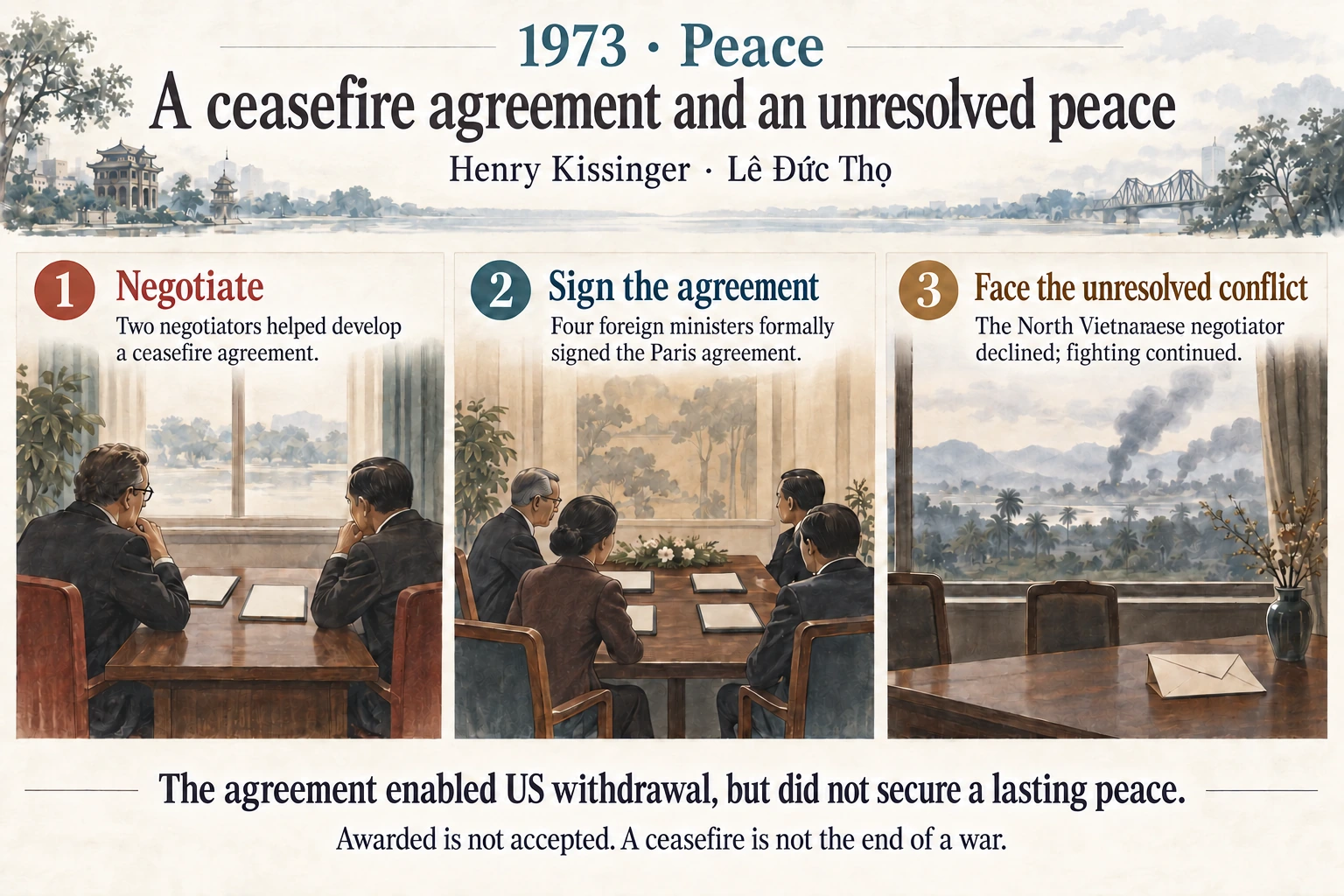
Infographic explaining A ceasefire agreement and an unresolved peace
Original AI-generated infographic. A conceptual overview; the explanations and sources below provide context.
Read the poster text

The agreement enabled US withdrawal, but did not secure a lasting peace.

  1. Negotiate

    Two negotiators helped develop a ceasefire agreement.

  2. Sign the agreement

    Four foreign ministers formally signed the Paris agreement.

  3. Face the unresolved conflict

    The North Vietnamese negotiator declined; fighting continued.

Awarded is not accepted. A ceasefire is not the end of a war.

01 · The contribution

The idea, in everyday language

Private talks between the US adviser and the North Vietnamese negotiator operated within a wider four-party process. They initialled the Paris agreement on 23 January 1973. Four foreign ministers formally signed it on 27 January: Nguyễn Duy Trinh, Nguyễn Thị Bình, William Rogers and Trần Văn Lắm. Negotiating the settlement and signing its final documents were different roles.

The agreement provided for a ceasefire, withdrawal of US forces and prisoner releases. It left fundamental political and military conflicts unresolved. Fighting continued, and the war ended in 1975. The Nobel Committee awarded both negotiators half shares. Kissinger accepted; Thọ refused. Nobel’s own account records controversy over bombing and two committee members’ resignations.

Why it matters

The negotiations produced an agreement with concrete consequences for US withdrawal and prisoners. The prize also became an enduring example of the gap between recognising a diplomatic agreement and establishing a durable peace.
02 · The people

Who brought the idea to life?

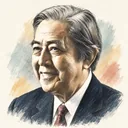
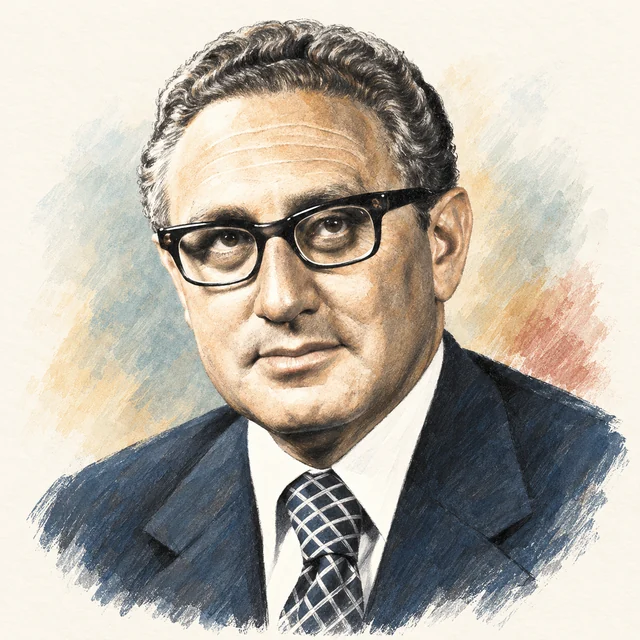
Illustrated portrait of Henry Kissinger

Henry Kissinger

Prize share · 1/2

Kissinger negotiated the 1973 Vietnam ceasefire with Lê Đức Thọ and accepted his half of the Peace Prize. The award was controversial and fighting continued.

Read the biography ↗
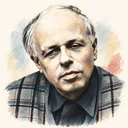
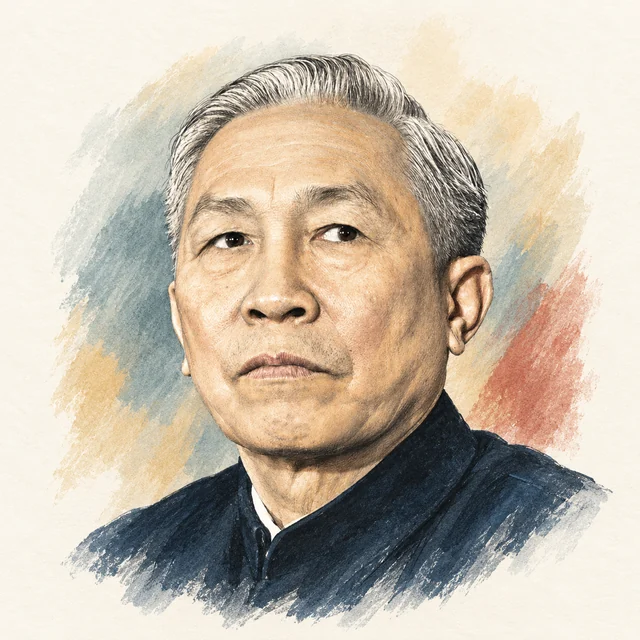
Illustrated portrait of Lê Đức Thọ

Lê Đức Thọ

Prize share · 1/2

Thọ negotiated the Vietnam ceasefire with Kissinger but declined the Peace Prize because peace had not been secured. He remains a listed half-share recipient.

Read the biography ↗

03 · Years in the making

The path here

  1. 1968

    The Paris negotiations began.

  2. 1973 · January

    The two initialled the agreement on23January; four ministers signed on 27 January.

  3. 1973 · October

    The joint Peace Prize was announced; Thọ declined it.

  4. 1973 · December

    Kissinger was represented at the Oslo ceremony.

  5. 1975

    The war ended after continued fighting.

04 · Read further

From the original sources

Original explanations by Curionode, based on the official records below. Biographical details and affiliations refer to the award year.

  1. Official award summary nobelprize.org
  2. Official ceremony speech nobelprize.org
  3. Vietnam government: Paris agreement chronology en.baochinhphu.vn
  4. US Office of the Historian: ending the Vietnam War history.state.gov