01 · The discovery
The idea, in everyday language
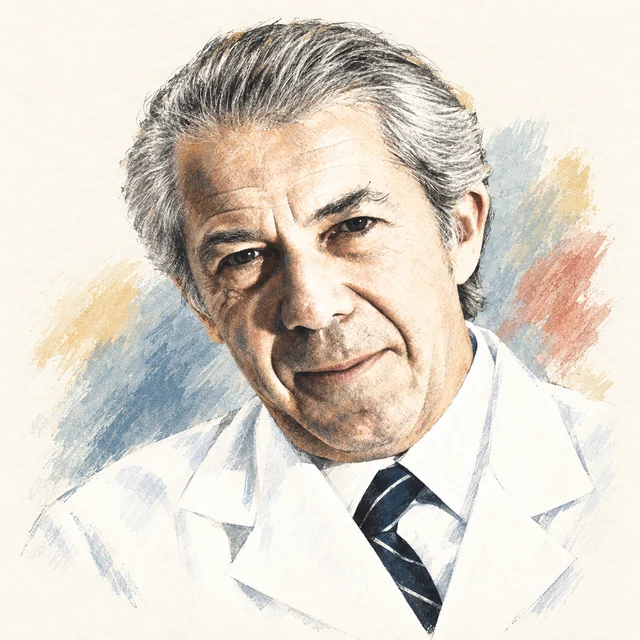
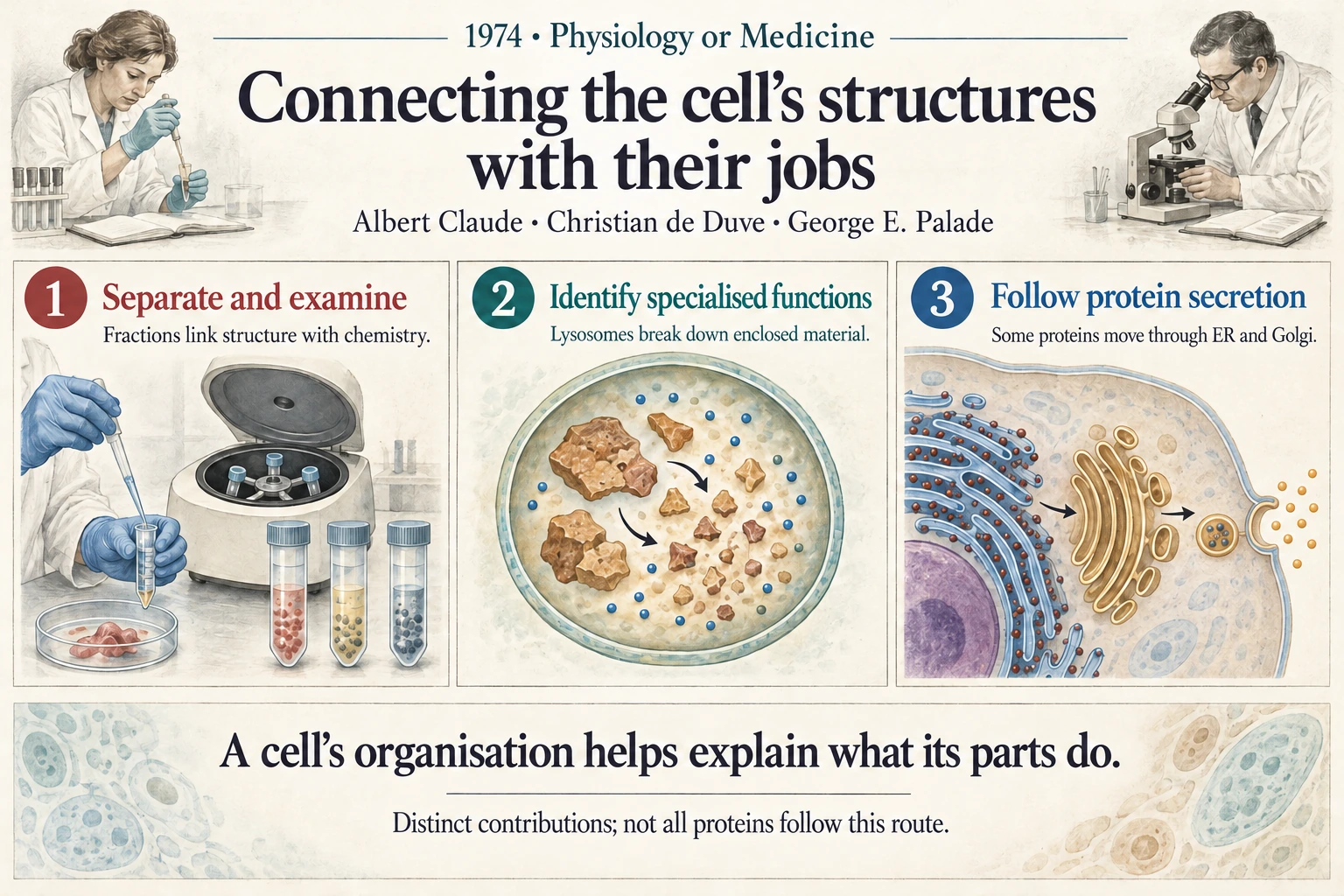
Claude developed cell fractionation: cells are disrupted and their components separated through centrifugation, producing fractions that can be examined chemically. Sedimentation depends on size, density and shape, so a fraction is not automatically one pure organelle. Electron microscopy provided detailed structural information. Comparing the chemistry of fractions with their microscopic appearance helped connect components with particular cellular activities.
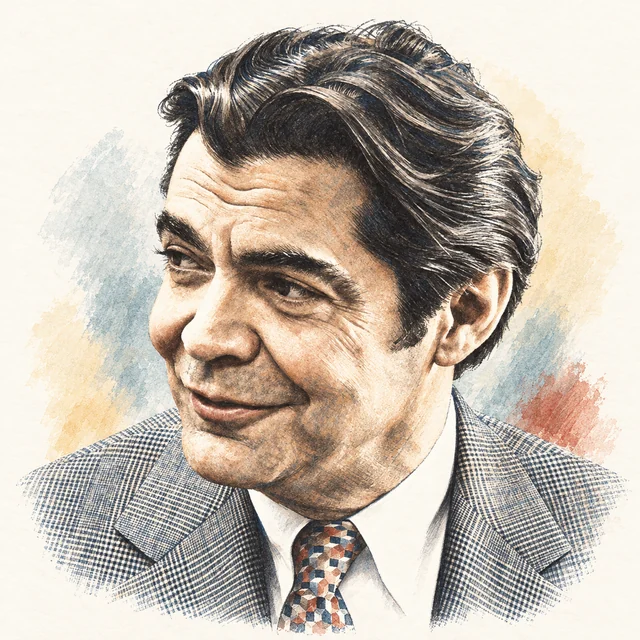
De Duve’s biochemical work identified lysosomes, membrane-bounded compartments with enzymes that break down material, and later investigated peroxisomes. Palade described the particles now called ribosomes and, with collaborators including Porter, Siekevitz and Jamieson, connected fine structure with protein synthesis and secretion. Proteins destined for secretion could be followed through the endoplasmic reticulum, Golgi system and secretory carriers. Microsomes obtained after breaking cells open were recognised as membrane fragments, rather than a separate intact organelle living inside the original cell.
Why it matters
Together, these approaches established ways to investigate how cellular organisation supports function. They made it possible to connect a structure, its molecules and its activity rather than describing the cell as an undifferentiated container. The discoveries provided foundations for later biological and medical research.