c.curionodeThe Nobel Archive

1976 · Chemistry

When one electron pair binds three atoms

Boranes challenged familiar rules of bonding. Lipscomb combined measured molecular geometry with quantum calculations to explain structures that ordinary two-atom bonds alone could not account for.

Chemical bondsMolecular structureShared electrons
1976Chemistry

Visual guide

The prize, pictured

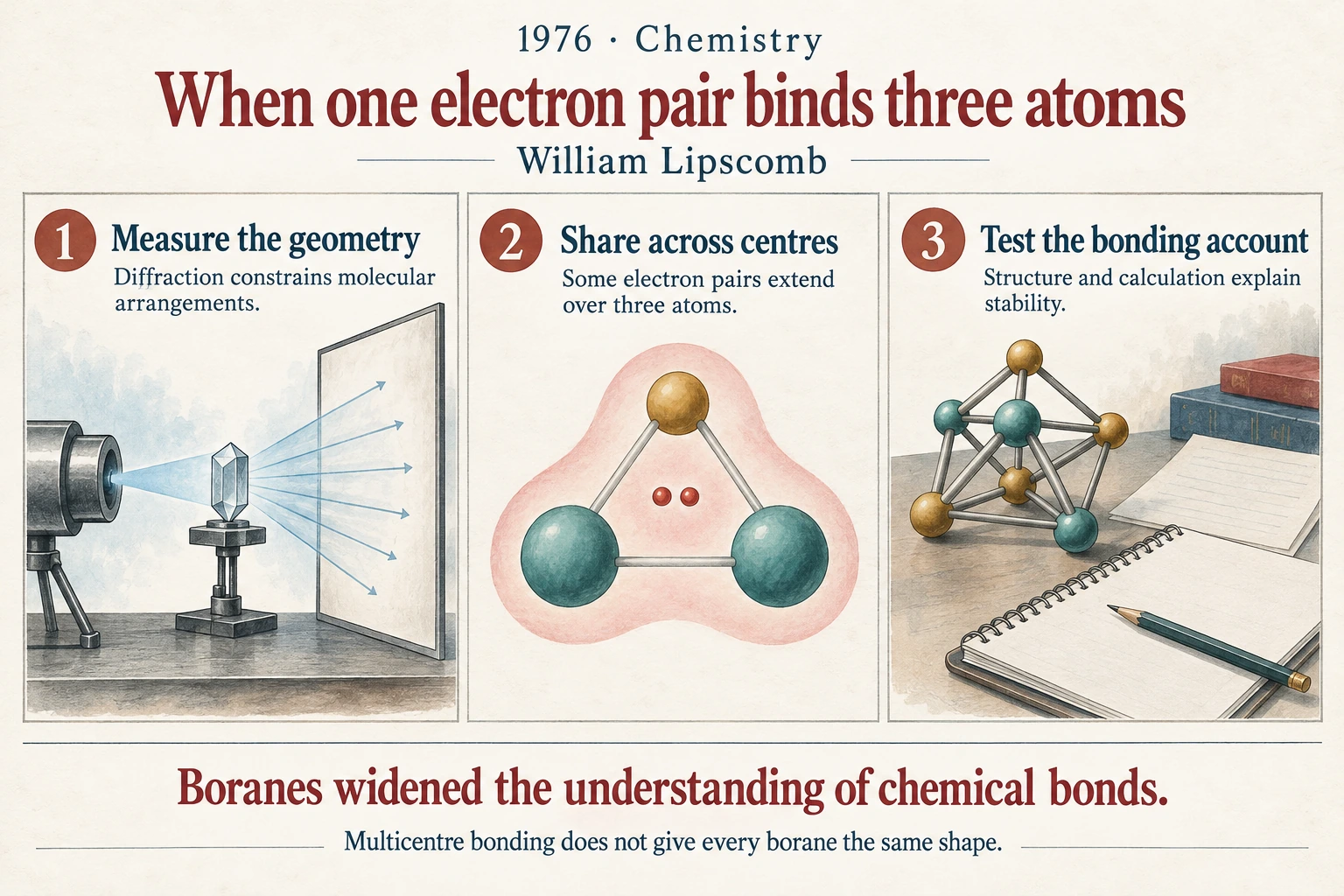
Infographic explaining When one electron pair binds three atoms
Original AI-generated infographic. A conceptual overview; the explanations and sources below provide context.
Read the poster text

Boranes widened the understanding of chemical bonds.

  1. Measure the geometry

    Diffraction constrains molecular arrangements.

  2. Share across centres

    Some electron pairs extend over three atoms.

  3. Test the bonding account

    Structure and calculation explain stability.

Multicentre bonding does not give every borane the same shape.

01 · The discovery

The idea, in everyday language

Boron and hydrogen form a varied family of compounds called boranes. Compared with a simple hydrocarbon picture, there are too few valence electrons to assign an ordinary two-centre, two-electron bond to every connection suggested by their structures. The solution is not to invent missing electrons. Some electron pairs are shared over more than two atomic centres, including three-centre bonding. Electron distribution must be considered across the molecular framework rather than forced into an unsuitable collection of pairwise links.

Lipscomb and his colleagues used X-ray diffraction to establish geometric arrangements, then structural reasoning and quantum calculations to test possible bonding accounts. This work included neutral boranes, charged clusters and related compounds. Agreement between structure and calculation helped explain stability and reaction patterns. Earlier researchers had suggested alternative bonding ideas; the award recognised Lipscomb’s systematic achievement in establishing and explaining borane structures, not sole invention of every multicentre-bond concept. His enzyme research demonstrated a broader interest in how three-dimensional structure shapes chemical behaviour.

Why it matters

The research expanded what chemists could mean by a chemical bond and provided methods for understanding electron-deficient clusters. Combining geometry, theory and reactivity made previously puzzling structures intelligible. Lipscomb received the full Chemistry Prize; later uses of cluster chemistry extend beyond the original award.
02 · The people

Who brought the idea to life?

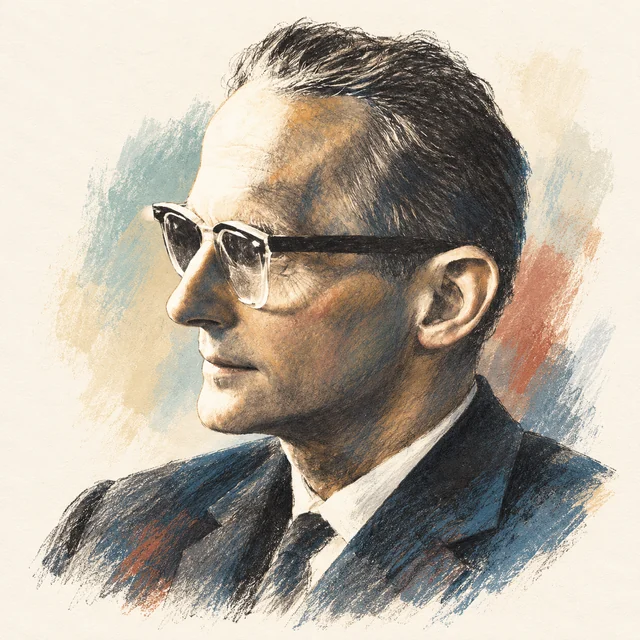
Illustrated portrait of William Lipscomb

William Lipscomb

Prize share · 1

Lipscomb received the full Chemistry Prize for determining and explaining borane structures. Multicentre bonding helped account for stable arrangements where ordinary two-centre bonds alone were insufficient.

Read the biography ↗

03 · Years in the making

The path here

  1. 1941

    Lipscomb enters Caltech, initially studying physics.

  2. 1946

    After his doctorate he joins the University of Minnesota.

  3. 1950s

    His group investigates borane geometry and bonding.

  4. 1959

    He moves to Harvard.

  5. 1963

    Boron Hydrides brings together the developing structural account.

  6. 1976

    He receives the full Chemistry Prize for borane structures and bonding.

04 · Read further

From the original sources

Original explanations by Curionode, based on the official records below. Biographical details and affiliations refer to the award year.

  1. Official announcement nobelprize.org

More in Chemistry

Browse this subject ↗