c.curionodeThe Nobel Archive

1979 · Economic Sciences

Development depends on people and change

Schultz examined agriculture and investment in people. Lewis analysed how capital accumulation can shift employment and production between sectors. Their different approaches made development a richer economic question.

The Sveriges Riksbank Prize in Economic Sciences in Memory of Alfred Nobel.

Development economicsHuman capitalStructural change
1979Economic Sciences

Visual guide

The prize, pictured

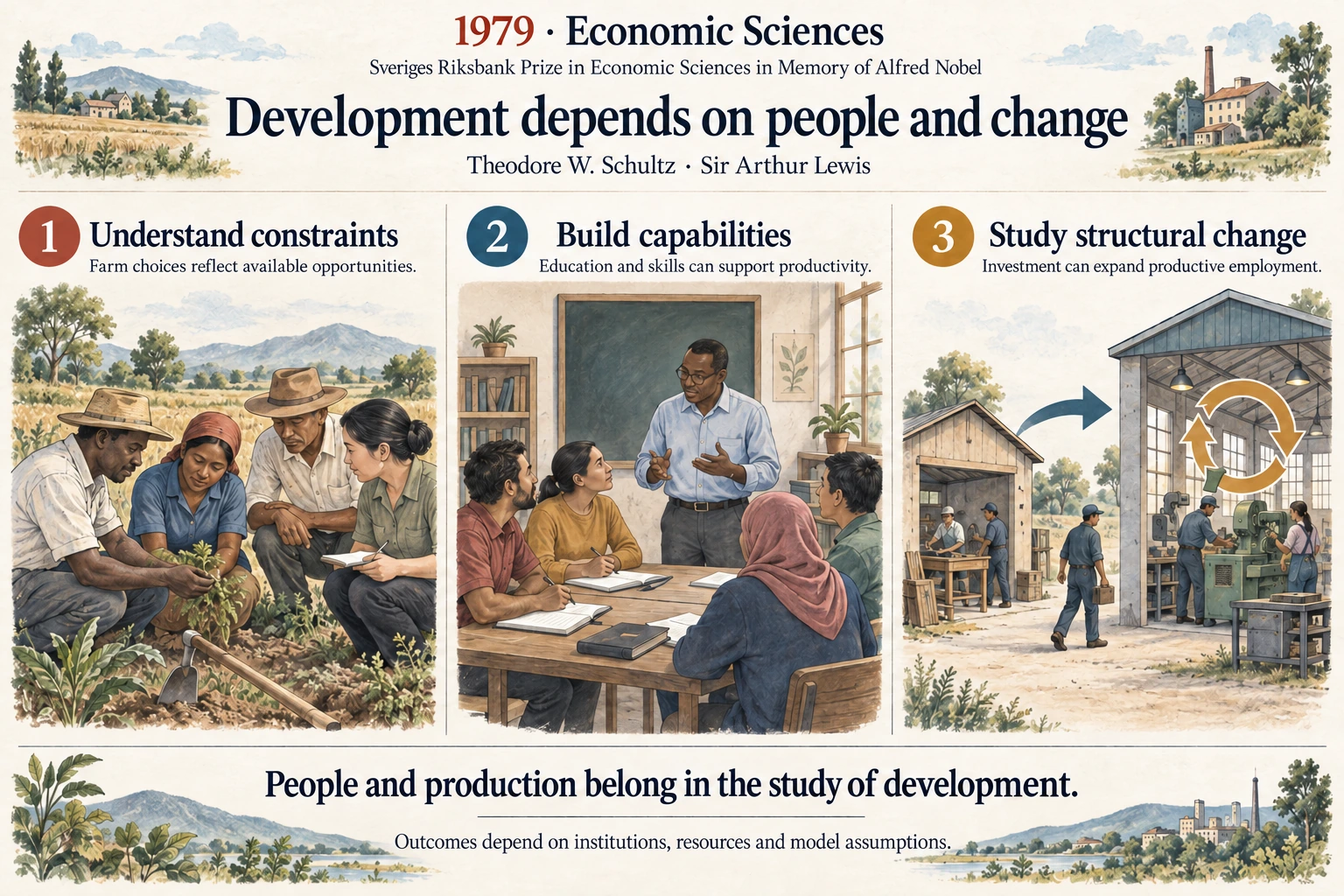
Infographic explaining Development depends on people and change
Original AI-generated infographic. A conceptual overview; the explanations and sources below provide context.
Read the poster text

People and production belong in the study of development.

  1. Understand constraints

    Farm choices reflect available opportunities.

  2. Build capabilities

    Education and skills can support productivity.

  3. Study structural change

    Investment can expand productive employment.

Outcomes depend on institutions, resources and model assumptions.

01 · The discovery

The idea, in everyday language

Schultz challenged explanations that treated poor farmers as incapable of making sensible choices. With limited technology and incentives, people may use their available resources carefully and still remain poor. New productive opportunities, education, skills and health can change what is possible. His human-capital approach made investment in capabilities part of economic analysis, alongside the costs and conditions of that investment.

Lewis’s 1954 model considers a labour-abundant part of the economy and an expanding capitalist sector. If profits are reinvested and employment can grow, workers may move into more productive activities while wages initially remain relatively stable. As abundant labour is absorbed, those conditions change. The mechanism links production, distribution and capital accumulation; its assumptions need checking against the economy being studied.

Why it matters

The research gave development economics tools for studying agriculture, education, structural change and growth without treating national income as the only question. Each laureate received one half of the Sveriges Riksbank Prize in Economic Sciences in Memory of Alfred Nobel. Their work encouraged attention to real constraints and to the interaction between human capabilities and productive organisation.
02 · The people

Who brought the idea to life?

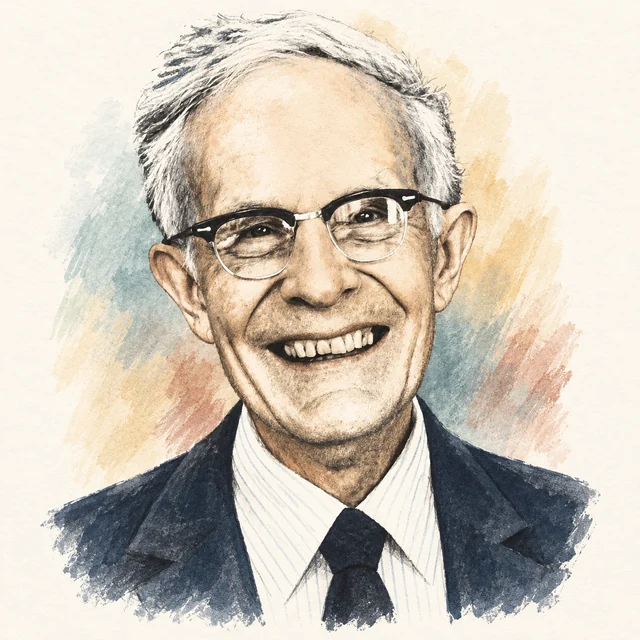
Illustrated portrait of Theodore W. Schultz

Theodore W. Schultz

Prize share · 1/2

Schultz investigated agricultural development and investment in people’s productive capabilities. He received one half of the Sveriges Riksbank memorial prize. Poverty did not, in his account, automatically show that farmers were irrational or that supplying machines alone would solve their constraints.

Read the biography ↗
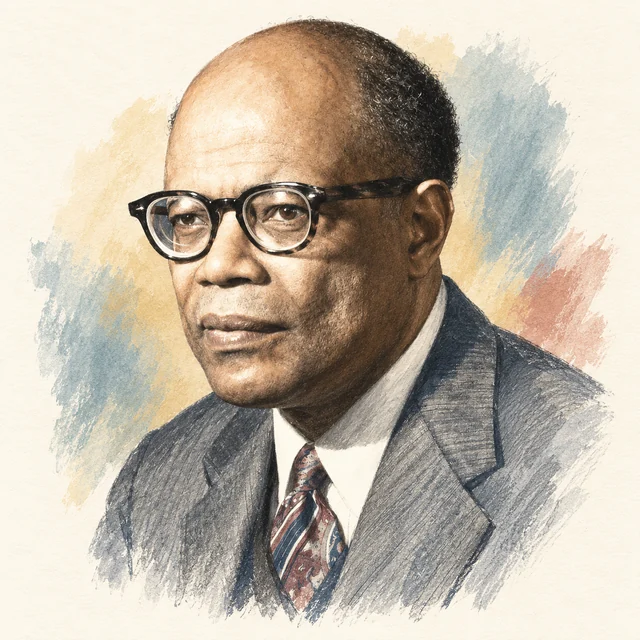
Illustrated portrait of Sir Arthur Lewis

Sir Arthur Lewis

Prize share · 1/2

Lewis developed a model of structural change linking a labour-abundant sector with capital accumulation and expanding employment. He received one half of the Sveriges Riksbank memorial prize. The model identifies a conditional mechanism, not a universal instruction to move workers from farms to cities.

Read the biography ↗

03 · Years in the making

The path here

  1. 1930–1943

    Schultz studies agricultural economics at Iowa State.

  2. 1943

    Schultz moves to Chicago.

  3. 1948

    Lewis becomes a professor at Manchester.

  4. 1954

    Lewis publishes the labour-abundance model.

  5. 1963

    Lewis joins Princeton.

  6. 1964

    Schultz publishes Transforming Traditional Agriculture.

  7. 1979

    The two development researchers share the memorial prize.

04 · Read further

From the original sources

Original explanations by Curionode, based on the official records below. Biographical details and affiliations refer to the award year.

  1. Official announcement nobelprize.org
  2. Schultz’s official biography nobelprize.org
  3. Lewis’s official biography nobelprize.org

More in Economic Sciences

Browse this subject ↗