c.curionodeThe Nobel Archive

1985 · Literature

Let memory reshape the novel

Simon combined poetic and painterly prose with an exploration of time and human experience.

memorynarrative formFrench prosetime
1985Literature

Visual guide

The prize, pictured

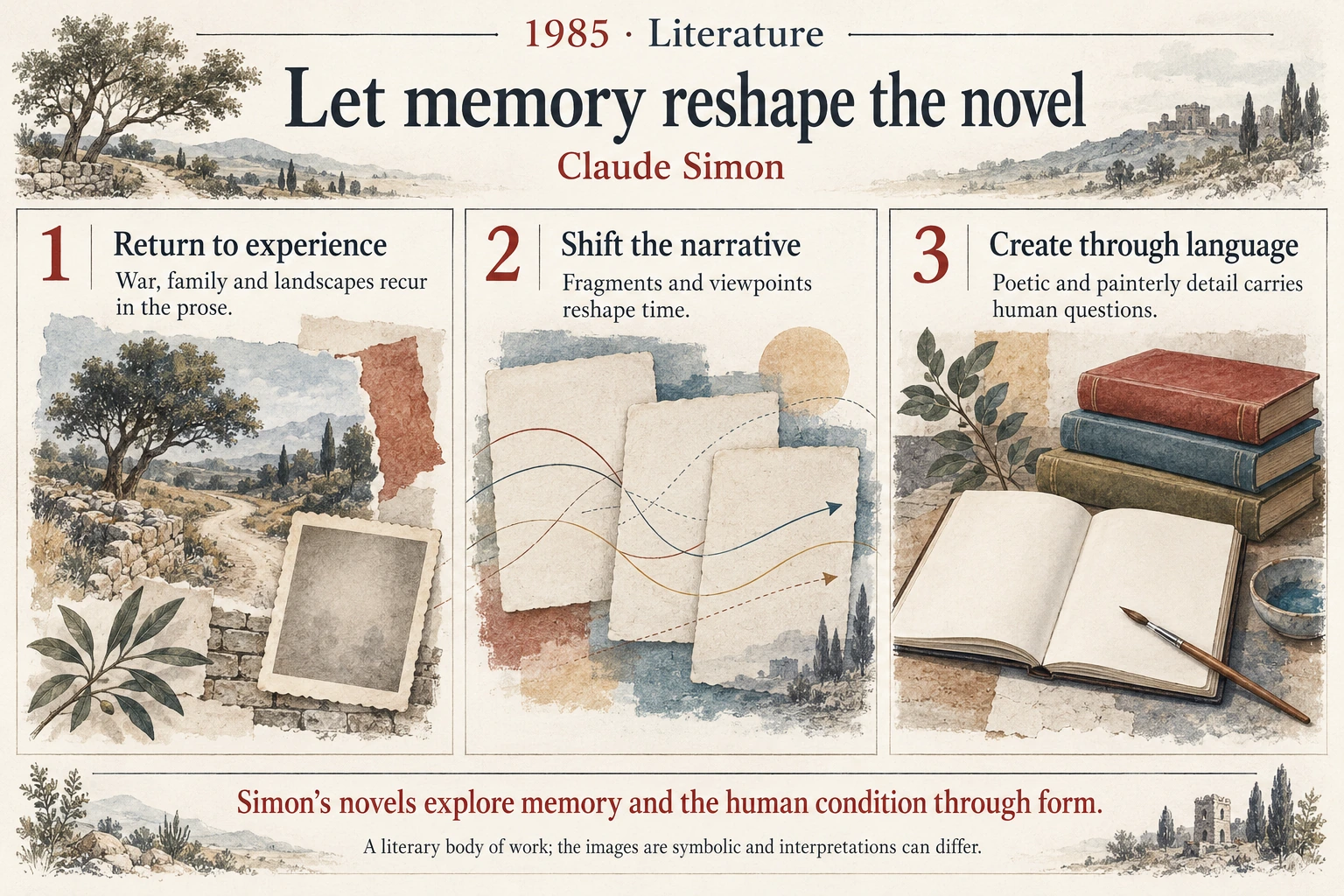
Infographic explaining Let memory reshape the novel
Original AI-generated infographic. A conceptual overview; the explanations and sources below provide context.
Read the poster text

Simon’s novels explore memory and the human condition through form.

  1. Return to experience

    War, family and landscapes recur in the prose.

  2. Shift the narrative

    Fragments and viewpoints reshape time.

  3. Create through language

    Poetic and painterly detail carries human questions.

A literary body of work; the images are symbolic and interpretations can differ.

01 · The contribution

The idea, in everyday language

An orderly story can make experience seem more continuous and certain than it feels. Simon’s novels return to war, family history, bodies, landscapes and remembered images through fragments and shifting perspectives. Dense sensory detail and long, moving sentences make the act of describing part of the work’s meaning.

La Route des Flandres uses the experience of war and memory in a complex narrative form; Histoire and Les Géorgiques further connect personal and historical time. His prose has affinities with painting and montage, but is built through language. The prize recognised a body of literature that combines creative form with attention to the human condition.

Why it matters

The novels enlarged the possibilities of narrative: repetition, changing viewpoint and sensuous description can carry thought about time and history. Simon is associated with the nouveau roman, alongside writers with different projects; the label does not make their books identical.

02 · The people

Who brought the idea to life?

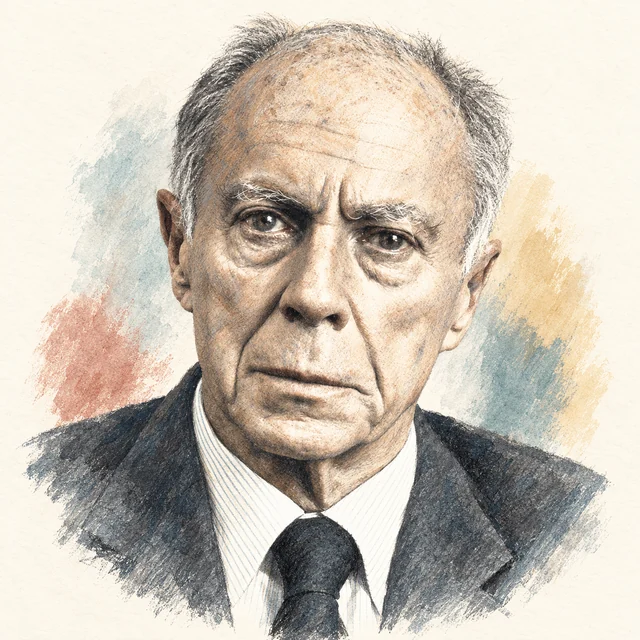
Illustrated portrait of Claude Simon

Claude Simon

Prize share · 1

Simon’s prose combines poetic and painterly detail with attention to time, memory and the human condition. Fragmented scenes and shifting perspectives question an orderly, continuous account of experience. Often associated with the nouveau roman, his work has its own changing forms and recurring concerns. The Literature Prize recognised his body of writing, rather than a single book or a scientific theory of memory. He received the full prize.

Read the biography ↗

03 · Years in the making

The path here

  1. 1945

    Le Tricheur, his first novel, is published.

  2. 1960

    La Route des Flandres brings international recognition.

  3. 1981

    Les Géorgiques connects historical and personal experiences.

  4. 1985

    Simon receives the full Literature Prize for his body of writing.

04 · Read further

From the original sources

Original explanations by Curionode, based on the official records below. Biographical details and affiliations refer to the award year.

  1. Official announcement nobelprize.org
  2. Claude Simon readers’ association: Le Tricheur (1945) associationclaudesimon.org

More in Literature

Browse this subject ↗