01 · The discovery
The idea, in everyday language
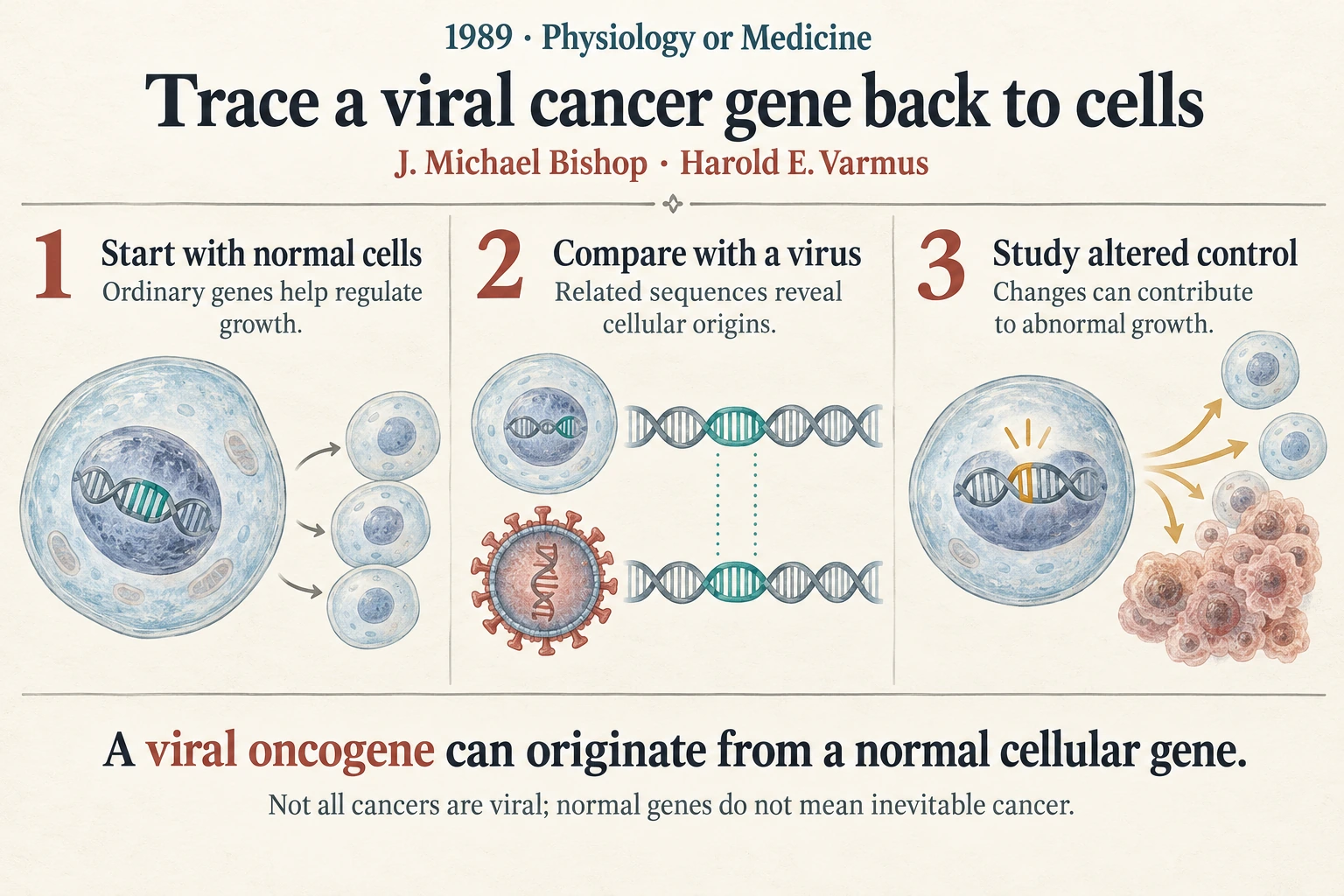
Rous sarcoma virus can cause tumours in chickens, and its src gene was known to be important for that ability. Was such a cancer-promoting gene unique to the virus? Bishop, Varmus and colleagues used molecular comparisons involving viral forms with and without the cancer-promoting region. A probe related to that region detected corresponding sequences in normal cellular DNA, including cells of different species.
The work showed that a retroviral oncogene could derive from a normal cellular gene. The normal counterpart, c-src, belongs to the class called proto-oncogenes: genes with ordinary roles in cellular regulation whose altered forms or activity can contribute to cancer. The discovery shifted attention from an exclusively foreign cause toward changes in a cell’s own growth-control machinery. The team’s key report appeared in 1976.
Why it matters
The finding connected tumour-virus research to cellular genetics and helped establish a broad programme studying oncogenes, signalling and abnormal growth. Bishop and Varmus shared the Medicine Prize, representing work with colleagues including Stehelin and Spector. The contribution was a biological explanation and experimental opening; it was not itself a cure or evidence that all cancers spread between people.