c.curionodeThe Nobel Archive

1989 · Peace

Seek peaceful solutions through dialogue

The Dalai Lama advocated nonviolence, mutual respect and the protection of Tibetan cultural heritage.

nonviolencedialogueTibetcultural heritage
1989Peace

Visual guide

The prize, pictured

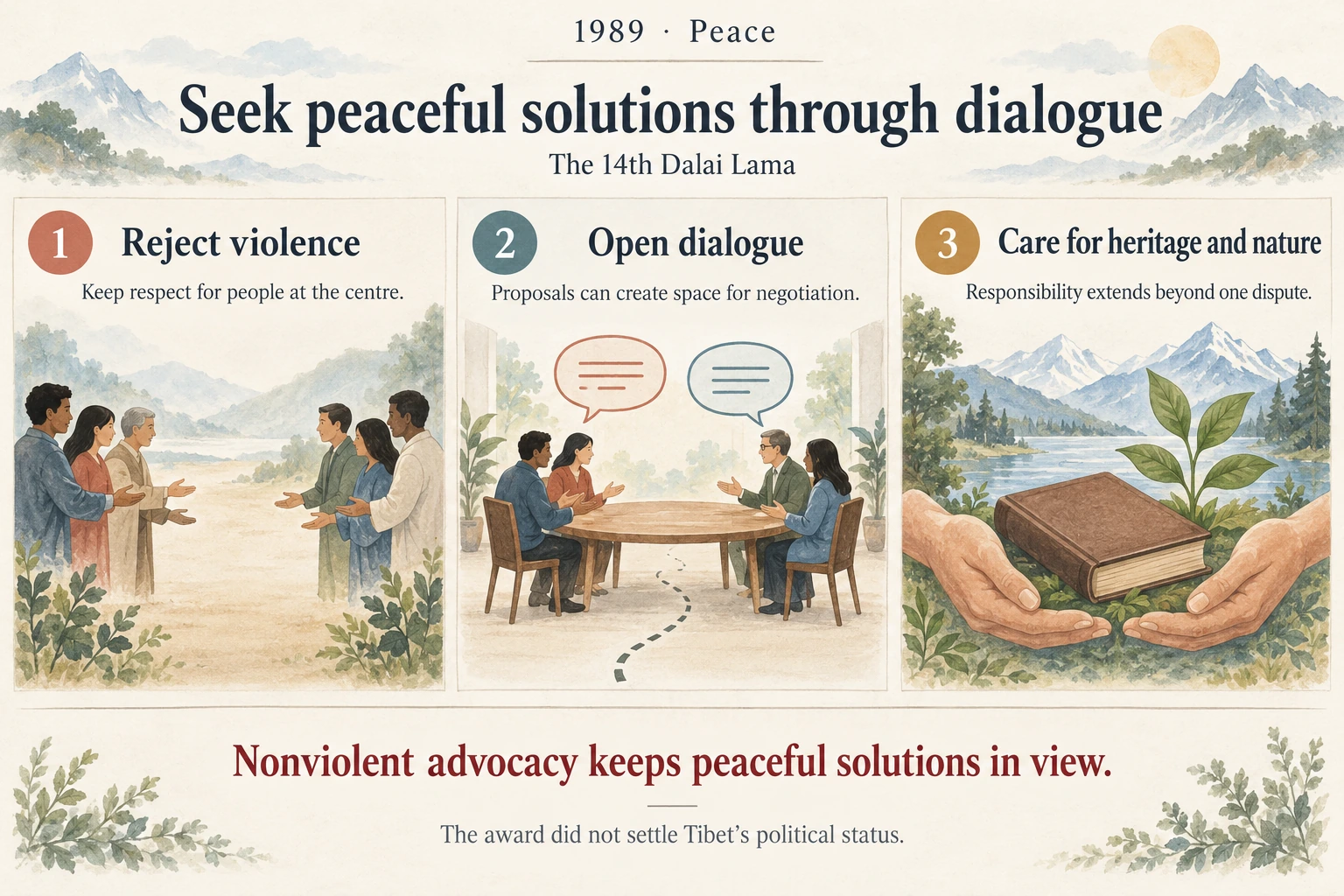
Infographic explaining Seek peaceful solutions through dialogue
Original AI-generated infographic. A conceptual overview; the explanations and sources below provide context.
Read the poster text

Nonviolent advocacy keeps peaceful solutions in view.

  1. Reject violence

    Keep respect for people at the centre.

  2. Open dialogue

    Proposals can create space for negotiation.

  3. Care for heritage and nature

    Responsibility extends beyond one dispute.

The award did not settle Tibet’s political status.

01 · The contribution

The idea, in everyday language

The Norwegian Nobel Committee recognised the fourteenth Dalai Lama’s opposition to violence in the struggle concerning Tibet. Living in exile in India since 1959, he argued for peaceful solutions through tolerance and mutual respect. His approach connected Tibetan cultural rights with a wider sense of responsibility for people, other living beings and nature.

The Five Point Peace Plan in 1987 and the Strasbourg proposal in 1988 put forward arrangements intended to open negotiation. A proposal and a negotiated settlement are different things: these initiatives did not establish an agreed political resolution. The 1989 award honoured sustained commitment to a peaceful approach amid an unresolved conflict, rather than declaring that the conflict had ended.

Why it matters

The award drew international attention to nonviolence and to links between cultural heritage, human dignity and care for the natural world. It recognised the Dalai Lama’s advocacy as a particular historical contribution. The explanation does not treat one religious tradition as uniformly peaceful or the prize as an endorsement of religious beliefs.
02 · The people

Who brought the idea to life?

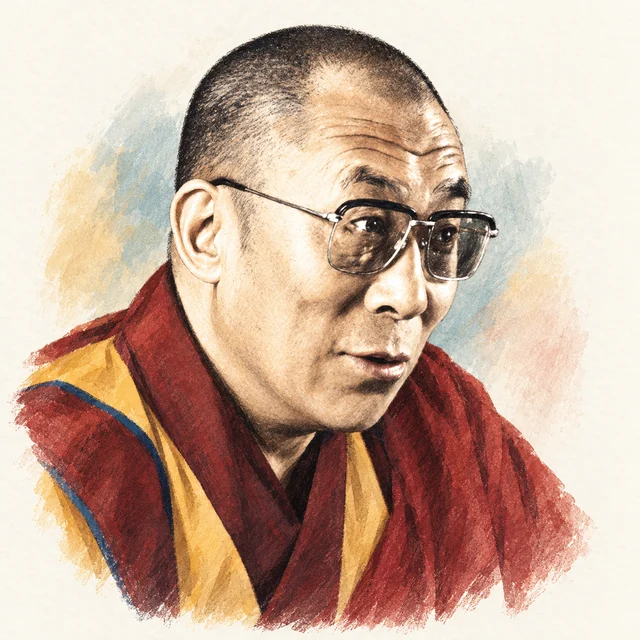
Illustrated portrait of The 14th Dalai Lama

The 14th Dalai Lama

Prize share · 1

The Norwegian Nobel Committee honoured his sustained opposition to violence in the struggle concerning Tibet and his advocacy of peaceful solutions through tolerance and mutual respect. It also emphasised concern for cultural heritage, living beings and nature. The award recognised an approach to conflict, not a resolution of Tibet’s disputed political status. His religious and political roles here describe the period of the 1989 award.

Read the biography ↗

03 · Years in the making

The path here

  1. 1959

    The Dalai Lama leaves Tibet for exile in India.

  2. 1987

    He presents the Five Point Peace Plan.

  3. 1988

    The Strasbourg proposal outlines a possible negotiating approach.

  4. 1989

    The committee honours his opposition to violence and advocacy of peaceful solutions.

04 · Read further

From the original sources

Original explanations by Curionode, based on the official records below. Biographical details and affiliations refer to the award year.

  1. Official announcement nobelprize.org