c.curionodeThe Nobel Archive

1990 · Peace

Reduce confrontation through negotiation

The 1990 prize recognised Gorbachev’s leading role in the international peace process and reduced East–West tensions.

Cold Wararms controlglasnostinternational negotiation
1990Peace

Visual guide

The prize, pictured

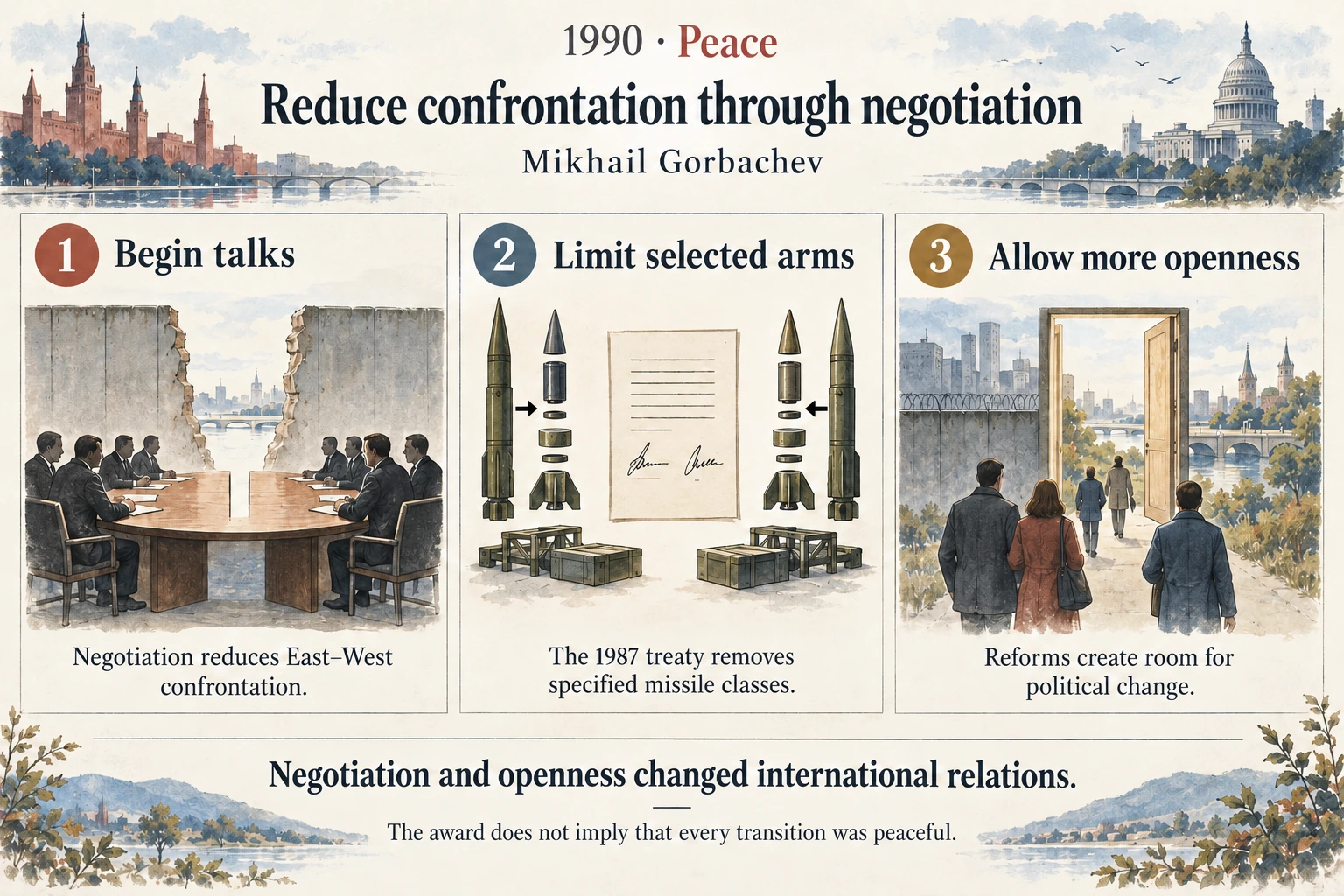
Infographic explaining Reduce confrontation through negotiation
Original AI-generated infographic. A conceptual overview; the explanations and sources below provide context.
Read the poster text

Negotiation and openness changed international relations.

  1. Begin talks

    Negotiation reduces East–West confrontation.

  2. Limit selected arms

    The 1987 treaty removes specified missile classes.

  3. Allow more openness

    Reforms create room for political change.

The award does not imply that every transition was peaceful.

01 · The contribution

The idea, in everyday language

The Cold War combined ideological conflict, military confrontation and the threat of nuclear destruction. As Soviet leader from 1985, Gorbachev pursued greater openness and restructuring while changing relations with other states. Negotiations with the United States produced the 1987 Intermediate-Range Nuclear Forces Treaty, signed with Ronald Reagan. It eliminated specified categories of land-based missiles and included verification.

Greater openness and reduced confrontation helped create room for political change in Europe. The Nobel Committee recognised his leading role in this international peace process in 1990. These developments also depended on other leaders, negotiators and people seeking change. The award preceded the Soviet Union’s dissolution and cannot be treated as recognition of a completed, universally peaceful transition.

Why it matters

The prize marked a major reduction in the danger of East–West confrontation and a new climate for international cooperation. The 1987 treaty was a concrete arms-control achievement, rather than elimination of all nuclear weapons. Recognition of that contribution must be read alongside the difficulties and violence that accompanied the later breakup of Soviet power.

02 · The people

Who brought the idea to life?

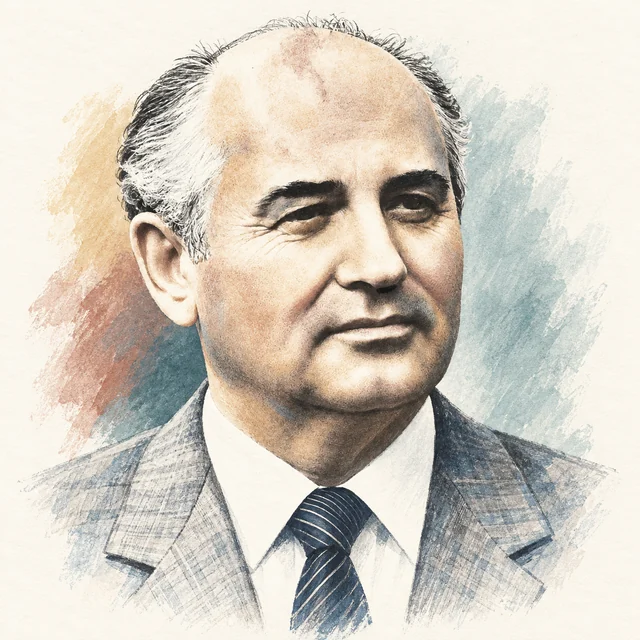
Illustrated portrait of Mikhail Gorbachev

Mikhail Gorbachev

Prize share · 1

The 1990 prize recognised his leading role in the international peace process, including reduced East–West confrontation, arms-control negotiations and greater openness. The 1987 INF Treaty with Ronald Reagan eliminated specified classes of land-based missiles, not all nuclear weapons. Later events require scrutiny: Soviet forces killed civilians in Vilnius in January 1991. The award recognises a historical contribution and does not endorse every policy or imply that all transitions were peaceful.

Read the biography ↗

03 · Years in the making

The path here

  1. 1985

    Gorbachev becomes Communist Party general secretary.

  2. 1987

    He and Reagan sign the INF Treaty in Washington on 8 December.

  3. 1990

    The Peace Prize recognises his role in the international peace process.

  4. 1991

    Soviet violence in Vilnius and the union’s eventual dissolution show the transition’s limits.

04 · Read further

From the original sources

Original explanations by Curionode, based on the official records below. Biographical details and affiliations refer to the award year.

  1. Official announcement nobelprize.org
  2. INF signing record (1987) history.state.gov
  3. Lithuanian Parliament historical account lrs.lt
  4. Nobel Committee statement (2022) nobelprize.org