01 · The contribution
The idea, in everyday language
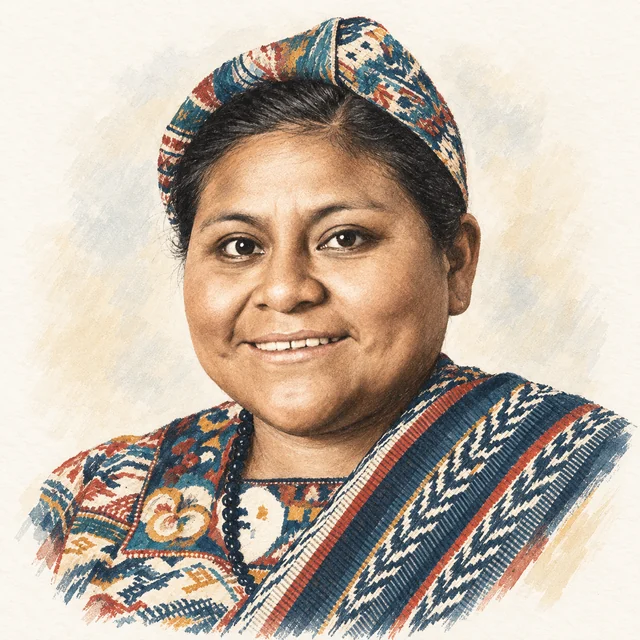
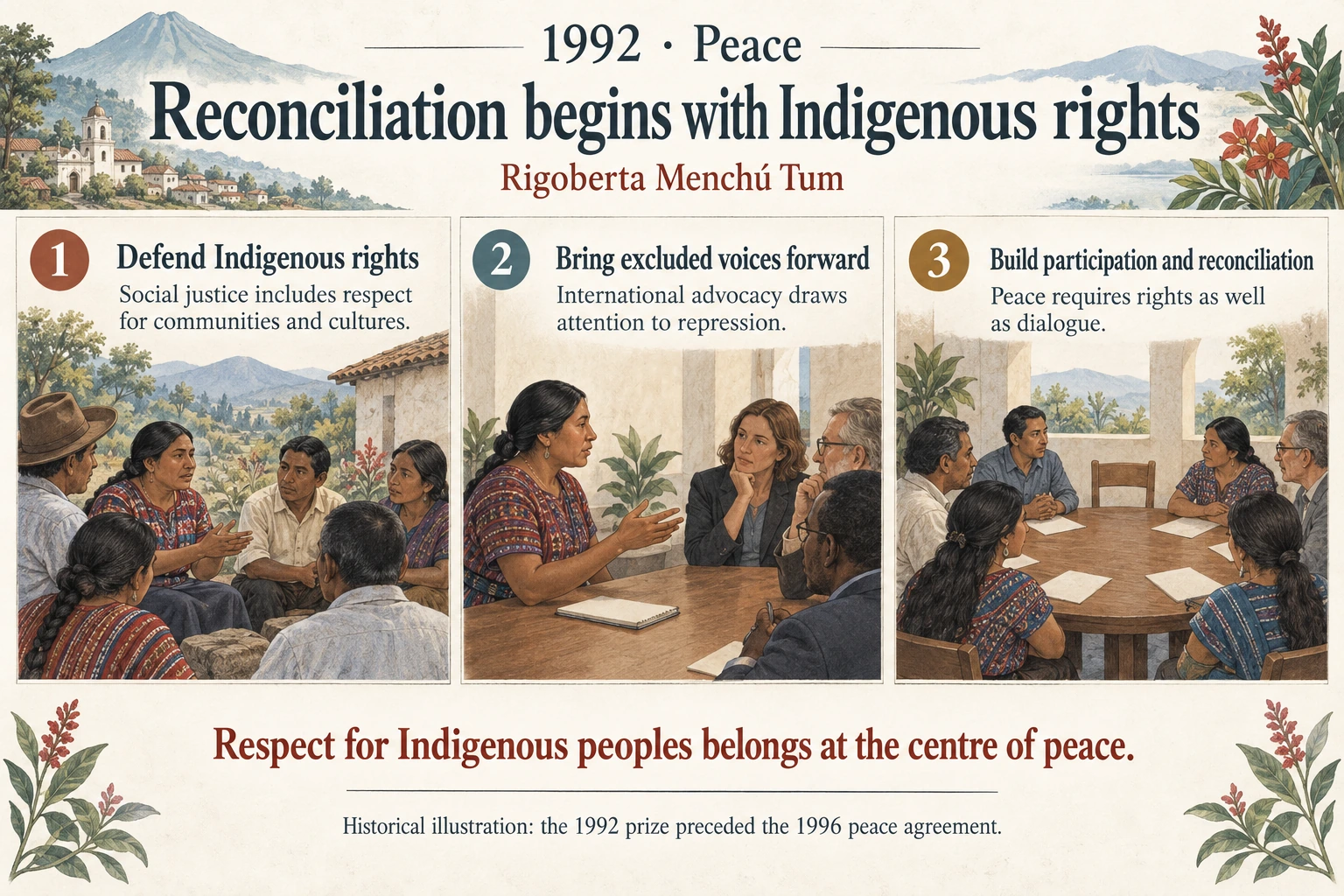
Guatemala’s civil war and repression devastated many Indigenous communities. Menchú’s organising grew out of that experience and the struggle over rights, land and social inequality. From exile, she helped make the circumstances of Maya communities visible internationally. The work recognised in 1992 joined advocacy for social justice with reconciliation across cultural and social divisions.
Reconciliation here depends on respecting the people who have been excluded. It includes their ability to participate and defend their communities’ rights, not merely a quiet end to argument. The award was made while conflict continued. The government and guerrilla organisation signed a final peace agreement in December 1996, after wider negotiations; Menchú was not its sole negotiator or author.
Why it matters
The prize increased international attention to Indigenous rights during the five-hundredth anniversary of Columbus’s arrival in the Americas. It recognised advocacy that linked peace with social justice and respect for cultural identities. Later truth-seeking and implementation of peace agreements show that international recognition is only one part of a much longer process.