01 · The discovery
The idea, in everyday language
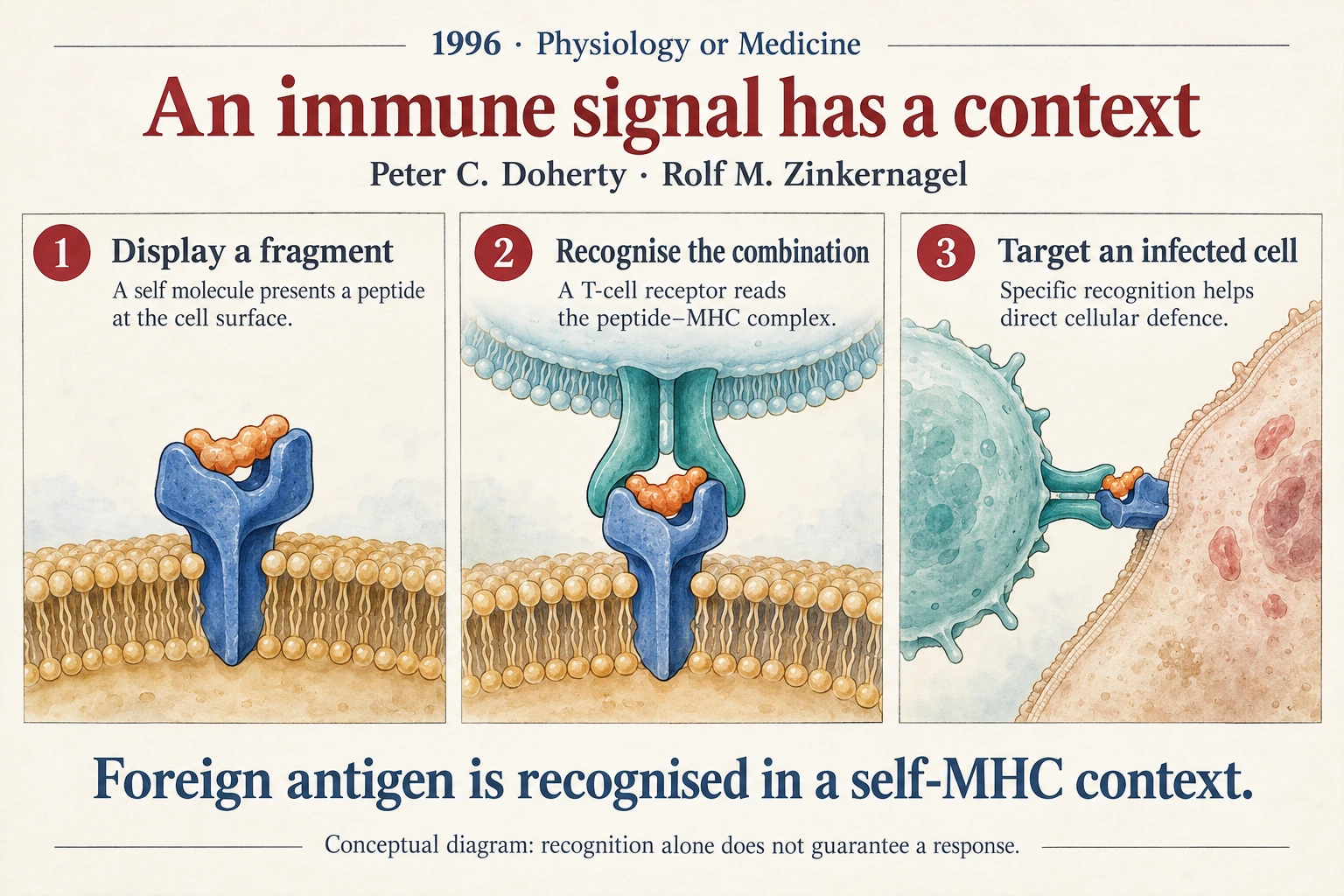
How does a T cell recognise a virus-infected cell? In experiments at the Australian National University during 1973–1975, Doherty and Zinkernagel studied T cells from infected mice. These could kill infected target cells from a compatible strain but failed against some targets from another strain, even when the same virus was present. Viral material alone did not explain the specificity.
Their 1974 papers established that recognition is restricted by self-MHC, the major histocompatibility molecules. Later molecular studies clarified the mechanism: a short peptide is held by an MHC molecule on the target cell’s surface, and a particular T-cell receptor recognises that combined structure. A molecule already associated with transplant compatibility was therefore central to everyday cellular immune defence.
Why it matters
MHC restriction became a foundation of cellular immunology. It helped explain immune development, transplant responses and why particular targets are recognised in infection. This knowledge informed later vaccine, cancer and inflammatory-disease research, without making the 1974 experiments a treatment or a cure in themselves.