01 · The discovery
The idea, in everyday language
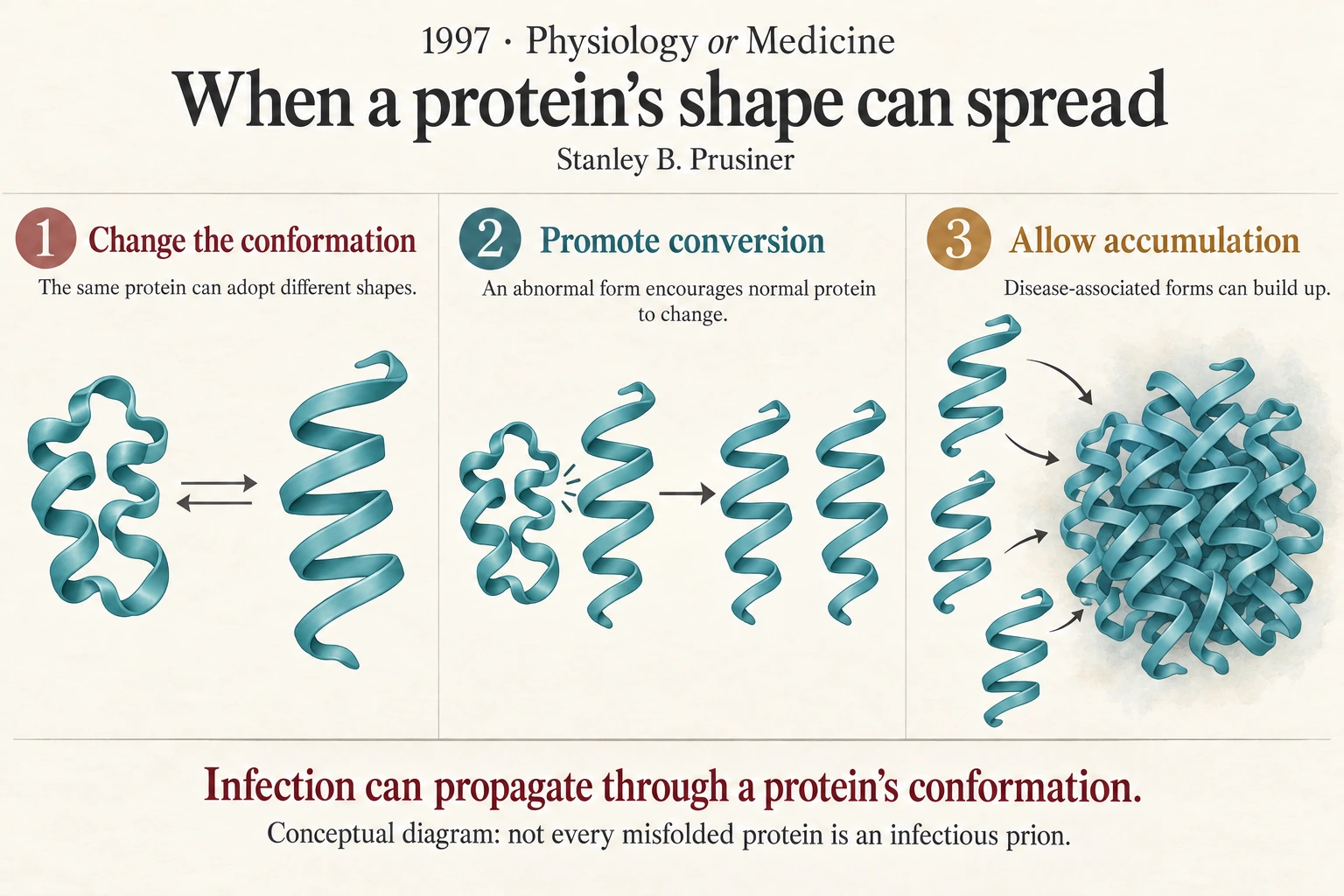
Some degenerative brain diseases could be transmitted experimentally, yet the responsible agent resisted the usual explanations. Prusiner pursued its identity through biochemical purification and named the proteinaceous infectious particle a prion in 1982. Work with colleagues showed that the relevant protein was also produced by healthy cells, rather than encoded by a separate infectious genome.
The crucial difference was conformation: an abnormal form could promote conversion of normal protein into the disease-associated form. Accumulation was linked to tissue damage. Genetic studies, including experiments in mice lacking the normal prion-protein gene, helped test the mechanism. The discovery expanded infection biology while raising new questions about how proteins fold and propagate their shapes.
Why it matters
The work changed understanding of prion diseases such as scrapie and Creutzfeldt–Jakob disease, connecting transmissible, inherited and sporadic forms through protein biology. It also stimulated wider research on misfolded proteins. The award recognized a new principle, rather than a proven treatment for every neurodegenerative disease.