01 · The contribution
The idea, in everyday language
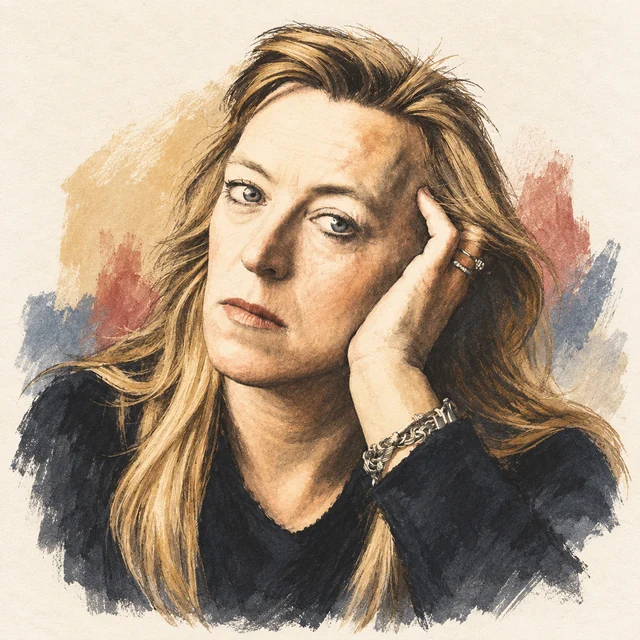
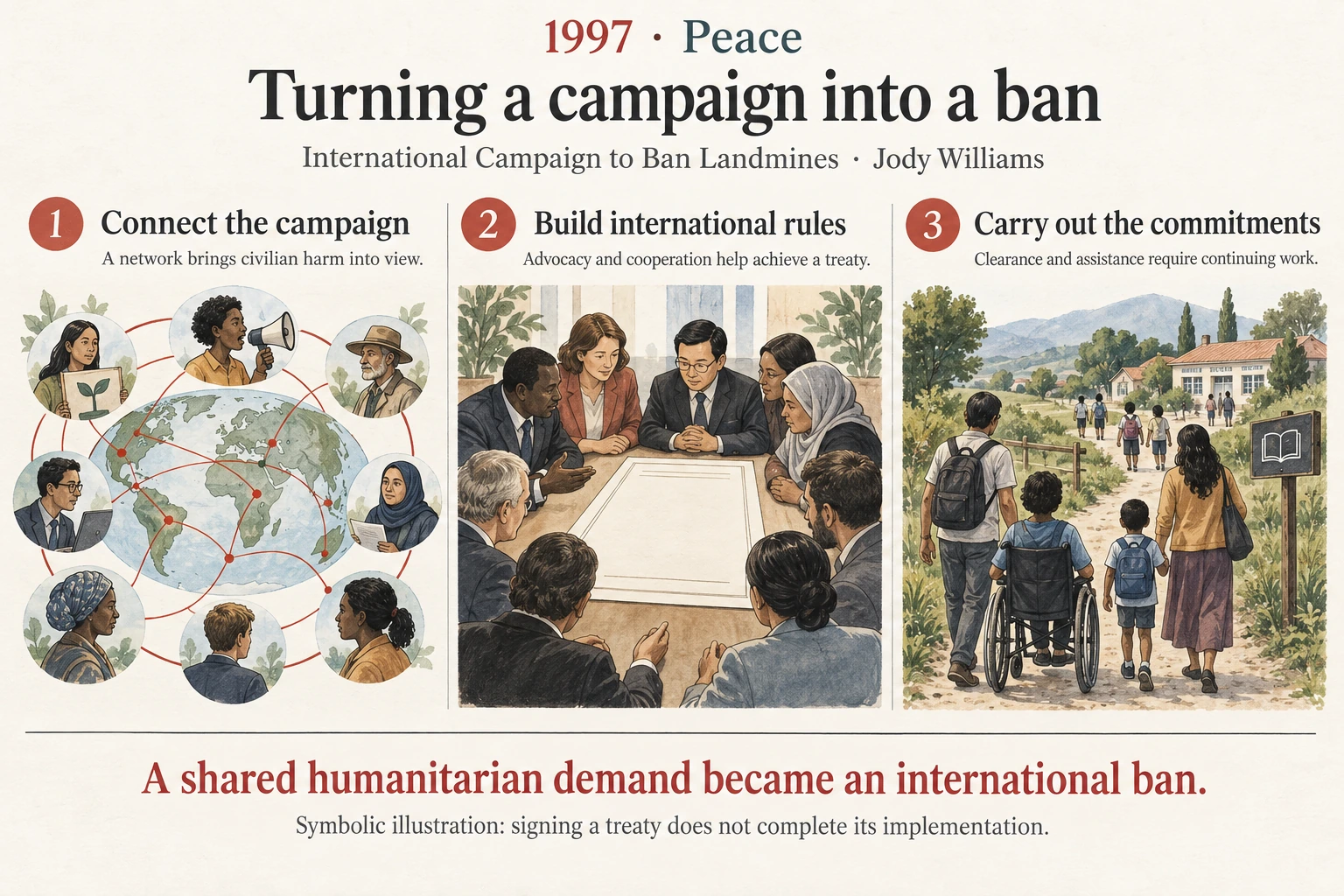
Anti-personnel mines can continue harming civilians long after a conflict has ended, obstructing everyday life and recovery. The ICBL linked organisations across countries to make the humanitarian consequences visible and press for a comprehensive ban. Williams coordinated the network’s advocacy and cooperation with supportive governments. The Nobel Committee recognized both the collective campaign and her leadership.
The Ottawa process produced a treaty adopted in September 1997 and opened for signature that December, after the October prize announcement. It prohibited key activities involving anti-personnel mines and required destruction, clearance and cooperation. Entry into force followed in 1999. The campaign’s achievement was a major change in international rules; practical protection still required states and partners to carry out the commitments.
Why it matters
The prize highlighted humanitarian disarmament and cooperation between civil society and governments. It showed how a network could help convert a proposed ban into an achievable treaty. The organisation’s half share and Williams’s half share recognize complementary contributions, while clearance and assistance remain continuing tasks.