01 · The discovery
The idea, in everyday language
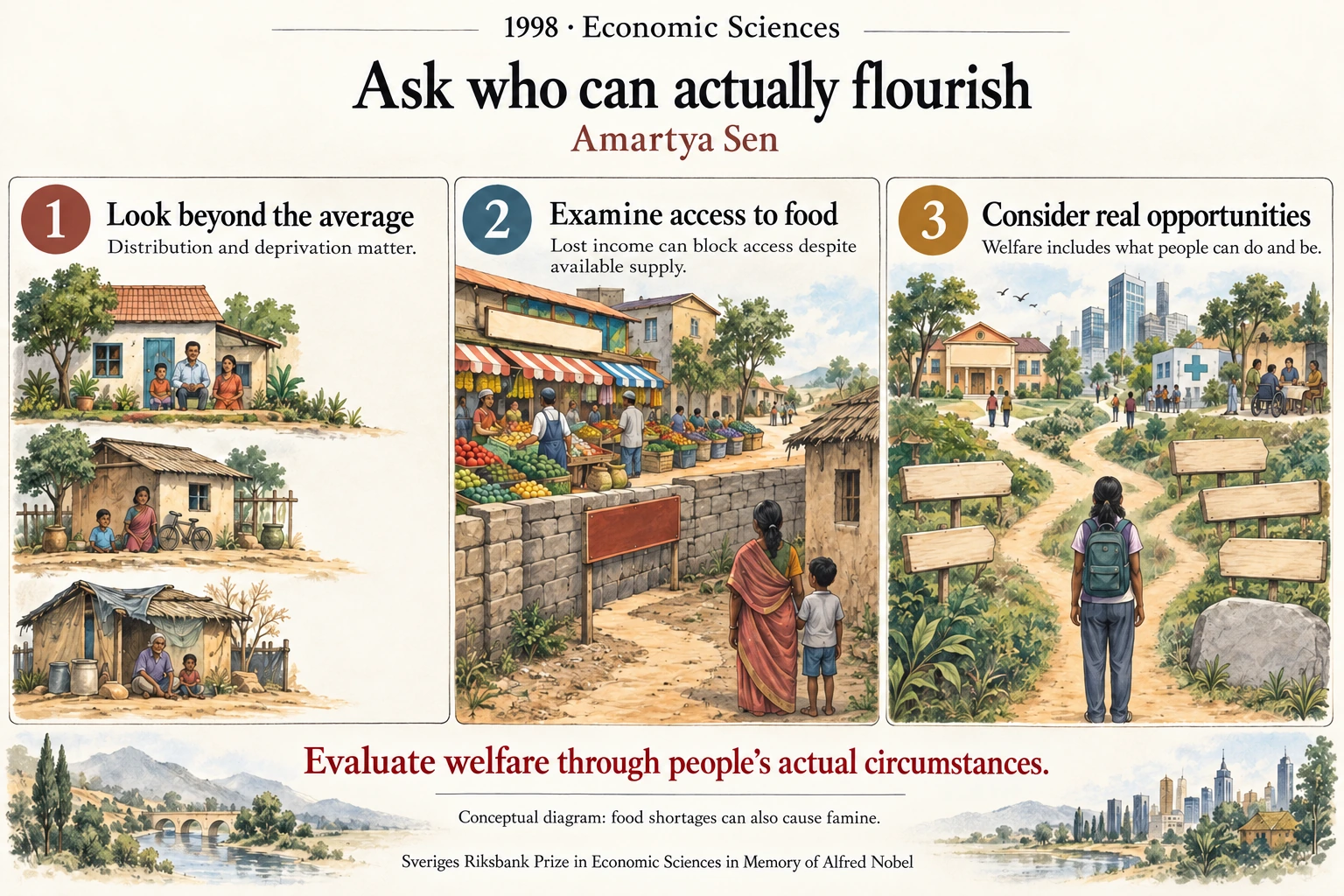
A society’s average income says little about who is deprived or what people can actually do. Sen examined the information needed to compare individual welfare and make collective decisions. His work on poverty measures took account of the depth and distribution of deprivation, rather than only counting those below a threshold. His capability approach emphasized real opportunities, including those affected by health and social circumstances.
In famine analysis, Sen showed why food supply alone is insufficient: people may lose the ability to obtain food through work, trade or other entitlements. Rising prices and lost income can destroy access even when food remains available. These studies joined formal social-choice theory with practical questions about the poorest members of society.
Why it matters
Sen strengthened the ethical and informational foundations of welfare economics and development analysis. His work encouraged attention to distribution, access and capabilities alongside income. The 1998 memorial prize covered several related contributions, rather than a single poverty statistic or policy prescription.