c.curionodeThe Nobel Archive

1998 · Literature

Parables that unsettle the familiar

Saramago combined imagination, compassion and irony to question how we see society and ourselves.

Portuguese literatureparablesironyethical responsibility
1998Literature

Visual guide

The prize, pictured

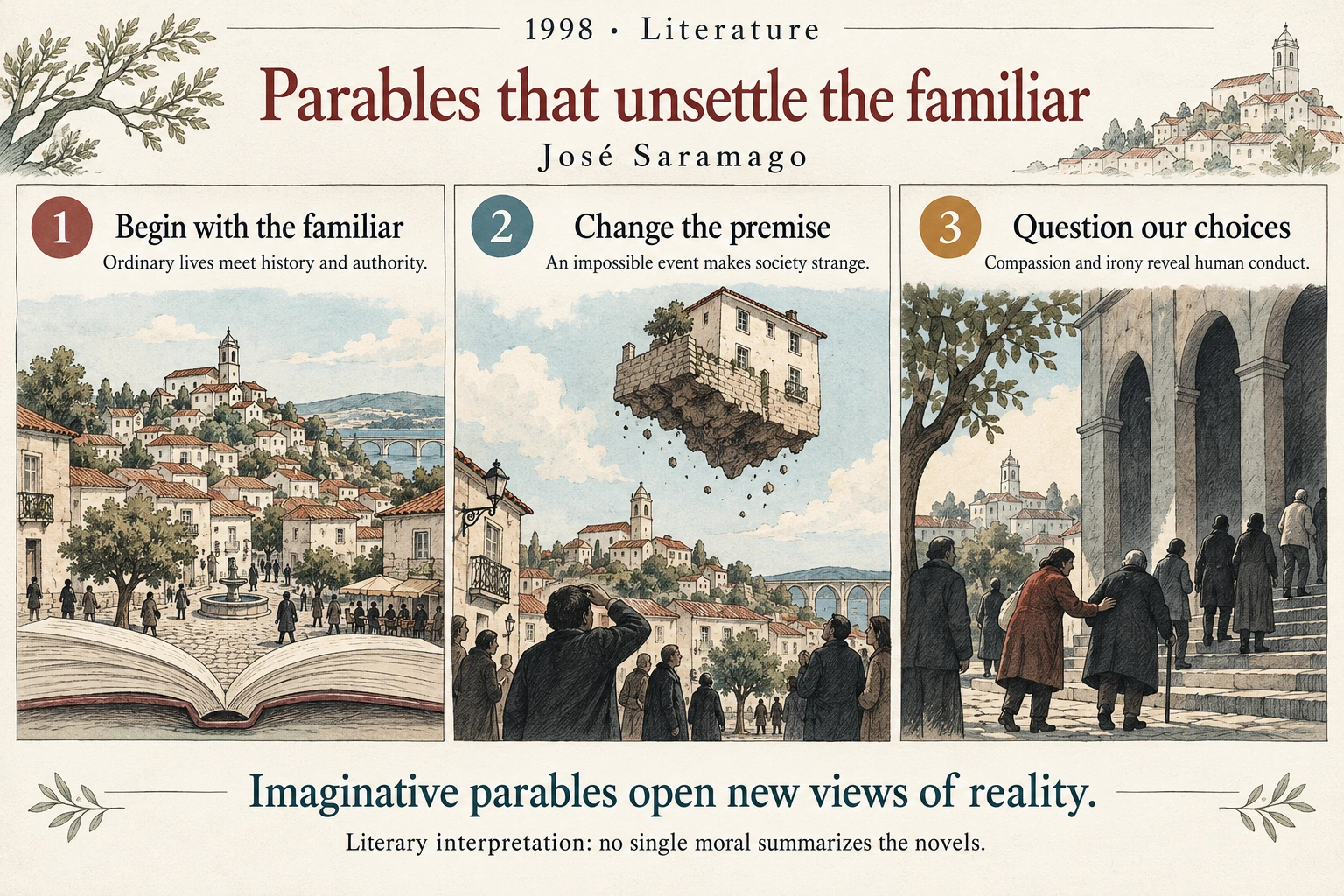
Infographic explaining Parables that unsettle the familiar
Original AI-generated infographic. A conceptual overview; the explanations and sources below provide context.
Read the poster text

Imaginative parables open new views of reality.

  1. Begin with the familiar

    Ordinary lives meet history and authority.

  2. Change the premise

    An impossible event makes society strange.

  3. Question our choices

    Compassion and irony reveal human conduct.

Literary interpretation: no single moral summarizes the novels.

01 · The contribution

The idea, in everyday language

An impossible event can make familiar institutions look strange. Saramago’s novels use such departures from ordinary reality to explore authority, historical memory and ethical responsibility. Baltasar and Blimunda joins individual lives to a historical world; The Year of the Death of Ricardo Reis brings literary invention into conversation with dictatorship-era Lisbon.

Blindness imagines an unexplained epidemic and follows the breakdown of social order, together with acts of care. His long sentences and flowing dialogue deny readers an easy distance from the characters. The Nobel Prize recognized an entire literary achievement: parables can reveal overlooked aspects of reality without offering a single authoritative answer.

Why it matters

His work brought Portuguese-language fiction to a broad international readership and made imaginative storytelling a sustained form of social inquiry. Compassion for vulnerable people sits beside sharp irony about institutions and authority. The award covered his body of work, not just Blindness.

02 · The people

Who brought the idea to life?

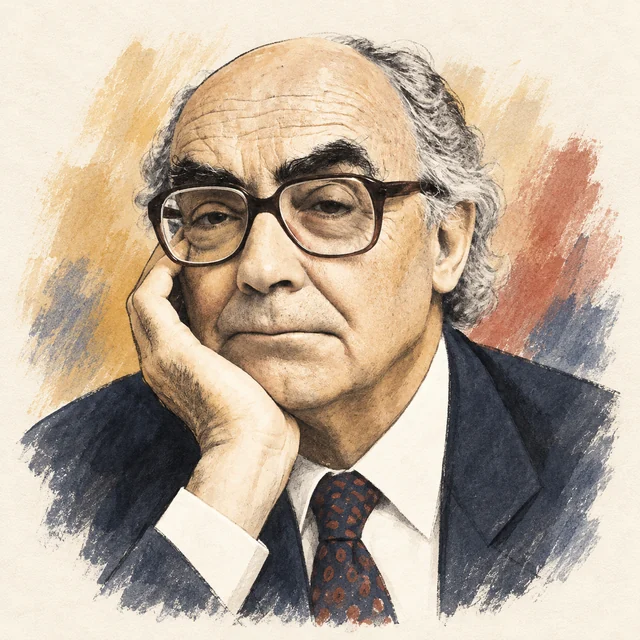
Illustrated portrait of José Saramago

José Saramago

Prize share · 1/1

Saramago transformed improbable situations into sustained investigations of human conduct. In Blindness, an unexplained epidemic exposes both cruelty and solidarity; other novels unsettle received history and official authority. Long sentences and the blending of dialogue with narration make readers attend closely to shifting voices. The prize recognized his body of work, joining imaginative parables with compassion and irony.

Read the biography ↗

03 · Years in the making

The path here

  1. 1982

    Baltasar and Blimunda became his international breakthrough.

  2. 1984

    The Year of the Death of Ricardo Reis was published.

  3. 1995

    Blindness was published.

  4. 1998

    The prize recognized his imaginative, compassionate and ironic parables.

04 · Read further

From the original sources

Original explanations by Curionode, based on the official records below. Biographical details and affiliations refer to the award year.

  1. Official announcement nobelprize.org
  2. Nobel Prize biobibliography nobelprize.org

More in Literature

Browse this subject ↗