c.curionodeThe Nobel Archive

1997 · Literature

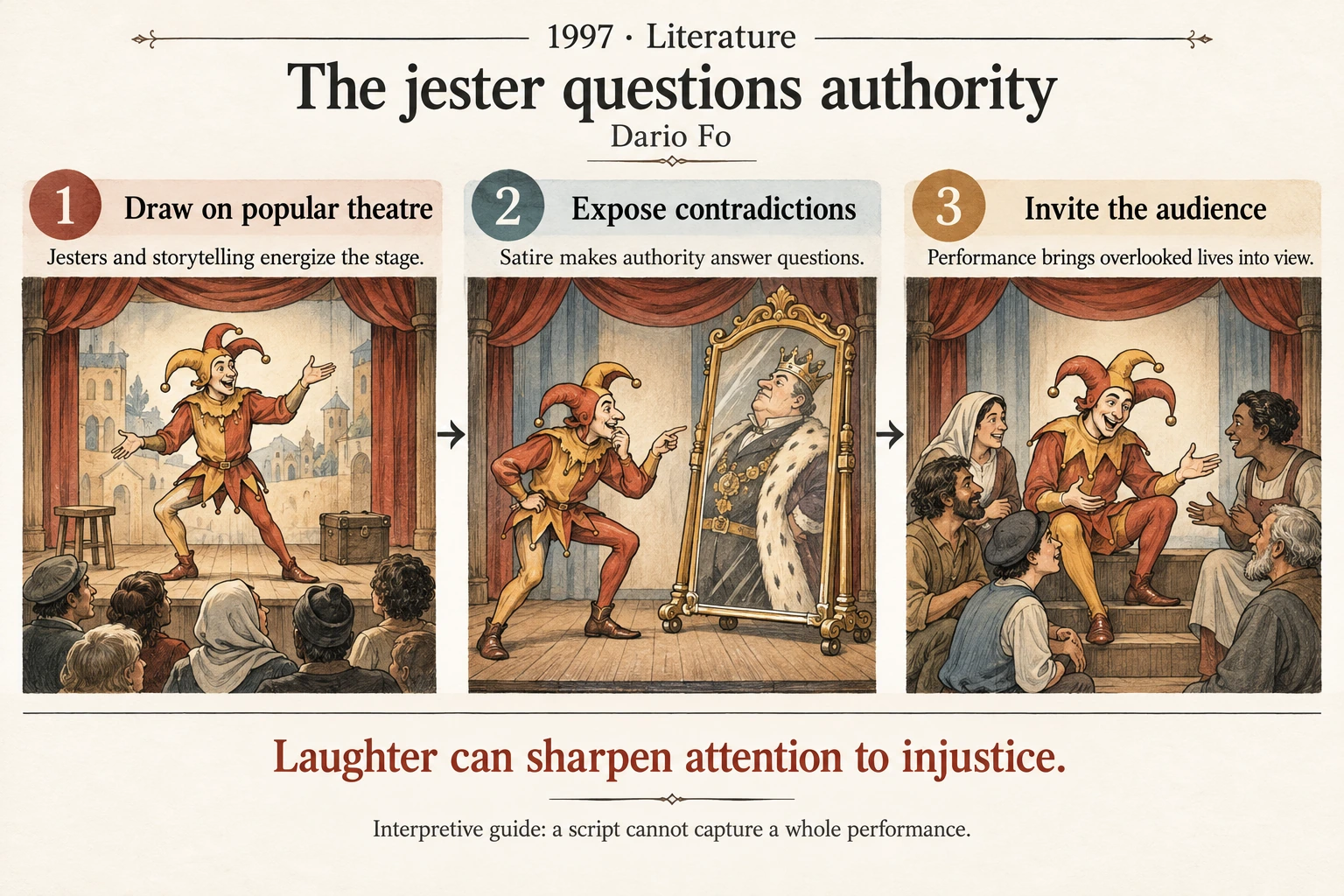
The jester questions authority

Fo’s theatre combined laughter, improvisation and social criticism to defend the dignity of the downtrodden.

political theatresatirecommedia dell’arteimprovisation
1997Literature

Visual guide

The prize, pictured

Infographic explaining The jester questions authority
Original AI-generated infographic. A conceptual overview; the explanations and sources below provide context.
Read the poster text

Laughter can sharpen attention to injustice.

  1. Draw on popular theatre

    Jesters and storytelling energize the stage.

  2. Expose contradictions

    Satire makes authority answer questions.

  3. Invite the audience

    Performance brings overlooked lives into view.

Interpretive guide: a script cannot capture a whole performance.

01 · The contribution

The idea, in everyday language

A comic performer can expose a contradiction that an official explanation tries to conceal. Fo drew on medieval jesters, popular storytelling and commedia dell’arte to create modern political theatre. Mistero Buffo reworked historical material, while Accidental Death of an Anarchist used farce to unsettle accounts of a suspect’s death in police custody.

Fo’s texts were also invitations to performance. Actors could improvise, topical references could shift, and audiences were encouraged to respond actively. His close collaboration with Franca Rame was central to this theatrical world. The prize recognized an extensive body of work in which humour and seriousness make authority answerable and bring marginalized lives into view.

Why it matters

Fo expanded the reach of political theatre through expressive performance, adaptable texts and engagement with audiences beyond established venues. His work encouraged laughter that also demands attention to injustice. The award covered his theatrical achievement, rather than endorsing every political position expressed in a play.
02 · The people

Who brought the idea to life?

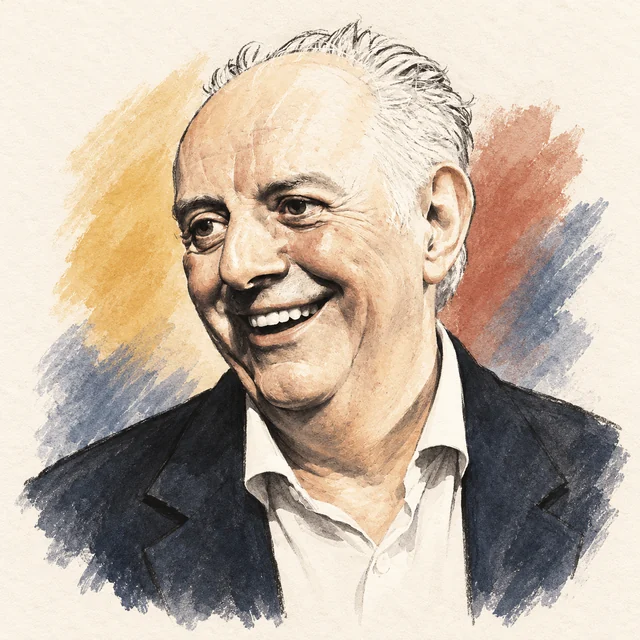
Illustrated portrait of Dario Fo

Dario Fo

Prize share · 1/1

Fo adapted the energy of medieval jesters and commedia dell’arte to modern political satire. Mistero Buffo reworked historical storytelling, while Accidental Death of an Anarchist exposed contradictions in official accounts through farce. His scripts invited improvisation and active audiences. The prize recognized a broad theatrical achievement that challenged authority and defended the dignity of people pushed to society’s margins.

Read the biography ↗

03 · Years in the making

The path here

  1. 1969

    Mistero Buffo became a central work of his popular theatre.

  2. 1970

    Accidental Death of an Anarchist was written.

  3. 1974

    We Won’t Pay, We Won’t Pay! continued his social satire.

  4. 1997

    The prize recognized his theatrical challenge to authority.

04 · Read further

From the original sources

Original explanations by Curionode, based on the official records below. Biographical details and affiliations refer to the award year.

  1. Official announcement nobelprize.org
  2. Nobel Prize biobibliography nobelprize.org

More in Literature

Browse this subject ↗