01 · The discovery
The idea, in everyday language
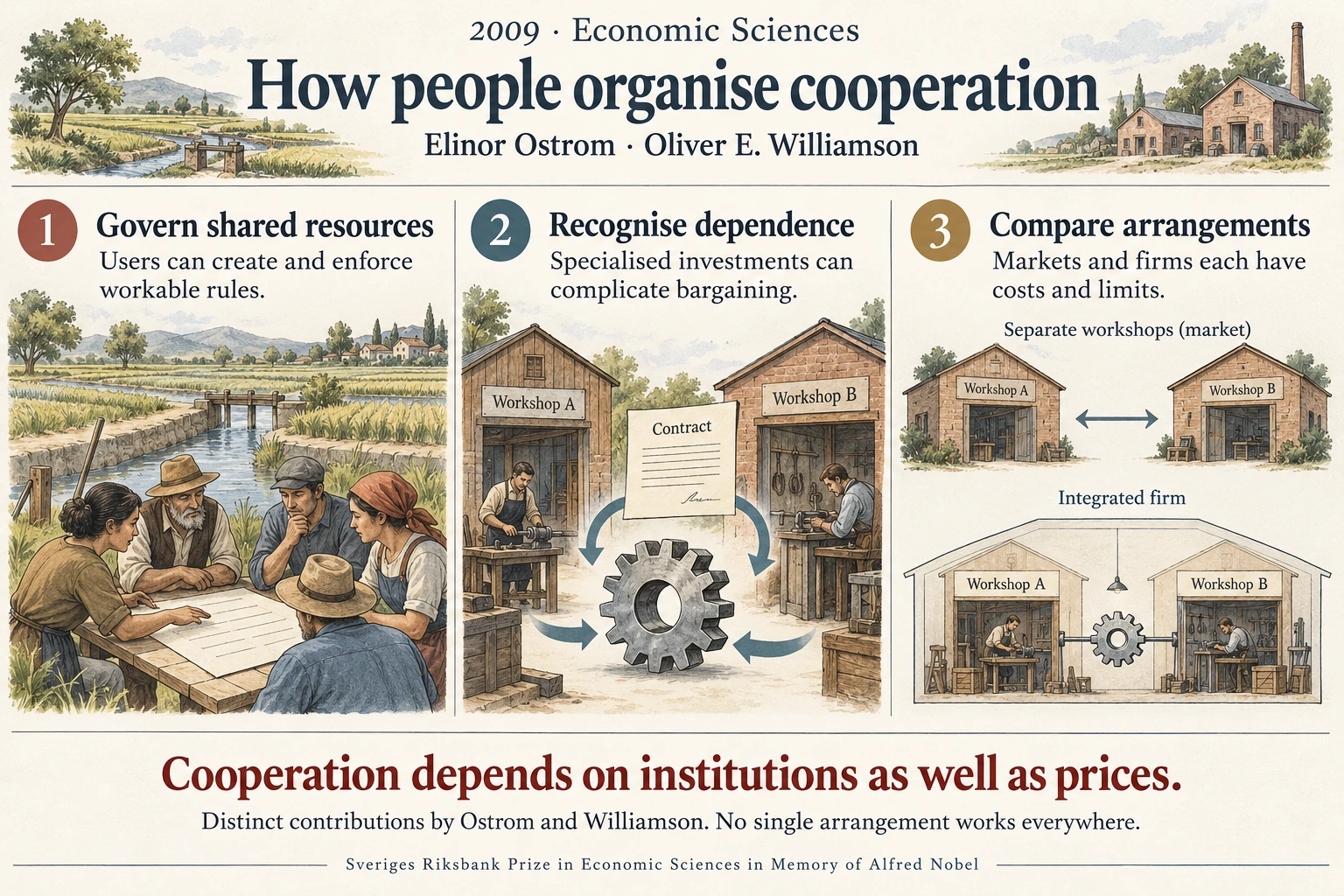
A shared fishery or irrigation system creates a problem: each person’s use can reduce what remains for others. Ostrom compared real communities and showed that users can sometimes create workable rules, monitor use and handle violations themselves. Common ownership does not have to mean unrestricted access. Understanding who can participate, how decisions are made and how disputes are settled helps explain both success and failure.
Williamson examined a different organisational choice. Why buy from an independent supplier in one case, but put production inside the same firm in another? When investments are useful mainly within a particular relationship and contracts cannot anticipate every difficulty, the parties can become dependent on one another. Internal authority may reduce costly bargaining, but that authority can also be abused. The question is which arrangement handles the particular transaction better.
Why it matters
The research broadened economic analysis beyond prices to the institutions that make cooperation possible. It supplied ways to study forests, water systems and other shared resources, and to examine contracts, outsourcing and the boundaries of businesses. Field evidence and comparisons matter because similar-looking activities can work differently under different rules.