01 · The discovery
The idea, in everyday language
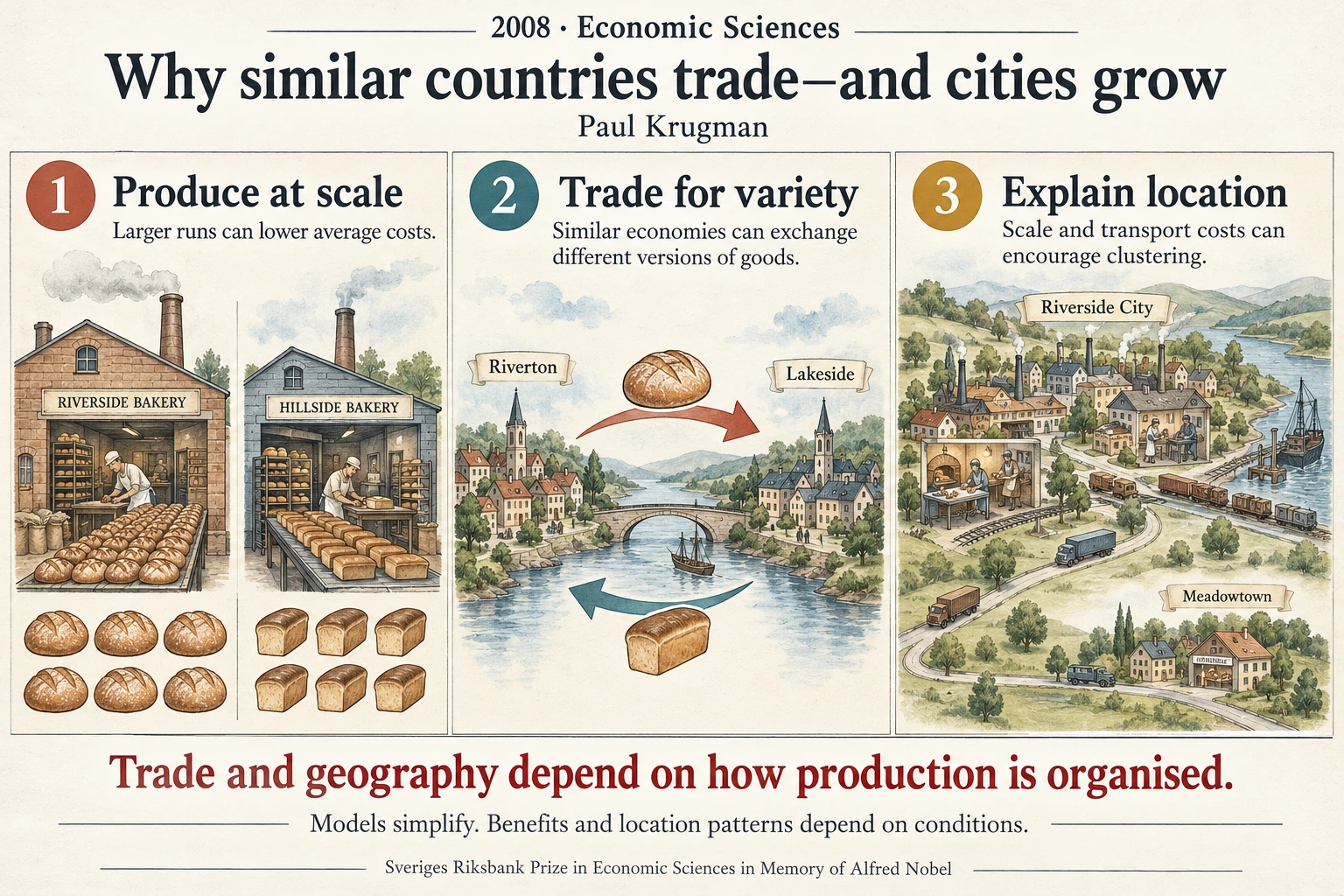
Countries can trade because they differ, but that is not the whole story. Similar countries often both import and export cars, machinery or other goods in the same broad category. Krugman modelled firms whose average costs fall when they produce on a larger scale, together with consumers who value different varieties. Specialising in some varieties and trading for others can therefore make sense even without large differences in resources or technology.
Related forces also affect location. Firms may want to be near customers and workers, while workers may prefer places with jobs and a wide range of goods. Transport costs interact with economies of scale, sometimes creating a self-reinforcing pull toward a centre. Under other conditions, dispersal is more attractive. The model asks how these competing forces produce patterns of concentration and separation.
Why it matters
The work gave economists tractable models of trade within industries and of the geographical concentration of activity. It connected choices made by firms and consumers with larger patterns of trade and urban development. Later research could test these mechanisms and add other features, including differences among firms, migration limits and distributional effects.