c.curionodeThe Nobel Archive

2019 · Physiology or Medicine

How a cell notices falling oxygen

An oxygen-dependent protein disposal system changes which genetic instructions a cell uses.

Oxygen sensingHIFGene regulation
2019Physiology or Medicine

Visual guide

The prize, pictured

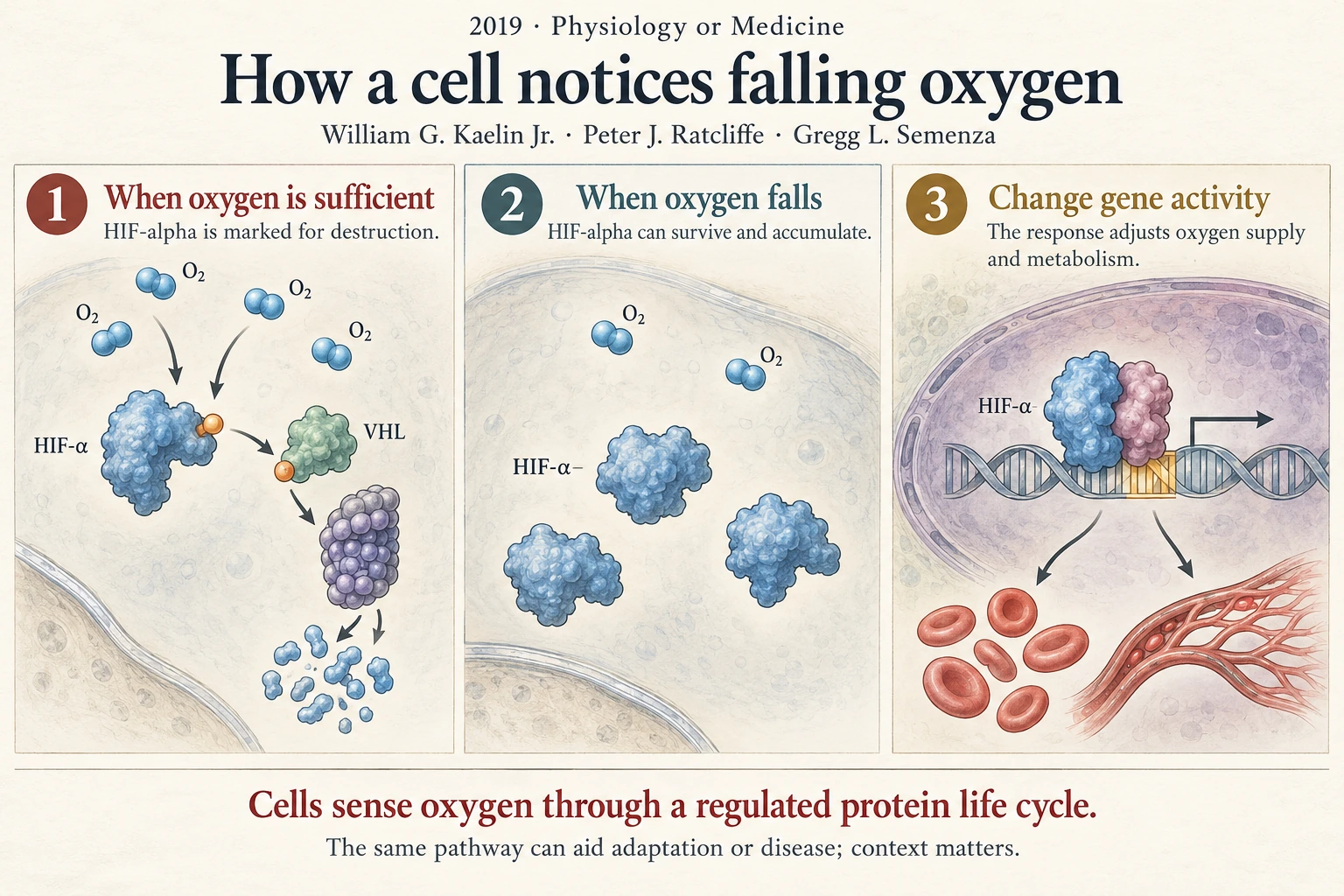
Infographic explaining How a cell notices falling oxygen
Original AI-generated infographic. A conceptual overview; the explanations and sources below provide context.
Read the poster text

Cells sense oxygen through a regulated protein life cycle.

  1. When oxygen is sufficient

    HIF-alpha is marked for destruction.

  2. When oxygen falls

    HIF-alpha can survive and accumulate.

  3. Change gene activity

    The response adjusts oxygen supply and metabolism.

The same pathway can aid adaptation or disease; context matters.

01 · The discovery

The idea, in everyday language

Cells need ways to adjust when oxygen becomes scarce. Semenza identified HIF, a protein complex that helps switch on genes involved in that response. One of its components, HIF-alpha, is normally short-lived. When sufficient oxygen is available, enzymes add a chemical mark that allows the VHL protein to recognise HIF-alpha and help send it for destruction.

When oxygen is low, this marking process slows and HIF-alpha can accumulate. Together with a partner protein, it helps regulate genes involved in oxygen supply and metabolism. Ratcliffe connected this response across tissues and linked VHL to HIF destruction; Kaelin’s cancer research helped reveal how oxygen-dependent marking controls that link.

Why it matters

The discoveries explained a basic connection between a cell’s environment and gene activity. The mechanism matters in red-blood-cell production, blood-vessel growth and metabolism, and helps explain aspects of anaemia and cancer. It opened ways to investigate therapies that alter oxygen-response pathways.


02 · The people

Who brought the idea to life?

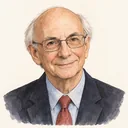
Illustrated portrait of William G. Kaelin Jr.

William G. Kaelin Jr.

Prize share · 1/3

His work on the VHL tumour-suppressor protein helped link cancer genetics to oxygen-dependent control of HIF. His team showed how chemical modification of HIF-alpha enables VHL to recognise it for destruction when oxygen is available.

Read the biography ↗
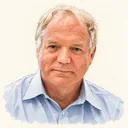
Illustrated portrait of Peter J. Ratcliffe

Peter J. Ratcliffe

Prize share · 1/3

He helped establish that oxygen-responsive gene control works in many tissues. His group linked VHL to HIF-alpha degradation and helped identify the oxygen-dependent chemical modification and enzymes that control this process.

Read the biography ↗
Illustrated portrait of Gregg L. Semenza

Gregg L. Semenza

Prize share · 1/3

He identified hypoxia-inducible factor, HIF, a protein complex that binds regulatory DNA and changes gene activity in low oxygen. Characterising its components provided a central piece of the cellular oxygen-sensing mechanism.

Read the biography ↗

03 · Years in the making

The path here

  1. 1995

    Semenza’s work identifies the components of the HIF complex.

  2. 1999

    Ratcliffe’s group links VHL to oxygen-dependent HIF degradation.

  3. 2001

    Kaelin’s and Ratcliffe’s teams reveal oxygen-dependent chemical marking of HIF-alpha.

04 · Read further

From the original sources

Original explanations by Curionode, based on the official records below. Biographical details and affiliations refer to the award year.

  1. Official award announcement nobelprize.org
  2. Scientific background nobelprize.org

More in Physiology or Medicine

Browse this subject ↗