A life in context
The person behind the prize
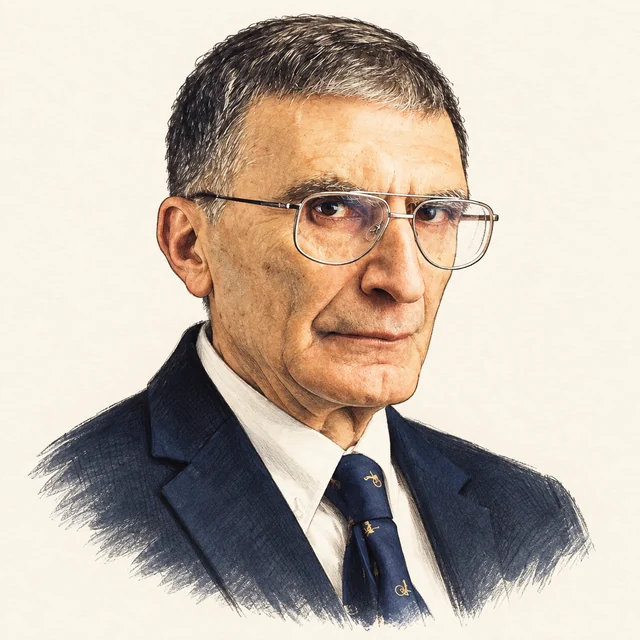
Sancar grew up in Savur and trained as a physician in Istanbul. After practising medicine, he pursued biochemistry in the United States and earned his doctorate at the University of Texas at Dallas in 1977. Work at Yale and then the University of North Carolina brought him deeper into DNA repair. His curiosity about how bacteria recover from ultraviolet damage became a detailed investigation of molecular mechanisms.
The contribution
He identified and characterised bacterial enzymes that locate bulky DNA damage and cut the affected strand on both sides of it. This nucleotide excision repair removes a short damaged segment so other enzymes can fill the gap and seal the strand. He also studied the corresponding human process.
The idea in plain language
DNA stores information, but it is not chemically indestructible. Bases can change spontaneously, ultraviolet light can damage neighbouring bases, and copying can leave a wrong pairing. Lindahl showed why active maintenance is necessary and helped uncover base excision repair. An enzyme first removes a faulty base; other enzymes process the remaining site, replace the missing information and seal the strand.
Read the full award story ↗